Join us

ContentUpdates and recent posts about NanoClaw..
Link
@faun shared a link, 7 months ago
FAUN.dev()

Esoteric Languages Challenge Coders to Think Way Outside the Box

Daniel Temkin has written a book about44 esoteric programming languages, including Valence, which uses ancient Greek measuring symbols. Temkin emphasizes the significance of esoteric languages in promoting creativity and investigating the complicated nature of modern programming. These languages hav.. read more  
Link
@faun shared a link, 7 months ago
FAUN.dev()

The Raku Programming Language: There's More Than One Way To Do It

Raku throws togethermulti-paradigm support,gradual typing,first-class regex grammars, andmetaprogrammingthat actually earns the name. It comes with built-in concurrency,multiple dispatch, and fresh tools likeRakuASTfor syntax-aware code wrangling... read more  

Link
@faun shared a link, 7 months ago
FAUN.dev()

Developer Experience at Pinterest: The Journey to PinConsole

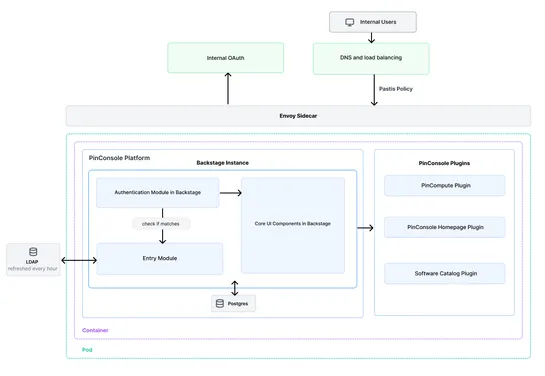
Pinterest rolled outPinConsole, a custom-built Internal Developer Platform powered byBackstage. Years of scattered tools had piled on complexity. This is their clean slate. PinConsole pulls developer workflows into one place, plugging intoPinCompute (Kubernetes),GitHub,Jira, andPagerDuty. It also b.. read more  

Developer Experience at Pinterest: The Journey to PinConsole
Link
@faun shared a link, 7 months ago
FAUN.dev()

The Ultimate Sprint Retro: My 10 Years of Software Engineering

A decade in the trenches took one engineer from writing clean code to navigating company chaos—eventually landing in engineering management. The big shift? Less about scaling systems, more about scaling humans. What started with system design and production code morphed into leading teams, syncing .. read more  

The Ultimate Sprint Retro: My 10 Years of Software Engineering
Story
@laura_garcia shared a post, 7 months ago
Software Developer, RELIANOID

The Importance of Reliability in Airport Systems

✈️ In aviation, reliability isn’t optional—it’s mission-critical. From flight scheduling to baggage handling, every system must perform flawlessly to keep passengers moving. Our latest blog explores how Navitaire by Collins Aerospace is transforming airport operations and how RELIANOID helps ensure ..

The Importance of Reliability in Airport Systems A Look at Navitaire
Story
@laura_garcia shared a post, 7 months ago
Software Developer, RELIANOID

The Importance of Reliability in Airport Systems

✈️ In aviation, reliability isn’t optional—it’s mission-critical. From flight scheduling to baggage handling, every system must perform flawlessly to keep passengers moving. Our latest blog explores how Navitaire by Collins Aerospace is transforming airport operations and how RELIANOID helps ensure ..

The Importance of Reliability in Airport Systems A Look at Navitaire
Link
@faun shared a link, 7 months ago
FAUN.dev()

In a first, Google has released data on how much energy an AI prompt uses

Google dropped detailed stats on energy, water, and carbon use per query for its Gemini models. Median energy:0.24 Wh, with TPUs eating58%of that. They’re claiming a33× efficiency boostin the last year—credit goes to model and software tuning. System shift:A public hyperscaler posting this means th.. read more  

In a first, Google has released data on how much energy an AI prompt uses
Link
@faun shared a link, 7 months ago
FAUN.dev()

AI Models Need a Virtual Machine

Microsoft and academic researchers want to give AI models a new kind of home: theAI Model Virtual Machine (MVM). Think of it like theJVM, but for LLMs—an interface layer that standardizes how models plug into host software. The MVM enforcessecurity,isolation, andtool-calling rules, while also unloc.. read more  

Link
@faun shared a link, 7 months ago
FAUN.dev()

Zero-Click Remote Code Execution: Exploiting MCP & Agentic IDEs

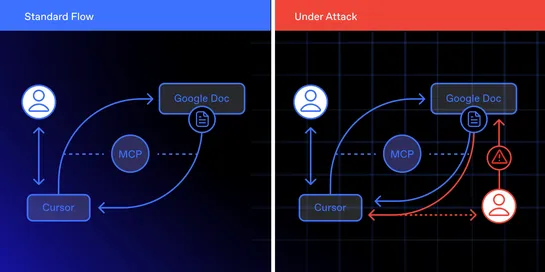
A zero-click exploit is making the rounds—nasty stuff targeting agentic IDEs likeCursor. The trick? Slip a malicious Google Doc into the system. If MCP integration and allow-listedPython executionare on, the document gets auto-pulled, parsed, and runs code. No clicks. No prompts. Justremote code exe.. read more  

Zero-Click Remote Code Execution: Exploiting MCP & Agentic IDEs
Link
@faun shared a link, 7 months ago
FAUN.dev()

Writing effective tools for AI agents—using AI agents

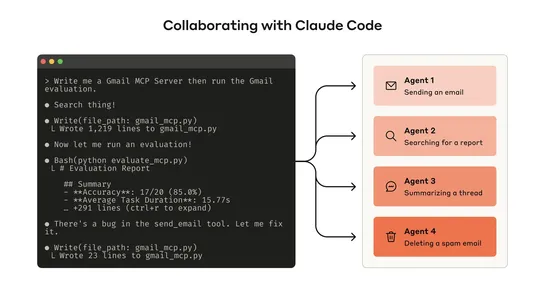
Anthropic’s sharpening the blueprint for building tools that play nice withLLM agents. TheirModel Context Protocol (MCP)leans hard into three pillars: test in loops, design for humans, format like context matters—because it does. They co-develop tools with agents like Claude Code. That means protot.. read more  

Writing effective tools for AI agents—using AI agents
NanoClaw is an open-source personal AI agent designed to run locally on your machine while remaining small enough to fully understand and audit. Built as a lightweight alternative to larger agent frameworks, the system runs as a single Node.js process with roughly 3,900 lines of code spread across about 15 source files.

The agent integrates with messaging platforms such as WhatsApp and Telegram, allowing users to interact with their AI assistant directly through familiar chat applications. Each conversation group operates independently and maintains its own memory and execution environment.

A core design principle of NanoClaw is security through isolation. Every agent session runs inside its own container using Docker or Apple Container, ensuring that the agent can only access files and resources that are explicitly mounted. This approach relies on operating system–level sandboxing rather than application-level permission checks.

The architecture is intentionally simple: a single orchestrator process manages message queues, schedules tasks, launches containerized agents, and stores state in SQLite. Additional functionality can be added through a modular skills system, allowing users to extend capabilities without increasing the complexity of the core codebase.

By combining a minimal architecture with container-based isolation and messaging integration, NanoClaw aims to provide a transparent, customizable personal AI agent that users can run and control entirely on their own infrastructure.