Join us

ContentUpdates and recent posts about Nano Banana Pro..
Link
@faun shared a link, 9 months, 2 weeks ago
FAUN.dev()

Effectively building AI agents on AWS Serverless

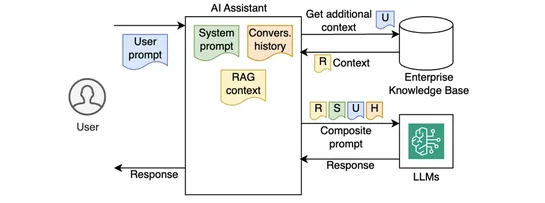
AWS just dropped support for buildingserverless agentic AI systems. You’ll need the Strands Agents SDK, Bedrock AgentCore (preview), plus trusty tools like Lambda and ECS. What’s new? Agentic AI flips the script. Instead of dumb prompt-in, response-out bots, you getgoal-driven loopswith memory, too.. read more  
Effectively building AI agents on AWS Serverless
Link
@faun shared a link, 9 months, 2 weeks ago
FAUN.dev()

Are OpenAI and Anthropic Really Losing Money on Inference?

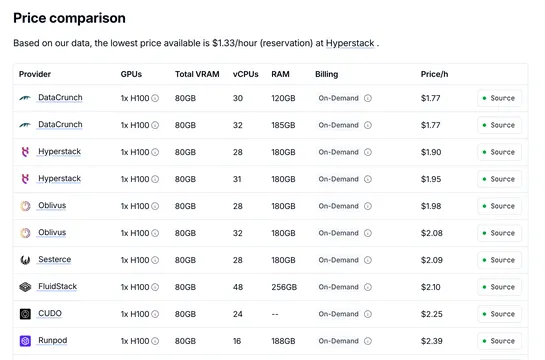
DeepSeek R1 running on H100s puts input-token costs near$0.003 per million—while output tokens still punch in north of$3. That’s a 1,000x spread. So if a job leans heavy on input—think code linting or parsing big docs—those margins stay fat, even with cautious compute. System shift:This lop-sided .. read more  

Are OpenAI and Anthropic Really Losing Money on Inference?
Link
@faun shared a link, 9 months, 2 weeks ago
FAUN.dev()

Combining GenAI & Agentic AI to build scalable, autonomous systems

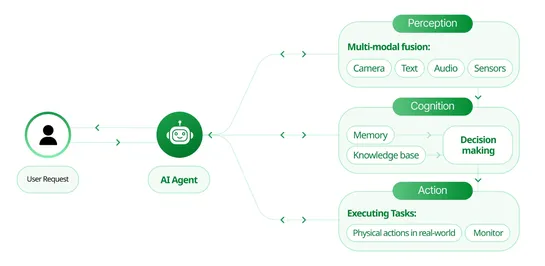
Agentic AI doesn’t just crank out content—it takes the wheel. Where GenAI reacts, Agentic AI plans, perceives, and acts. Think less autocomplete, more autonomous ops. Hook them together, and you get a full-stack brain: content creation, real-time decisions, adaptive workflows, all learning as they .. read more  

Combining GenAI & Agentic AI to build scalable, autonomous systems
Link
@faun shared a link, 9 months, 2 weeks ago
FAUN.dev()

ECScape: Understanding IAM Privilege Boundaries in Amazon ECS

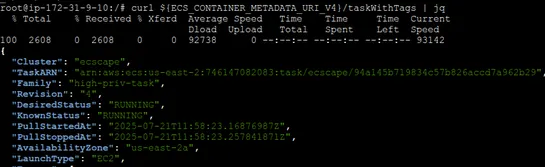
A new ECS security mess—ECScape—lets low-privileged tasks on EC2 act like the ECS agent. That’s bad. Real bad. Why? Because it opens the door to stealing IAM credentials from other ECS tasks sharing the same host. Here’s the trick: The attacker hits the instance metadata service (IMDS) and fakes a .. read more  

ECScape: Understanding IAM Privilege Boundaries in Amazon ECS
Link
@faun shared a link, 9 months, 2 weeks ago
FAUN.dev()

Observability in Go: What Real Engineers Are Saying in 2025

Go observability still feels like pulling teeth. Manual instrumentation? Tedious. Span coverage? Spotty. Telemetry volume? Totally out of hand. Even with OpenTelemetry gaining traction, Go lags behind Java and Python when it comes to auto-instrumentation and clean context propagation. Devs are hunt.. read more  

Observability in Go: What Real Engineers Are Saying in 2025
Link
@faun shared a link, 9 months, 2 weeks ago
FAUN.dev()

How to prepare for the Bitnami Changes coming soon

The Bitnami team has delayed the deletion of the Bitnami public catalog until September 29th. They will conduct a series of brownouts to prepare users for the upcoming changes, with the affected applications list being published on the day of each brownout. Users are advised to switch to Bitnami Sec.. read more  

Link
@faun shared a link, 9 months, 2 weeks ago
FAUN.dev()

Availability Models: Because “Highly Available” Isn’t Saying Much

Antithesis and Jepsen want to kill hand-wavy "high availability" talk. Instead, they push for clearavailability models—majority,total,sticky, etc.—that spell out when an operationactuallyworks during failures. It's about precision, not platitudes. Why it matters:This reframes availability from a va.. read more  

Availability Models: Because “Highly Available” Isn’t Saying Much
Link
@faun shared a link, 9 months, 2 weeks ago
FAUN.dev()

Google Develops KFuzzTest For Fuzzing Internal Linux Kernel Functions

Google droppedKFuzzTest, a lean fuzzing tool built to hit Linux kernel internals—way past just syscalls. It brings a clean API, docs, and sample targets to get fuzzing fast. Why it matters:KFuzzTest marks a shift. Kernel fuzzing’s no longer just about hammering syscalls—it’s going deeper into the g.. read more  

Link
@faun shared a link, 9 months, 2 weeks ago
FAUN.dev()

v1.34: User preferences (kuberc) are available for testing in kubectl 1.34

Kubernetes v1.34 pusheskubectlinto the future with a betauser preferencessystem. Drop a.kubercfile in place, and you can bake in default flags, toggle features likeinteractive deleteorServer-Side Apply, and wire up custom aliases—including pre- and post-args... read more  

Link
@faun shared a link, 9 months, 2 weeks ago
FAUN.dev()

CNCF Incubates OpenYurt for Kubernetes at the Edge

OpenYurt just leveled up—now officially an incubating project under the CNCF. It pushes Kubernetes out past the data center, into the messy edges of the network, without breaking upstream compatibility. No forks, no duct tape. The maintainer roster’s growing too. Folks fromVMware,Microsoft, andInte.. read more  

CNCF Incubates OpenYurt for Kubernetes at the Edge
The "Nano Banana Pro" is an AI image generation and editing model. It is built on the Gemini 3.0 Pro reasoning engine. It is designed to create visuals from ideas. Nano Banana Pro plans scenes before rendering. This ensures high-quality results. It can generate text in multiple languages directly within the image.

The model offers advanced creative controls. Users can specify camera angles, lighting conditions, and depth of field. It has editing features, like "multi-image fusion". Up to 14 reference images can be combined. This maintains consistent branding, character identity, and style. Its "search grounding" capability uses real-time information from Google Search. This produces accurate infographics or diagrams.

The visuals are available in up to 4K resolution. They are suitable for social media posts to print materials. They are generated in seconds. Nano Banana Pro is available across the Google Gemini interface, Google Cloud for enterprise clients, and integrated into popular creative software like Adobe Photoshop.