Join us

ContentUpdates and recent posts about Magika..
Link
@faun shared a link, 11 months, 4 weeks ago
FAUN.dev()

Why Kubernetes 1.33 Is a Turning Point for MLOps — and Platform Engineering

Kubernetes v1.33crushes it for AI/ML workloads with slickDynamic Resource Allocation.Your GPU headaches? Gone. It's nimble, modular, and ready to scale. Plus, with topology-aware routing now in the spotlight, Kubernetes slashes network latency and trims cloud expenses by favoring the nearest options.. read more  

Why Kubernetes 1.33 Is a Turning Point for MLOps — and Platform Engineering
Link
@faun shared a link, 11 months, 4 weeks ago
FAUN.dev()

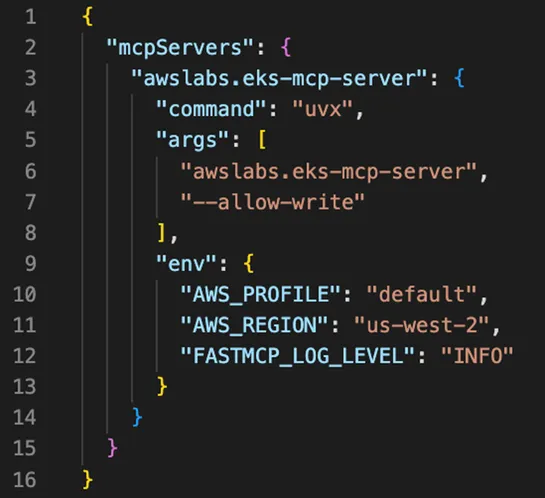
Accelerating application development with the Amazon EKS MCP server

TheEKS MCP serverhands AI code assistants, likeQ Developer CLI, the keys to a streamlined Kubernetes kingdom. App development? Now lightning fast. WithLLMstapping into real-time context, AI flexes its muscles in the wild world of Kubernetes ops and troubleshooting... read more  

Accelerating application development with the Amazon EKS MCP server
Link
@faun shared a link, 11 months, 4 weeks ago
FAUN.dev()

Upgrading ECK Operator: A Side-by-Side Kubernetes Operator Upgrade Approach

Abhishek Munagekar from the Search Infrastructure Team at Mercari manages several Elasticsearch clusters on Kubernetes using the Elastic Cloud on Kubernetes (ECK) Operator. The team embarked on an upgrade project to leverage advancements in newer ECK operator versions. By implementing a custom side-.. read more  

Link
@faun shared a link, 11 months, 4 weeks ago
FAUN.dev()

High Available Mosquitto MQTT on Kubernetes

Running a Kubernetes-nativeMQTT brokerwith Eclipse Mosquitto cuts downtime to a mere5 seconds. Compare that to the usual 5-minute snooze. This feat involves Traefik sorcery and a custom failover rig. Uninterrupted message flow? Check. Real-time state? Handled with message bridges that practically da.. read more  

High Available Mosquitto MQTT on Kubernetes
Link
@faun shared a link, 11 months, 4 weeks ago
FAUN.dev()

10 Open Source Kubernetes Security Tools 2025

A wild440%spike in Kubernetes vulnerabilities over five years calls for open-source security tools that actually get the job done. Still, half of the organizations feel like they're playing catch-up trying to lock it down. Enter tools likeFalcoandIstio. Falco sniffs out runtime anomalies while Istio.. read more  

10 Open Source Kubernetes Security Tools 2025
Link
@faun shared a link, 11 months, 4 weeks ago
FAUN.dev()

Secrets Management in CI/CD Pipeline: Best Practices & Tools

Hardcoding secrets is a ticking time bomb. Instead, reach for centralized tools like HashiCorp Vault; they'll guard your secrets like a vault should. Automate secret rotation so your credentials don't gather dust, and log everything to keep tabs on who does what. Devtron makes it a breeze with its K.. read more  

Link
@faun shared a link, 11 months, 4 weeks ago
FAUN.dev()

Kubernetes CRD Abstraction Risks in kro

Orca Research Pod discovered two bugs in kro that could allow an attacker to introduce a malicious CustomResourceDefinition (CRD). Kro is an open-source project enabling custom Kubernetes APIs using ResourceGraphDefinition resources. These vulnerabilities could lead to a confused deputy scenario whe.. read more  

Link
@faun shared a link, 11 months, 4 weeks ago
FAUN.dev()

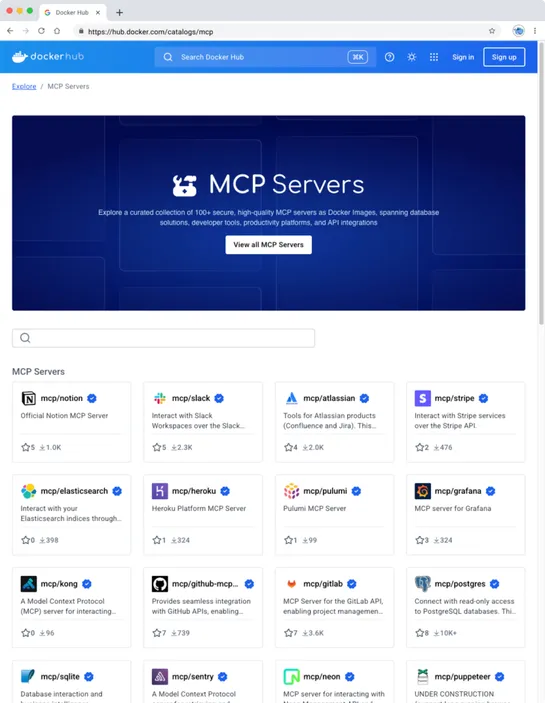
Introducing MCP Catalog and Toolkit: The Simple and Secure Way to Power AI Agents with MCP

Docker's MCP Catalog and Toolkit bust myths and solve setup headaches, smoothing out AI agent development with snug, secure containers.With heavy-hitter partners likeStripe,Elastic, andHerokuon board, developers now revel in one-click connections through Docker Desktop. Integration nightmares and se.. read more  

Introducing MCP Catalog and Toolkit: The Simple and Secure Way to Power AI Agents with MCP
Link
@faun shared a link, 11 months, 4 weeks ago
FAUN.dev()

Kubernetes at Google Cloud: AI, containers and open source scale

Kubernetestransformed from an obscure tech into a backbone for cloud-native AI projects. Today,Google Cloudtakes the crown for effortlessly scaling AI models withGKE. Together,Cloud RunandKubernetescurb AI inference expenses. The secret sauce? On-the-fly GPU access and serverless wizardry that let e.. read more  

Link
@faun shared a link, 11 months, 4 weeks ago
FAUN.dev()

Open Source KubeVirt: VM Management With Kubernetes Is a Work in Progress

KubeVirtpromises the glitzy dream: running VMs in Kubernetes. With Red Hat and friends fanning the flame, it seems poised for greatness. But hold your applause—it's not yet a production powerhouse. Advanced VM management features? Missing in action. Switching to KubeVirt isn't just a hop; it's a lea.. read more  

Magika is an open-source file type identification engine developed by Google that uses machine learning instead of traditional signature-based heuristics. Unlike classic tools such as file, which rely on magic bytes and handcrafted rules, Magika analyzes file content holistically using a trained model to infer the true file type.

It is designed to be both highly accurate and extremely fast, capable of classifying files in milliseconds. Magika excels at detecting edge cases where file extensions are incorrect, intentionally spoofed, or absent altogether. This makes it particularly valuable for security scanning, malware analysis, digital forensics, and large-scale content ingestion pipelines.

Magika supports hundreds of file formats, including programming languages, configuration files, documents, archives, executables, media formats, and data files. It is available as a Python library, a CLI, and integrates cleanly into automated workflows. The project is maintained by Google and released under an open-source license, making it suitable for both enterprise and research use.

Magika is commonly used in scenarios such as:

- Secure file uploads and content validation
- Malware detection and sandboxing pipelines
- Code repository scanning
- Data lake ingestion and classification
- Digital forensics and incident response