Join us

ContentUpdates and recent posts about Magika..
Link
@faun shared a link, 10 months, 1 week ago
FAUN.dev()

How to Reduce Technical Debt With Artificial Intelligence (AI)

Technical debt from outdated software slows down businesses, costingover $2.4 trillion annually in the U.S. Using AI in SaaS can smartly reduce debt, but beware AI-induced debt by implementing rigorous oversight and governance principles likeT.R.U.S.T. Responsible AI integration enhances SaaS scalab.. read more  

Link
@faun shared a link, 10 months, 1 week ago
FAUN.dev()

Hidden Complexities of Distributed SQL

Distributed SQL engines shine when it comes to wrangling scattered data. Their secret weapons?Push-down filtersandTopNtricks that slash data transfer and shrink processing time. They deftly juggle complex queries from multiple sources, without the whole data mess piling up. Even the humdinger of ope.. read more  

Hidden Complexities of Distributed SQL
Link
@faun shared a link, 10 months, 1 week ago
FAUN.dev()

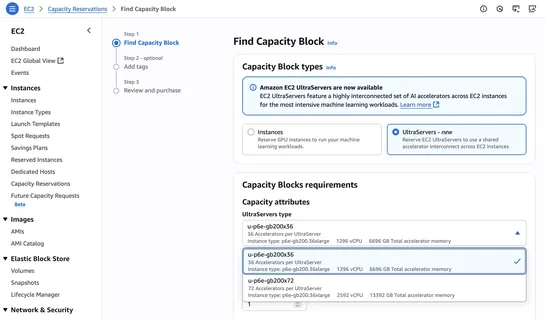
New Amazon EC2 P6e-GB200 UltraServers accelerated by NVIDIA Grace Blackwell GPUs for the highest AI performance

Amazon EC2 P6e-GB200 UltraServersroar to life withNVIDIA Grace Blackwell. Imagine a beast with360 petaflopsof FP8 compute and13.4 TBof high-bandwidth memory. Hungry for speed? They deliver, with28.8 TbpsEFAv4 networking, ensuring lightning-fast data flow. And the GPUs chat like old friends, thanks t.. read more  

New Amazon EC2 P6e-GB200 UltraServers accelerated by NVIDIA Grace Blackwell GPUs for the highest AI performance
Link
@faun shared a link, 10 months, 1 week ago
FAUN.dev()

Why Policy as Code is a Game Changer for Platform Engineers

Policy as Code (PaC) isn't just another tech trend. It’s shaking up platform engineering. Get instant feedback, dodge production disasters, and automate compliance. It’s like a security blanket for self-service platforms. Enforcing those"golden paths"might actually keep things safe while innovation .. read more  

Why Policy as Code is a Game Changer for Platform Engineers
Link
@faun shared a link, 10 months, 1 week ago
FAUN.dev()

Local Chatbot RAG with FreeBSD Knowledge

Deepseek-r1crushes it for FreeBSD chatbots running locally on hefty GPUs. It dishes out adjustable precision, but don’t expect rubber-stamped approval... read more  

Link
@faun shared a link, 10 months, 1 week ago
FAUN.dev()

Netflix Tudum Architecture: from CQRS with Kafka to CQRS with RAW Hollow

RAW Hollow, Netflix's brainy in-memory database, torches Tudum's update lag by jamming full datasets right into app memory. This move guaranteesO(1)access time and rock-solidread-after-writeconsistency while flexing to juggle a whopping100 millionrecords... read more  

Netflix Tudum Architecture: from CQRS with Kafka to CQRS with RAW Hollow
Link
@faun shared a link, 10 months, 1 week ago
FAUN.dev()

Understanding Time Series Databases

Time series databasesoptimize storage, retrieval, and analysis of time-stamped data, offering high-speed ingestion and specialized analytics. TSDBs are designed for efficiency and scalability, outperforming traditional databases in time-centric applications... read more  

Link
@faun shared a link, 10 months, 1 week ago
FAUN.dev()

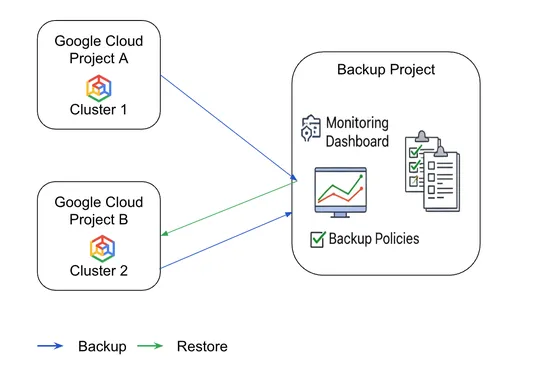
Backup for GKE supports cross-project backup and restore

Backup for GKEjust got a power-up. Now, you can zip data from one Google Cloud project and unpack it in another. This shake-up makes disaster recovery smoother, teamwork easier, and security tighter by keeping backups out of the wrong hands. All the control, none of the headache. No scripts needed... read more  

Backup for GKE supports cross-project backup and restore
Link
@faun shared a link, 10 months, 1 week ago
FAUN.dev()

Docker Desktop 4.43: Expanded Model Runner, Reimagined MCP Catalog, MCP Server Submissions, and Smarter Gordon

Docker Desktop 4.43 cranks up AI integration with theModel Runner. OpenAI APIs? Now they're putty in your hands. Fine-tune model runtime with ease. EnterDocker’s Gordon—the multitasker extraordinaire who juggles threads like a caffeinated circus performer. Enjoy speeds and accuracy that make old ver.. read more  

Docker Desktop 4.43: Expanded Model Runner, Reimagined MCP Catalog, MCP Server Submissions, and Smarter Gordon
Link
@faun shared a link, 10 months, 1 week ago
FAUN.dev()

Automatic Helm Deployments with Ansible on Minikube: Jenkins & Grafana

Ansiblewields its off-the-shelf modules like a charm bracelet, linking arms withDockerandKubernetes. It turns the rut ofHelmsetup into a dance, orchestrating across machines like a seasoned conductor. Declare your Kubernetes resources with the flair of a playwright using Helm charts. Then, invite au.. read more  

Magika is an open-source file type identification engine developed by Google that uses machine learning instead of traditional signature-based heuristics. Unlike classic tools such as file, which rely on magic bytes and handcrafted rules, Magika analyzes file content holistically using a trained model to infer the true file type.

It is designed to be both highly accurate and extremely fast, capable of classifying files in milliseconds. Magika excels at detecting edge cases where file extensions are incorrect, intentionally spoofed, or absent altogether. This makes it particularly valuable for security scanning, malware analysis, digital forensics, and large-scale content ingestion pipelines.

Magika supports hundreds of file formats, including programming languages, configuration files, documents, archives, executables, media formats, and data files. It is available as a Python library, a CLI, and integrates cleanly into automated workflows. The project is maintained by Google and released under an open-source license, making it suitable for both enterprise and research use.

Magika is commonly used in scenarios such as:

- Secure file uploads and content validation
- Malware detection and sandboxing pipelines
- Code repository scanning
- Data lake ingestion and classification
- Digital forensics and incident response