Join us

ContentUpdates and recent posts about Magika..
Story
@laura_garcia shared a post, 9 months, 3 weeks ago
Software Developer, RELIANOID

📌 New: netstat Command Cheatsheet

Need to check active connections, monitor listening ports, or debug network issues? The Linux netstat command remains a go-to tool for quick and effective diagnostics. We’ve created a clear, quick-reference cheatsheet with: 🔍 Essential command flags 📊 Real-world use cases ⚙️ Integration tips for REL..

The_Linux_netstat_command_Cheatsheet
Link
@faun shared a link, 9 months, 3 weeks ago
FAUN.dev()

Building Reproducible ML Systems with Apache Iceberg and SparkSQL

Apache Iceberg +SparkSQLbringsACID transactions,schema evolution, andtime travelto data lakes. That means ML pipelines finally get reproducibility and consistency without the hacks. Iceberg’s snapshot-based guts track every version, handle parallel writes without stepping on toes, and keep training .. read more  

Building Reproducible ML Systems with Apache Iceberg and SparkSQL
Link
@faun shared a link, 9 months, 3 weeks ago
FAUN.dev()

Introducing the Amazon Bedrock AgentCore Code Interpreter

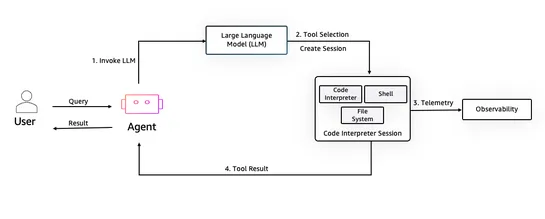
AWS just droppedAgentCore Code Interpreter—a managed box where AI agents can run Python, JavaScript, and TypeScript in isolation. Think of it as a secure playground with autoscaling, controlled file access, and deep hooks into frameworks likeLangChain,LangGraph,Strands, andCrewAI. Big picture: This.. read more  

Introducing the Amazon Bedrock AgentCore Code Interpreter
Link
@faun shared a link, 9 months, 3 weeks ago
FAUN.dev()

How to Build an Agent

A new framework lays out six sharp steps for building agents that actually ship. It kicks off with a grounded task, locks in SOPs, then tunes high-leverage prompts. The real choke point? LLM reasoning. Everything else—architecture, data flow, testing—is scoped to chase tight, measurable gains there... read more  

Link
@faun shared a link, 9 months, 3 weeks ago
FAUN.dev()

Using generative AI for building AWS networks

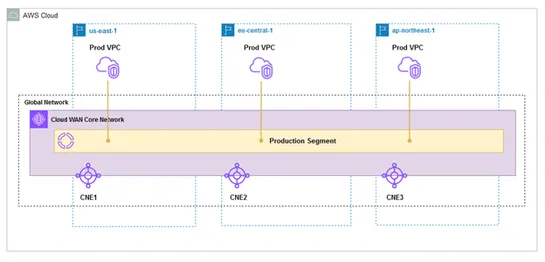
Amazon Q Developer CLI and Bedrock just leveled up. You can now spin up AWS Cloud WANs and VPCs using plain English. Type what you need—get full deployments, phased migrations, and IaC for both CloudFormation and Terraform. Agents handle the whole stack: network discovery, rollout, and config. No m.. read more  

Using generative AI for building AWS networks
Link
@faun shared a link, 9 months, 3 weeks ago
FAUN.dev()

AWS AgentCore: The Overlooked Privilege Escalation Path in Bedrock’s AI Tooling

AWS Bedrock AgentCore just got a new trick: agents (and anyone IAM-blessed) can now runCode Interpreters. Think arbitrary code execution—with custom or predefined IAM roles. But here’s the kicker: these interpreters skipresource policies, lean on control plane APIs, and don’t log squat—unlessyou fl.. read more  

Link
@faun shared a link, 9 months, 3 weeks ago
FAUN.dev()

Building AIOps with Amazon Q Developer CLI and MCP Server

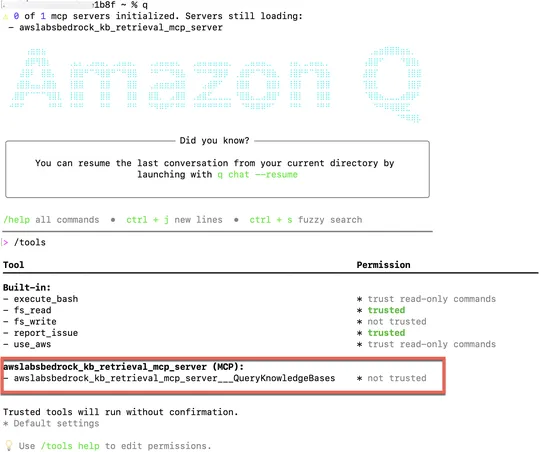
Amazon Q Developer CLI now hooks into Model Context Protocol (MCP) servers, unlocking AIOps tasks—incident detection, remediation, security fixes—through plain English. Natural language in, real-time control out. It fetches data and talks to your AWS stack via a low-code UI. Tinkerable, scriptable,.. read more  

Building AIOps with Amazon Q Developer CLI and MCP Server
Link
@faun shared a link, 9 months, 3 weeks ago
FAUN.dev()

Azure AI Speech Service Configuration

Azure AI Speech now splits config paths forTTS(text-to-speech) andSTT(speech-to-text) when usingmanaged identity—and yes, they're different enough to matter. Roles, env vars, and auth flows don’t line up. Private endpoints? They nuke regional fallbacks, so you’ll need to pass full URLs. A shared ut.. read more  

Link
@faun shared a link, 9 months, 3 weeks ago
FAUN.dev()

Typed languages are better suited for vibecoding

Claude’s making typed, compiled languages feel like cheating. Rust, Go, TypeScript—rising fast where Python used to reign. Why? AI coding tools now catch bugs early, validate sprawling diffs, and help devs grok unfamiliar codebases without breaking a sweat. Compiler guarantees + AI pair = fast, safe.. read more  

Link
@faun shared a link, 9 months, 3 weeks ago
FAUN.dev()

Browser-Based LLMs: WebGPU Enables AI in Your Browser

Browser-based LLMs likeBrowser-LLMnow run models likeLlama 2entirely in the browser—no server round-trips, no cloud bill. Just you, WebGPU, and up to7B parametershumming along on your machine. System shift:WebGPU cracks open real AI horsepower in the browser. Local inference gets faster, more priva.. read more  

Browser-Based LLMs: WebGPU Enables AI in Your Browser
Magika is an open-source file type identification engine developed by Google that uses machine learning instead of traditional signature-based heuristics. Unlike classic tools such as file, which rely on magic bytes and handcrafted rules, Magika analyzes file content holistically using a trained model to infer the true file type.

It is designed to be both highly accurate and extremely fast, capable of classifying files in milliseconds. Magika excels at detecting edge cases where file extensions are incorrect, intentionally spoofed, or absent altogether. This makes it particularly valuable for security scanning, malware analysis, digital forensics, and large-scale content ingestion pipelines.

Magika supports hundreds of file formats, including programming languages, configuration files, documents, archives, executables, media formats, and data files. It is available as a Python library, a CLI, and integrates cleanly into automated workflows. The project is maintained by Google and released under an open-source license, making it suitable for both enterprise and research use.

Magika is commonly used in scenarios such as:

- Secure file uploads and content validation
- Malware detection and sandboxing pipelines
- Code repository scanning
- Data lake ingestion and classification
- Digital forensics and incident response