Join us

ContentUpdates and recent posts about Magika..
Link
@faun shared a link, 8 months, 2 weeks ago
FAUN.dev()

The Most Important Machine Learning Equations: A Comprehensive Guide

A new reference rounds up the core ML equations—Bayes’ Theorem, cross-entropy, eigen decomposition, attention—and shows how they plug into real Python code using NumPy, TensorFlow, and scikit-learn. It hits the big four: probability, linear algebra, optimization, and generative modeling. Stuff that.. read more  
Link
@faun shared a link, 8 months, 2 weeks ago
FAUN.dev()

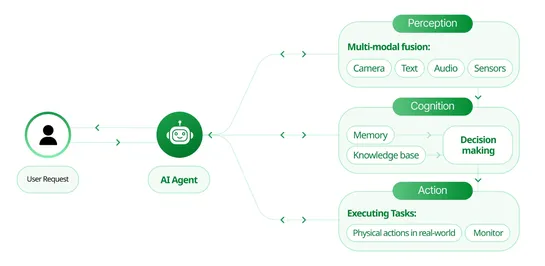
Combining GenAI & Agentic AI to build scalable, autonomous systems

Agentic AI doesn’t just crank out content—it takes the wheel. Where GenAI reacts, Agentic AI plans, perceives, and acts. Think less autocomplete, more autonomous ops. Hook them together, and you get a full-stack brain: content creation, real-time decisions, adaptive workflows, all learning as they .. read more  

Combining GenAI & Agentic AI to build scalable, autonomous systems
Link
@faun shared a link, 8 months, 2 weeks ago
FAUN.dev()

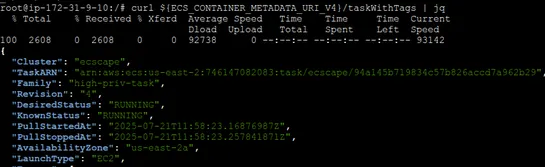
ECScape: Understanding IAM Privilege Boundaries in Amazon ECS

A new ECS security mess—ECScape—lets low-privileged tasks on EC2 act like the ECS agent. That’s bad. Real bad. Why? Because it opens the door to stealing IAM credentials from other ECS tasks sharing the same host. Here’s the trick: The attacker hits the instance metadata service (IMDS) and fakes a .. read more  

ECScape: Understanding IAM Privilege Boundaries in Amazon ECS
Link
@faun shared a link, 8 months, 2 weeks ago
FAUN.dev()

How to prepare for the Bitnami Changes coming soon

The Bitnami team has delayed the deletion of the Bitnami public catalog until September 29th. They will conduct a series of brownouts to prepare users for the upcoming changes, with the affected applications list being published on the day of each brownout. Users are advised to switch to Bitnami Sec.. read more  

Link
@faun shared a link, 8 months, 2 weeks ago
FAUN.dev()

Availability Models: Because “Highly Available” Isn’t Saying Much

Antithesis and Jepsen want to kill hand-wavy "high availability" talk. Instead, they push for clearavailability models—majority,total,sticky, etc.—that spell out when an operationactuallyworks during failures. It's about precision, not platitudes. Why it matters:This reframes availability from a va.. read more  

Availability Models: Because “Highly Available” Isn’t Saying Much
Link
@faun shared a link, 8 months, 2 weeks ago
FAUN.dev()

Observability in Go: What Real Engineers Are Saying in 2025

Go observability still feels like pulling teeth. Manual instrumentation? Tedious. Span coverage? Spotty. Telemetry volume? Totally out of hand. Even with OpenTelemetry gaining traction, Go lags behind Java and Python when it comes to auto-instrumentation and clean context propagation. Devs are hunt.. read more  

Observability in Go: What Real Engineers Are Saying in 2025
Link
@faun shared a link, 8 months, 2 weeks ago
FAUN.dev()

Google Develops KFuzzTest For Fuzzing Internal Linux Kernel Functions

Google droppedKFuzzTest, a lean fuzzing tool built to hit Linux kernel internals—way past just syscalls. It brings a clean API, docs, and sample targets to get fuzzing fast. Why it matters:KFuzzTest marks a shift. Kernel fuzzing’s no longer just about hammering syscalls—it’s going deeper into the g.. read more  

Link
@faun shared a link, 8 months, 2 weeks ago
FAUN.dev()

v1.34: User preferences (kuberc) are available for testing in kubectl 1.34

Kubernetes v1.34 pusheskubectlinto the future with a betauser preferencessystem. Drop a.kubercfile in place, and you can bake in default flags, toggle features likeinteractive deleteorServer-Side Apply, and wire up custom aliases—including pre- and post-args... read more  

Link
@faun shared a link, 8 months, 2 weeks ago
FAUN.dev()

v1.34: Of Wind & Will (O' WaW)

Kubernetes v1.34 drops with58 updates, and23 just hit stable. Highlights: Dynamic Resource Allocation (DRA), per-Pod resource limits, and secure image pulls using Pod-specific ServiceAccount tokens. Scalability gets a lift from streaming list responses. Security tightens with finer anonymous auth r.. read more  

v1.34: Of Wind & Will (O' WaW)
Link
@faun shared a link, 8 months, 2 weeks ago
FAUN.dev()

An introduction to platform engineering

Platform engineering is stepping in where DevOps didn’t quite land. Think fewer duct-taped pipelines, more thoughtful systems. The fix? Internal Developer Platforms (IDPs), usually riding on Kubernetes, built to tame the sprawl. Gartner says 80% of big engineering orgs will run platform teams by 20.. read more  

An introduction to platform engineering
Magika is an open-source file type identification engine developed by Google that uses machine learning instead of traditional signature-based heuristics. Unlike classic tools such as file, which rely on magic bytes and handcrafted rules, Magika analyzes file content holistically using a trained model to infer the true file type.

It is designed to be both highly accurate and extremely fast, capable of classifying files in milliseconds. Magika excels at detecting edge cases where file extensions are incorrect, intentionally spoofed, or absent altogether. This makes it particularly valuable for security scanning, malware analysis, digital forensics, and large-scale content ingestion pipelines.

Magika supports hundreds of file formats, including programming languages, configuration files, documents, archives, executables, media formats, and data files. It is available as a Python library, a CLI, and integrates cleanly into automated workflows. The project is maintained by Google and released under an open-source license, making it suitable for both enterprise and research use.

Magika is commonly used in scenarios such as:

- Secure file uploads and content validation
- Malware detection and sandboxing pipelines
- Code repository scanning
- Data lake ingestion and classification
- Digital forensics and incident response