Join us

ContentUpdates and recent posts about Magika..
Link
@faun shared a link, 7 months ago
FAUN.dev()

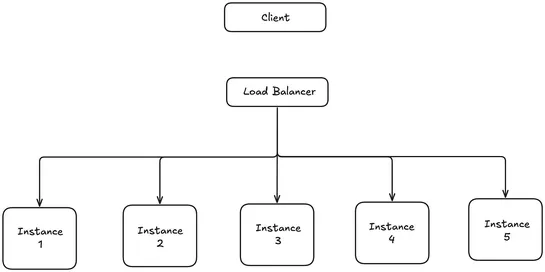
Writing Load Balancer From Scratch In 250 Line of Code

A developer rolled out a fully working **Go load balancer** with a clean **Round Robin** setup—and hooks for dropping in smarter strategies like **Least Connection** or **IP Hash**. Backend servers live in a custom server pool. Swapping balancing logic? Just plug into the interface... read more  
Writing Load Balancer From Scratch In 250 Line of Code
Link
@faun shared a link, 7 months ago
FAUN.dev()

The productivity paradox of AI coding assistants

A July 2025 METR trial dropped a twist: seasoned devs using Cursor with Claude 3.5/3.7 moved **19% slower** - while thinking they were **20% faster**. Chalk it up to AI-induced confidence inflation. Faros AI tracked over **10,000 developers**. More AI didn’t mean more done. It meant more juggling, .. read more  

The productivity paradox of AI coding assistants
Link
@faun shared a link, 7 months ago
FAUN.dev()

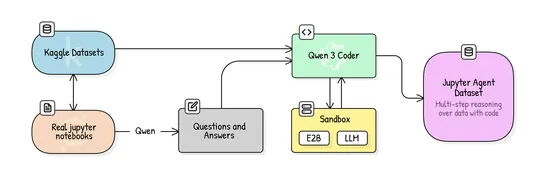
Jupyter Agents: training LLMs to reason with notebooks

Hugging Face dropped an open pipeline and dataset for training small models—think **Qwen3-4B**—into sharp **Jupyter-native data science agents**. They pulled curated Kaggle notebooks, whipped up synthetic QA pairs, added lightweight **scaffolding**, and went full fine-tune. Net result? A **36% jump .. read more  

Jupyter Agents: training LLMs to reason with notebooks
Link
@faun shared a link, 7 months ago
FAUN.dev()

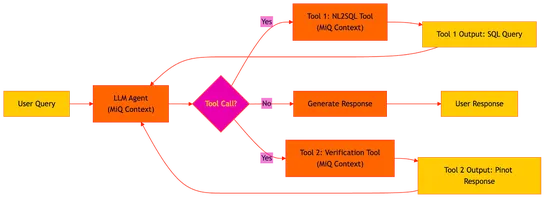
Building a Natural Language Interface for Apache Pinot with LLM Agents

MiQ plugged **Google’s Agent Development Kit** into their stack to spin up **LLM agents** that turn plain English into clean, validated SQL. These agents speak directly to **Apache Pinot**, firing off real-time queries without the usual parsing pain. Behind the scenes, it’s a slick handoff: NL2SQL .. read more  

Building a Natural Language Interface for Apache Pinot with LLM Agents
Link
@faun shared a link, 7 months ago
FAUN.dev()

Implementing Vector Search from Scratch: A Step-by-Step Tutorial

Search is a fundamental problem in computing, and vector search aims to match meanings rather than exact words. By converting queries and documents into numerical vectors and calculating similarity, vector search retrieves contextually relevant results. In this tutorial, a vector search system is bu.. read more  

Link
@faun shared a link, 7 months ago
FAUN.dev()

5 Free AI Courses from Hugging Face

Hugging Face just rolled out a sharp set of free AI courses. Real topics, real tools—think **AI agents, LLMs, diffusion models, deep RL**, and more. It’s hands-on from the jump, packed with frameworks like LangGraph, Diffusers, and Stable Baselines3. You don’t just read about models—you build ‘em i.. read more  

Link
@faun shared a link, 7 months ago
FAUN.dev()

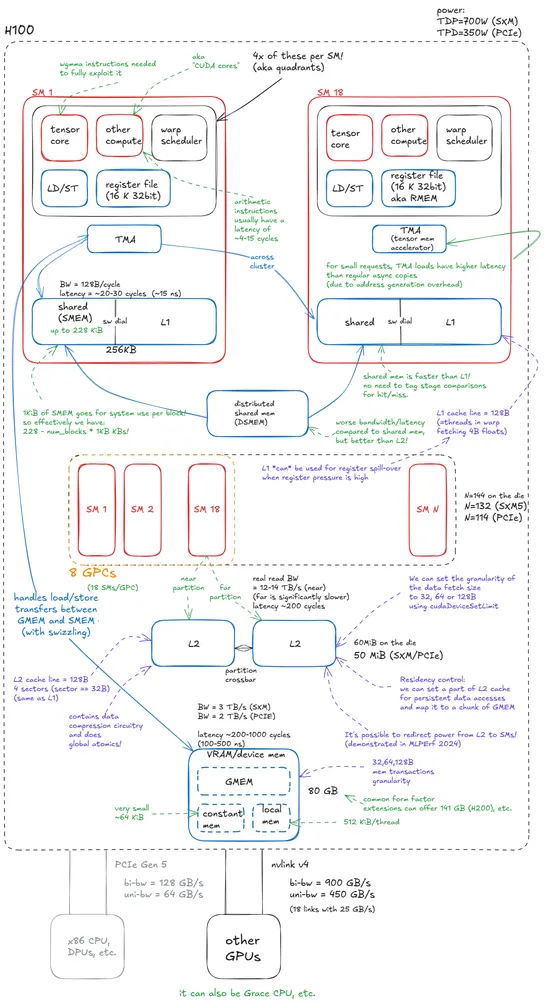
Inside NVIDIA GPUs: Anatomy of high performance matmul kernels

NVIDIA Hopper packs serious architectural tricks. At the core: **Tensor Memory Accelerator (TMA)**, **tensor cores**, and **swizzling**—the trio behind async, cache-friendly matmul kernels that flirt with peak throughput. But folks aren't stopping at cuBLAS. They're stacking new tactics: **warp-gro.. read more  

Inside NVIDIA GPUs: Anatomy of high performance matmul kernels
Link
@faun shared a link, 7 months ago
FAUN.dev()

Becoming a Research Engineer at a Big LLM Lab - 18 Months of Strategic Career Development

To land a big career role like Mistral, mix efficient **tactical** moves (like LeetCode practice) with **strategic** ups, like building a powerful portfolio and a solid network. Balance is key; aim to impress and prepare well without overlooking the power of strategy in shaping a successful career... read more  

Link
@faun shared a link, 7 months ago
FAUN.dev()

Shai-Hulud npm Supply Chain Attack

Malicious npm packages just leveled up: this one dropped a self-spreading worm that hijacks repos and leaks secrets the moment it lands. It abuses `postinstall` scripts to run TruffleHog and swipe tokens straight from your codebase. Then it uses GitHub Actions to exfiltrate the loot and auto-publis.. read more  

Shai-Hulud npm Supply Chain Attack
Link
@faun shared a link, 7 months ago
FAUN.dev()

How FinOps Drives Value for Every Engineering Dollar

Duolingo’s FinOps crew didn’t just track cloud costs—they wired up sharp, automated observability across 100+ microservices. Real-time alerts now catch AI and infra spend spikes before they torch the budget. They sliced TTS costs by 40% with in-memory caching. Dumped pricey CloudWatch metrics for P.. read more  

How FinOps Drives Value for Every Engineering Dollar
Magika is an open-source file type identification engine developed by Google that uses machine learning instead of traditional signature-based heuristics. Unlike classic tools such as file, which rely on magic bytes and handcrafted rules, Magika analyzes file content holistically using a trained model to infer the true file type.

It is designed to be both highly accurate and extremely fast, capable of classifying files in milliseconds. Magika excels at detecting edge cases where file extensions are incorrect, intentionally spoofed, or absent altogether. This makes it particularly valuable for security scanning, malware analysis, digital forensics, and large-scale content ingestion pipelines.

Magika supports hundreds of file formats, including programming languages, configuration files, documents, archives, executables, media formats, and data files. It is available as a Python library, a CLI, and integrates cleanly into automated workflows. The project is maintained by Google and released under an open-source license, making it suitable for both enterprise and research use.

Magika is commonly used in scenarios such as:

- Secure file uploads and content validation
- Malware detection and sandboxing pipelines
- Code repository scanning
- Data lake ingestion and classification
- Digital forensics and incident response