Join us

ContentUpdates and recent posts about Lustre..
Link
@faun shared a link, 9 months, 1 week ago
FAUN.dev()

Critical NVIDIA Container Toolkit Flaw Allows Privilege Escalation on AI Cloud Services

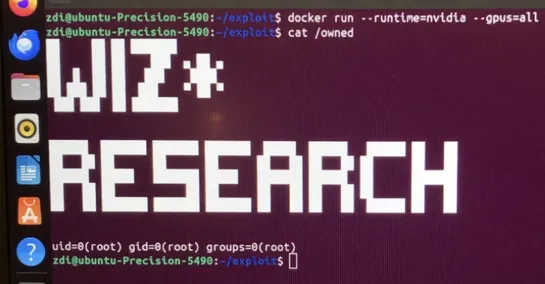
A critical container escape vulnerability (CVE-2025-23266) in NVIDIA Container Toolkit poses a severe threat to managed AI cloud services, earning a CVSS score of 9.0 out of 10.0. This flaw allows37%of cloud environments to potentially be accessed by attackers using a three-line exploit, enabling co.. read more  
Critical NVIDIA Container Toolkit Flaw Allows Privilege Escalation on AI Cloud Services
Link
@faun shared a link, 9 months, 1 week ago
FAUN.dev()

Building scalable secrets management in hybrid cloud environments

GitGuardian's 2024 reportsounds the alarm:23 million secrets slipped through leaks in 2023. A whopping 70% hung around for months. Talk about a security nightmare! EnterHashiCorp VaultandAkeyless. These tools mastered the multi-cloud juggling act and automated secrets management. Result? A satisfyin.. read more  

Building scalable secrets management in hybrid cloud environments
Link
@faun shared a link, 9 months, 1 week ago
FAUN.dev()

Automated Kubernetes Threat Detection with Tetragon and Azure Sentinel

Kubernetes security tools usually drop the ball. Enter the dynamic duo:Tetragonwielding eBPF magic for deep observability, and smart notifications for sniper-precise alerts.Fluent Bitpairs withAzure Logic Appsin an automated setup so you can hunt down threats in real-time. Not a drop of sweat needed.. read more  

Automated Kubernetes Threat Detection with Tetragon and Azure Sentinel
Link
@faun shared a link, 9 months, 1 week ago
FAUN.dev()

Kubernetes Scaling Strategies

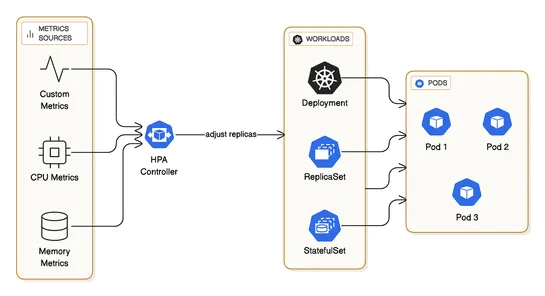
Horizontal Pod Autoscaler(HPA) cranks up pods based on CPU, memory, or custom quirks. A dream for stateless adventures, but you'll need a metrics server.Vertical Pod Autoscaler(VPA) fine-tunes CPU and memory for pods. Works like a charm for jobs where scaling out is sketchy, though it demands restar.. read more  

Kubernetes Scaling Strategies
Link
@faun shared a link, 9 months, 1 week ago
FAUN.dev()

Upcoming changes to the Bitnami catalog

Bitnamiclears out the virtual cobwebs by tucking its oldDebian-based imagesinto a digital time capsule, also known as theLegacy repository. It throws a friendly nudge to devs: get with the times and swap to the "latest" images. In production-ville, serious users should hitch a ride on theBitnami Sec.. read more  

Link
@faun shared a link, 9 months, 1 week ago
FAUN.dev()

GitOps continuous delivery with ArgoCD and EKS using natural language

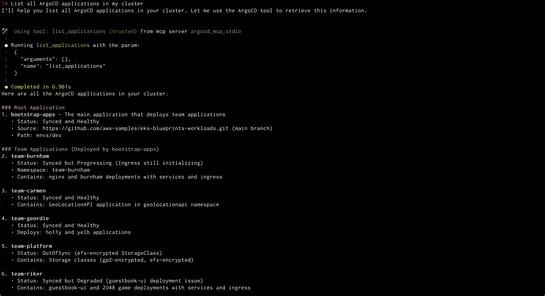
ArgoCD MCP Serverteams up withAmazon Q CLIto shake up Kubernetes with natural language controls. Finally, GitOps that even the non-tech crowd can handle. Kiss those roadblocks goodbye. No more brain strain from Kubernetes. Now, plain language syncs apps, reveals resource trees, and checks health sta.. read more  

GitOps continuous delivery with ArgoCD and EKS using natural language
Link
@faun shared a link, 9 months, 1 week ago
FAUN.dev()

Securing Kubernetes 1.33 Pods: The Impact of User Namespace Isolation

Kubernetes 1.33rolls out with a security upgrade. It flips the switch onuser namespacesby default, shoving pods into the safety zone as unprivileged users. Potential breaches? Curbed. But don't get too comfy—idmap-capable file systems and up-to-date runtimes are now your new best friends if you want.. read more  

Securing Kubernetes 1.33 Pods: The Impact of User Namespace Isolation
Link
@faun shared a link, 9 months, 1 week ago
FAUN.dev()

Zendesk Streamlines Infrastructure Provisioning with Foundation Interface Platform

Zendeskhas tossed out the old playbook with itsFoundation Interface. Forget the guessing games of infrastructure provisioning; engineers now scribble their demands in YAML, and voilà—magic happens. Kubernetes operators step in, spinning these requests into Custom Resources. It’s self-service nirvana.. read more  

Zendesk Streamlines Infrastructure Provisioning with Foundation Interface Platform
Link
@faun shared a link, 9 months, 1 week ago
FAUN.dev()

Rethinking Node Drains: A Webhook Based Approach to Graceful Pod Removal

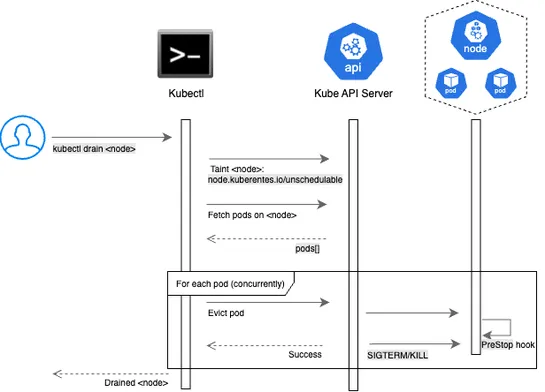
Eviction Reschedule Hooksticks its nose in Kubernetes eviction requests, letting operator-managed stateful apps wriggle their way through node drains without breaking a sweat. 🎯.. read more  

Rethinking Node Drains: A Webhook Based Approach to Graceful Pod Removal
Link
@faun shared a link, 9 months, 1 week ago
FAUN.dev()

Under the hood: Amazon EKS ultra scale clusters

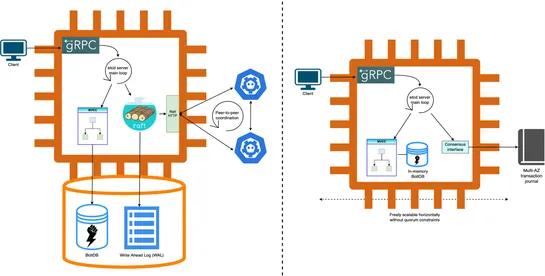
Amazon EKScranked up its gear—you can now spin up clusters with a staggering100,000 nodesat your beck and call. That’s a cozy home for either1.6 million AWS Trainium chipsor800,000 NVIDIA GPUs. Welcome to the playground for ultra-scale AI/ML. Performance soars skyward by ditching old etcd consensus .. read more  

Under the hood: Amazon EKS ultra scale clusters
Lustre is an open-source, parallel distributed file system built for high-performance computing environments that require extremely fast, large-scale data access. Designed to serve thousands of compute nodes concurrently, Lustre enables HPC clusters to read and write data at multi-terabyte-per-second speeds while maintaining low latency and fault tolerance.

A Lustre deployment separates metadata and file data into distinct services—Metadata Servers (MDS) handling namespace operations and Object Storage Servers (OSS) serving file contents stored across multiple Object Storage Targets (OSTs). This architecture allows clients to access data in parallel, achieving performance far beyond traditional network file systems.

Widely adopted in scientific computing, supercomputing centers, weather modeling, genomics, and large-scale AI training, Lustre remains a foundational component of modern HPC stacks. It integrates with resource managers like Slurm, supports POSIX semantics, and is designed to scale from small clusters to some of the world’s fastest supercomputers.

With strong community and enterprise support, Lustre provides a mature, battle-tested solution for workloads that demand extreme I/O performance, massive concurrency, and petabyte-scale distributed storage.