Join us

ContentUpdates and recent posts about LangChain..
Link
@faun shared a link, 10 months, 3 weeks ago
FAUN.dev()

Automated Kubernetes Threat Detection with Tetragon and Azure Sentinel

Kubernetes security tools usually drop the ball. Enter the dynamic duo:Tetragonwielding eBPF magic for deep observability, and smart notifications for sniper-precise alerts.Fluent Bitpairs withAzure Logic Appsin an automated setup so you can hunt down threats in real-time. Not a drop of sweat needed.. read more  

Automated Kubernetes Threat Detection with Tetragon and Azure Sentinel
Link
@faun shared a link, 10 months, 3 weeks ago
FAUN.dev()

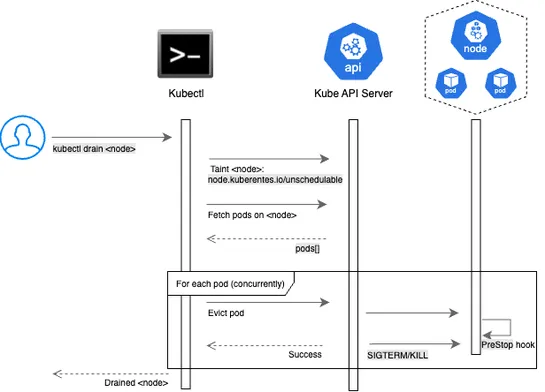
Rethinking Node Drains: A Webhook Based Approach to Graceful Pod Removal

Eviction Reschedule Hooksticks its nose in Kubernetes eviction requests, letting operator-managed stateful apps wriggle their way through node drains without breaking a sweat. 🎯.. read more  

Rethinking Node Drains: A Webhook Based Approach to Graceful Pod Removal
Link
@faun shared a link, 10 months, 3 weeks ago
FAUN.dev()

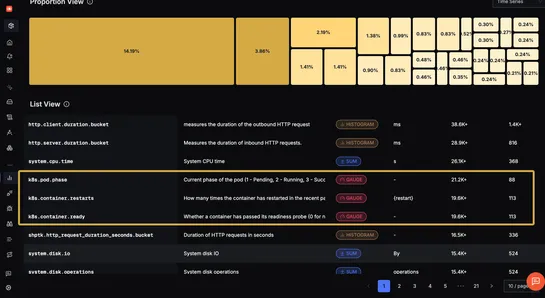
Kubernetes Observability with OpenTelemetry | A Complete Setup Guide

OpenTelemetrydelivers a full observability package for Kubernetes—traces, metrics, logs—all without handcuffs to a single vendor. Deployyour own OTEL Collectorson Minikube usingHelm charts. Dive into node and pod-level metrics and grab those can't-miss Kubernetes cluster events... read more  

Kubernetes Observability with OpenTelemetry | A Complete Setup Guide
Link
@faun shared a link, 10 months, 3 weeks ago
FAUN.dev()

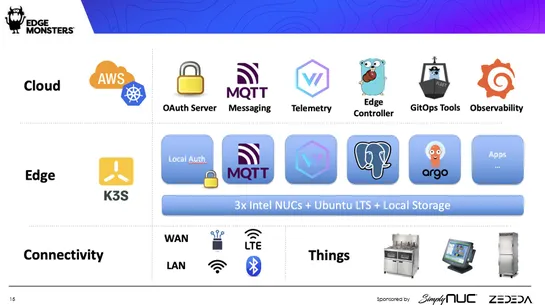
6 Design Principles for Edge Computing Systems

Edge systemseach have their eccentricities, needing solutions as unique as they are:Chick-fil-Aswears byKubernetesto herd its standard operations. TheAir Force, however, prizes nimbleness and ironclad security for deployments scattered across the globe. Smart edge management? It’s a mix ofInfrastruc.. read more  

6 Design Principles for Edge Computing Systems
Link
@faun shared a link, 10 months, 3 weeks ago
FAUN.dev()

OpenShift LACP bonding performance expectations

Red Hat OpenShift and NIC bonding for high availability is getting popular in data centers. Consider layer2/layer2+3 configurations for balanced traffic distribution across bonded links. Layer3+4 hashing offers highest throughput but may lead to out-of-order packets due to 802.3ad non-compliance. It.. read more  

Link
@faun shared a link, 10 months, 3 weeks ago
FAUN.dev()

Upcoming changes to the Bitnami catalog

Bitnamiclears out the virtual cobwebs by tucking its oldDebian-based imagesinto a digital time capsule, also known as theLegacy repository. It throws a friendly nudge to devs: get with the times and swap to the "latest" images. In production-ville, serious users should hitch a ride on theBitnami Sec.. read more  

Link
@faun shared a link, 10 months, 3 weeks ago
FAUN.dev()

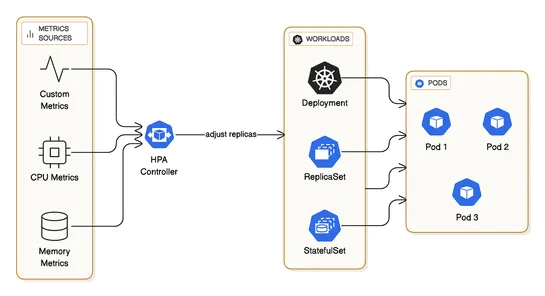
Kubernetes Scaling Strategies

Horizontal Pod Autoscaler(HPA) cranks up pods based on CPU, memory, or custom quirks. A dream for stateless adventures, but you'll need a metrics server.Vertical Pod Autoscaler(VPA) fine-tunes CPU and memory for pods. Works like a charm for jobs where scaling out is sketchy, though it demands restar.. read more  

Kubernetes Scaling Strategies
Story
@laura_garcia shared a post, 10 months, 3 weeks ago
Software Developer, RELIANOID

🚨 Is Your Business Ready for a Cyber Crisis? 🚨

A cyberattack can strike at any time—causing operational disruption, financial loss, and reputational damage. Preparing for and effectively managing a cyber crisis is no longer optional—it's essential. At RELIANOID, we help businesses build robust cyber resilience through advanced solutions and expe..

Blog Preparing and Managing a Cyber Crisis RELIANOID
Link
@anjali shared a link, 10 months, 3 weeks ago
Customer Marketing Manager, Last9

Monitor Nginx with OpenTelemetry Tracing

Instrument NGINX with OpenTelemetry to capture traces, track latency, and connect upstream and downstream services in a single request flow.

Nginx_opentelemetry
Story
@laura_garcia shared a post, 10 months, 3 weeks ago
Software Developer, RELIANOID

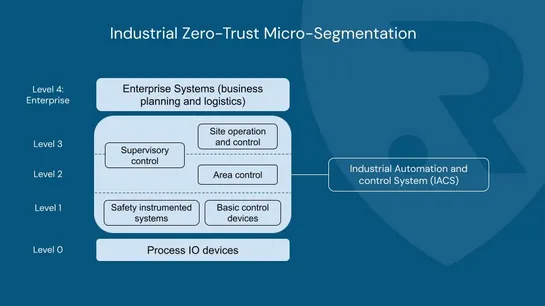
🔐 Zero-Trust Micro-Segmentation in Industrial Environments

In today's connected industrial world, the convergence of IT & OT brings efficiency—but also new risks. That’s why Zero-Trust Micro-Segmentation is no longer optional. 📌 It divides your network into isolated zones, applies strict access rules, and assumes no user or device is inherently trusted. ✅ K..

Industrial Zero-Trust Micro-Segmentation
LangChain is a modular framework designed to help developers build complex, production-grade applications that leverage large language models. It abstracts the underlying complexity of prompt management, context retrieval, and model orchestration into reusable components. At its core, LangChain introduces primitives like Chains, Agents, and Tools, allowing developers to sequence model calls, make decisions dynamically, and integrate real-world data or APIs into LLM workflows.

LangChain supports retrieval-augmented generation (RAG) pipelines through integrations with vector databases, enabling models to access and reason over large external knowledge bases efficiently. It also provides utilities for handling long-term context via memory management and supports multiple backends like OpenAI, Anthropic, and local models.

Technically, LangChain simplifies building LLM-driven architectures such as chatbots, document Q&A systems, and autonomous agents. Its ecosystem includes components for caching, tracing, evaluation, and deployment, allowing seamless movement from prototype to production. It serves as a foundational layer for developers who need tight control over how language models interact with data and external systems.