Join us

ContentUpdates and recent posts about LangChain..
Link
@faun shared a link, 8 months, 1 week ago
FAUN.dev()

Go is still not good

Go’s been catching flak for years, and the hits keep coming: stiff variable scoping, no destructor patterns, clunky error handling, and brittle build directives. Critics point out how Go’s design often blocks best practices like RAII and makes devs contort logic just to clean up resources or manage .. read more  

Link
@faun shared a link, 8 months, 1 week ago
FAUN.dev()

Bash Explained: How the Most Popular Linux Shell Works

Bash isn't going anywhere. It's still the glue for CI/CD, cron jobs, and whatever janky monitoring stack someone duct-taped together at 2am. If automation runs the show, Bash is probably in the pit orchestra. It keeps things moving on Linux, old-school macOS (think pre-Catalina), and even WSL. Stil.. read more  

Link
@faun shared a link, 8 months, 1 week ago
FAUN.dev()

Developer's block

Overdoing “best practices” can kill momentum. Think endless tests, wall-to-wall docs, airtight CI, and coding rules rigid enough to snap. Sounds responsible—until it slows dev to a crawl. The piece argues for flipping that script. Start scrappy. Build fast. Save the polish for later. It’s how you d.. read more  

Link
@faun shared a link, 8 months, 1 week ago
FAUN.dev()

Lessons learned from building a sync-engine and reactivity system with SQLite

A dev ditched Electric + PGlite for a lean, browser-native sync setup built aroundWASM SQLite,JSON polling, andBroadcastChannel reactivity. It’s running inside a local-first notes app. Changes get logged with DB triggers. Sync state? Tracked by hand. Svelte stores update via lightweight polling, wi.. read more  

Lessons learned from building a sync-engine and reactivity system with SQLite
Link
@faun shared a link, 8 months, 1 week ago
FAUN.dev()

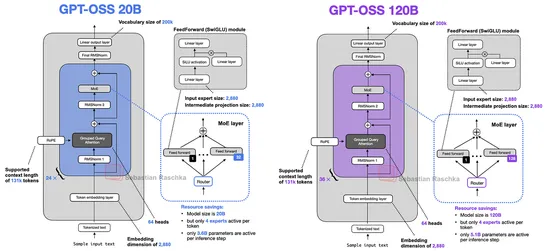
From GPT-2 to gpt-oss: Analyzing the Architectural Advances

OpenAI Returns to Openness. The company droppedgpt-oss-20Bandgpt-oss-120B—its first open-weight LLMs since GPT-2. The models pack a modern stack:Mixture-of-Experts,Grouped Query Attention,Sliding Window Attention, andSwiGLU. They're also lean. Thanks toMXFP4 quantization, 20B runs on a 16GB consume.. read more  

From GPT-2 to gpt-oss: Analyzing the Architectural Advances
Link
@faun shared a link, 8 months, 1 week ago
FAUN.dev()

The Most Important Machine Learning Equations: A Comprehensive Guide

A new reference rounds up the core ML equations—Bayes’ Theorem, cross-entropy, eigen decomposition, attention—and shows how they plug into real Python code using NumPy, TensorFlow, and scikit-learn. It hits the big four: probability, linear algebra, optimization, and generative modeling. Stuff that.. read more  

Link
@faun shared a link, 8 months, 1 week ago
FAUN.dev()

Effectively building AI agents on AWS Serverless

AWS just dropped support for buildingserverless agentic AI systems. You’ll need the Strands Agents SDK, Bedrock AgentCore (preview), plus trusty tools like Lambda and ECS. What’s new? Agentic AI flips the script. Instead of dumb prompt-in, response-out bots, you getgoal-driven loopswith memory, too.. read more  

Effectively building AI agents on AWS Serverless
Link
@faun shared a link, 8 months, 1 week ago
FAUN.dev()

Are OpenAI and Anthropic Really Losing Money on Inference?

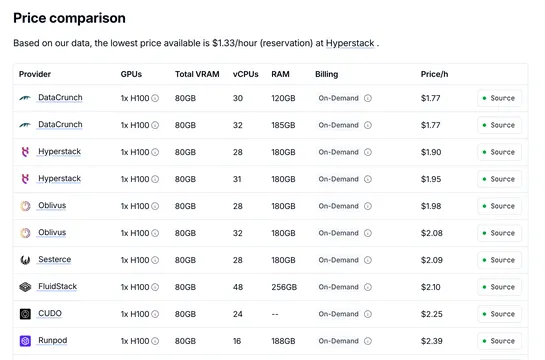
DeepSeek R1 running on H100s puts input-token costs near$0.003 per million—while output tokens still punch in north of$3. That’s a 1,000x spread. So if a job leans heavy on input—think code linting or parsing big docs—those margins stay fat, even with cautious compute. System shift:This lop-sided .. read more  

Are OpenAI and Anthropic Really Losing Money on Inference?
Link
@faun shared a link, 8 months, 1 week ago
FAUN.dev()

Some thoughts on LLMs and Software Development

Most LLMs still play autocomplete sidekick. But seasoned devs? They get better results when the model reads and rewrites actual source files. That gap—between how LLMs are designed to work and how prosactuallyuse them—messes with survey data and muddies the picture on real gains in code quality and.. read more  

Link
@faun shared a link, 8 months, 1 week ago
FAUN.dev()

Combining GenAI & Agentic AI to build scalable, autonomous systems

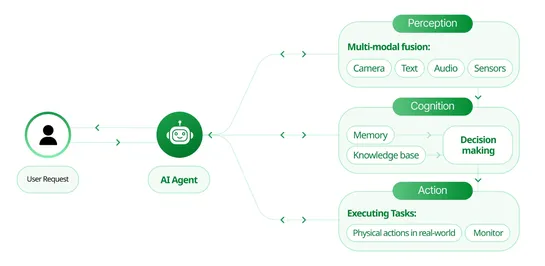
Agentic AI doesn’t just crank out content—it takes the wheel. Where GenAI reacts, Agentic AI plans, perceives, and acts. Think less autocomplete, more autonomous ops. Hook them together, and you get a full-stack brain: content creation, real-time decisions, adaptive workflows, all learning as they .. read more  

Combining GenAI & Agentic AI to build scalable, autonomous systems
LangChain is a modular framework designed to help developers build complex, production-grade applications that leverage large language models. It abstracts the underlying complexity of prompt management, context retrieval, and model orchestration into reusable components. At its core, LangChain introduces primitives like Chains, Agents, and Tools, allowing developers to sequence model calls, make decisions dynamically, and integrate real-world data or APIs into LLM workflows.

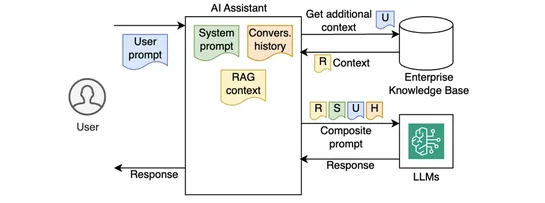
LangChain supports retrieval-augmented generation (RAG) pipelines through integrations with vector databases, enabling models to access and reason over large external knowledge bases efficiently. It also provides utilities for handling long-term context via memory management and supports multiple backends like OpenAI, Anthropic, and local models.

Technically, LangChain simplifies building LLM-driven architectures such as chatbots, document Q&A systems, and autonomous agents. Its ecosystem includes components for caching, tracing, evaluation, and deployment, allowing seamless movement from prototype to production. It serves as a foundational layer for developers who need tight control over how language models interact with data and external systems.