Join us

ContentUpdates and recent posts about LangChain..
Link
@faun shared a link, 6 months, 4 weeks ago
FAUN.dev()

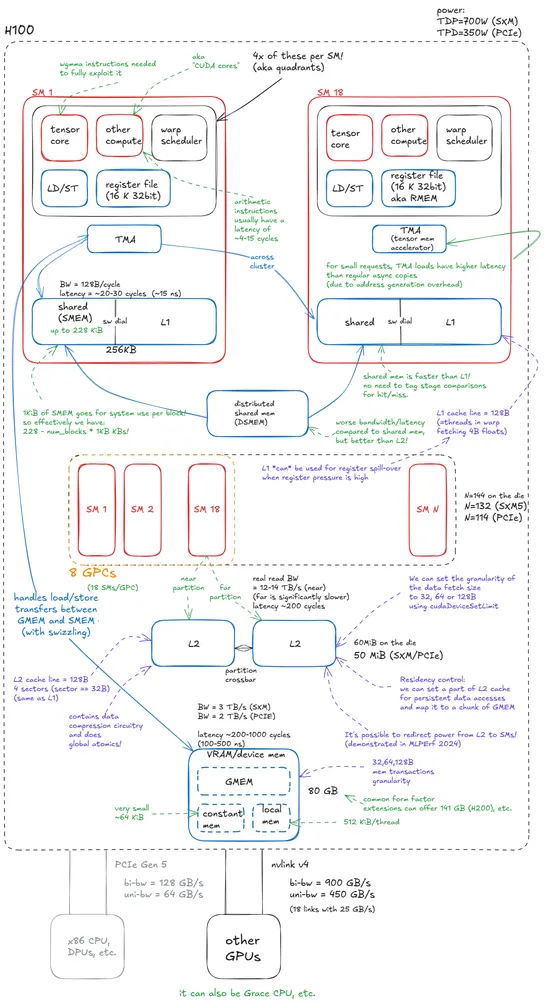
Inside NVIDIA GPUs: Anatomy of high performance matmul kernels

NVIDIA Hopper packs serious architectural tricks. At the core: **Tensor Memory Accelerator (TMA)**, **tensor cores**, and **swizzling**—the trio behind async, cache-friendly matmul kernels that flirt with peak throughput. But folks aren't stopping at cuBLAS. They're stacking new tactics: **warp-gro.. read more  
Inside NVIDIA GPUs: Anatomy of high performance matmul kernels
Link
@faun shared a link, 6 months, 4 weeks ago
FAUN.dev()

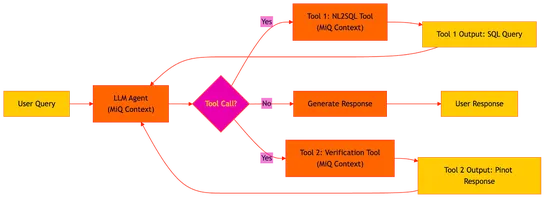
Building a Natural Language Interface for Apache Pinot with LLM Agents

MiQ plugged **Google’s Agent Development Kit** into their stack to spin up **LLM agents** that turn plain English into clean, validated SQL. These agents speak directly to **Apache Pinot**, firing off real-time queries without the usual parsing pain. Behind the scenes, it’s a slick handoff: NL2SQL .. read more  

Building a Natural Language Interface for Apache Pinot with LLM Agents
Link
@faun shared a link, 6 months, 4 weeks ago
FAUN.dev()

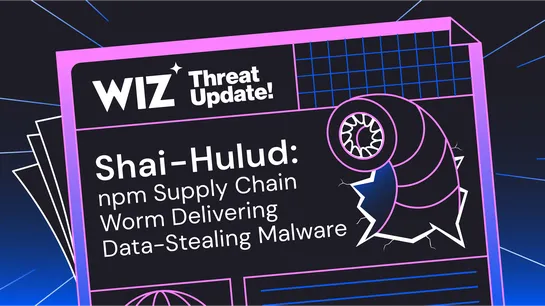
Shai-Hulud npm Supply Chain Attack

Malicious npm packages just leveled up: this one dropped a self-spreading worm that hijacks repos and leaks secrets the moment it lands. It abuses `postinstall` scripts to run TruffleHog and swipe tokens straight from your codebase. Then it uses GitHub Actions to exfiltrate the loot and auto-publis.. read more  

Shai-Hulud npm Supply Chain Attack
Link
@faun shared a link, 6 months, 4 weeks ago
FAUN.dev()

Introducing DigitalOcean Organizations, a new and comprehensive account layer

DigitalOcean just dropped **Organizations**—a real upgrade for anyone juggling multiple Teams. Think one top-level account to rule them all: centralized user control, one invoice to track, and org-wide settings for taxes, credits, and permissions... read more  

Introducing DigitalOcean Organizations, a new and comprehensive account layer
Link
@faun shared a link, 6 months, 4 weeks ago
FAUN.dev()

Observability for the Invisible: Tracing Message Drops in Kafka Pipelines

When an event drops silently in a distributed system, it is not a bug, it is an architectural blind spot. Detect, debug, and prevent message loss in Kafka-based streaming pipelines using tools like OpenTelemetry, Fluent Bit, Jaeger, and dead-letter queues. Make sure observability gaps in event strea.. read more  

Link
@faun shared a link, 6 months, 4 weeks ago
FAUN.dev()

Demystifying Log Retention in Azure

Azure logs come in three flavors: **Activity Logs**, **Diagnostic Logs**, and **Log Analytics**. Each with its own rules for retention and billing. The catch? Those differences aren’t quirks—they’re baked in... read more  

Link
@faun shared a link, 6 months, 4 weeks ago
FAUN.dev()

Top 30 Argo CD Anti-Patterns to Avoid When Adopting Gitops

A teardown of Argo CD anti-patterns calls out 28 common misfires—stuff like skipping Git for Application CRDs or stuffing Helm/Kustomize config right into Argo CD manifests. Yikes. It pushes for a cleaner setup: use **ApplicationSets** instead of rolling your own YAML, turn on **auto-sync/self-heal.. read more  

Link
@faun shared a link, 6 months, 4 weeks ago
FAUN.dev()

How FinOps Drives Value for Every Engineering Dollar

Duolingo’s FinOps crew didn’t just track cloud costs—they wired up sharp, automated observability across 100+ microservices. Real-time alerts now catch AI and infra spend spikes before they torch the budget. They sliced TTS costs by 40% with in-memory caching. Dumped pricey CloudWatch metrics for P.. read more  

How FinOps Drives Value for Every Engineering Dollar
Link
@faun shared a link, 6 months, 4 weeks ago
FAUN.dev()

What are Error Budgets? A Guide to Managing Reliability

OneUptime shows how to put **error budgets** to work—keeping feature velocity in check without tanking reliability. The goal: ship fast, stay within SLOs. They do it by tracking **burn rates**, syncing across teams, and tuning SLOs to match how users actually use the product. Less guesswork, more s.. read more  

Link
@faun shared a link, 6 months, 4 weeks ago
FAUN.dev()

v1.34: Pod Level Resources Graduated to Beta

Kubernetes v1.34 bumps **Pod Level Resources** to Beta—and flips them on by default. Now you can set CPU, memory, and hugepages limits for the whole Pod, not just per container. That means smoother scheduling, stricter resource caps, and less sidecar thrashing. **Why it matters:** This shifts Kuber.. read more  

LangChain is a modular framework designed to help developers build complex, production-grade applications that leverage large language models. It abstracts the underlying complexity of prompt management, context retrieval, and model orchestration into reusable components. At its core, LangChain introduces primitives like Chains, Agents, and Tools, allowing developers to sequence model calls, make decisions dynamically, and integrate real-world data or APIs into LLM workflows.

LangChain supports retrieval-augmented generation (RAG) pipelines through integrations with vector databases, enabling models to access and reason over large external knowledge bases efficiently. It also provides utilities for handling long-term context via memory management and supports multiple backends like OpenAI, Anthropic, and local models.

Technically, LangChain simplifies building LLM-driven architectures such as chatbots, document Q&A systems, and autonomous agents. Its ecosystem includes components for caching, tracing, evaluation, and deployment, allowing seamless movement from prototype to production. It serves as a foundational layer for developers who need tight control over how language models interact with data and external systems.