Join us

ContentUpdates and recent posts about Kata Containers..
Story
@laura_garcia shared a post, 10 months, 4 weeks ago
Software Developer, RELIANOID

🌐 DNS for Load Balancing

Looking for a simple, scalable way to distribute traffic across multiple servers? In our latest post, we explore howDNS-based load balancingworks, including: 📌 Techniques like Round Robin, Weighted, and Dynamic DNS 📌 Using DNS for failover and backup configurations 📌 Key benefits: performance, high ..
Story
@laura_garcia shared a post, 11 months ago
Software Developer, RELIANOID

🛡️ Creating a DR Environment for RELIANOID Load Balancer Clusters in Azure

Is your load balancer cluster ready for a disaster recovery scenario? Our latest 3-minute read explains how to replicate RELIANOID Load Balancer nodes to Azure usingAzure Site Recovery, covering: ✅ Infrastructure & replication setup ✅ Manual license activation for DR ✅ Failover and failback strategi..

Knowledge base Creating a DR environment for relianoid cluster using Azure Site Recovery Service
Story
@viktoriia-yarosh shared a post, 11 months ago
Freshcode

How Clojure shapes teams and products. Part 2

Curious how Clojure shapes teams and products beyond the hype? Tune into episodes 5–10 of “Clojure in Product. Would you do it again?” to hear leaders from startups to enterprises share real stories on scaling, tackling complexity, and building sustainable, high-impact software with smaller, focused teams. Discover why Clojure isn’t just a language – it’s a game-changing approach to development. Listen now and see what thoughtful tech choices can do for your business!

img (4)
Story
@laura_garcia shared a post, 11 months ago
Software Developer, RELIANOID

🚨 Cyberattack on Qantas highlights growing threats to aviation

Up to 6 million customers affected via a third-party breach – allegedly linked to Scattered Spider, a group known for social engineering and supply chain attacks. 🔍 The lesson? The weakest link is often outside the organization. ✈️ At RELIANOID, we help airlines and critical services stay protected ..

Blog quantas breach Aviation Cyber Risks and Need for Proactive Defense
Link
@faun shared a link, 11 months ago
FAUN.dev()

Asynchrony is not Concurrency

Asynchronyisn't a twin toConcurrencyin Zig. It juggles async tasks without leaning on multi-threading, letting sync and async mingle harmoniously. Concurrency craves overlap, but Zig's savvy. When resources get stingy, it smartly reverts tasks to synchronous, dodging drama like deadlocks or sudden c.. read more  

Asynchrony is not Concurrency
Link
@faun shared a link, 11 months ago
FAUN.dev()

10 Unspoken NestJS Secrets for Production at Scale

UnlockNestJSspeed by steering clear of full module preloads. This trick slashes cold start drags, cutting first request delays by up to10 seconds... read more  

Link
@faun shared a link, 11 months ago
FAUN.dev()

“A Programmer Who Reads Is Worth Two”: Tech Books for Summer 2025

Crafting an LLM from the ground up? Dive intoSebastian Raschka’s guide. It tackles everything: data wrangling to toeing the ethical line. Seasoned ML pros will nod in approval. Craving a sharp take on AI’s charming deceptions?Narayanan & Kapoor's"AI Snake Oil" spills the beans on marketing myths wit.. read more  

“A Programmer Who Reads Is Worth Two”: Tech Books for Summer 2025
Link
@faun shared a link, 11 months ago
FAUN.dev()

Understand CPU Branch Instructions Better

Branch prediction matters. Why? About a quarter of instructions are branches, and modern CPUs nail an accuracyabove 90%. Yet, those often-pesky branches can choke CPUs, stalling instruction flow. So, take a wrench to yourif-else logic. Trim indirect branches whenever you can—your CPU will thank you... read more  

Link
@faun shared a link, 11 months ago
FAUN.dev()

Containers: Everything You Need To Know

cgroupsand namespaces anchor Linux containers, isolating resources and processes like gatekeepers with a mission. On macOS and Windows, these containers ride in VMs withWSL2orLinuxKit, putting on their "welcome to the virtual world" hats. EnterrunC, executing OCI-built images with isolation flair, w.. read more  

Containers: Everything You Need To Know
Link
@faun shared a link, 11 months ago
FAUN.dev()

Crawling a billion web pages in just over 24 hours

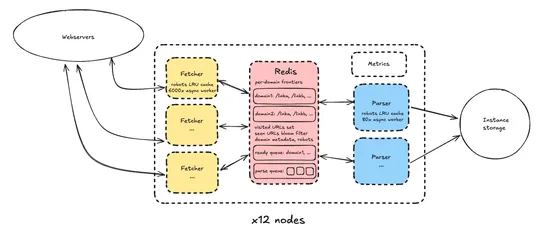
Imagine tearing through1 billion pages in a single dayon a shoestring budget. This crawler pulled it off with12 nodes and some savvy async maneuvering. But here's the kicker: it wasn’t the fetching that choked the CPU. Nope, it was the parsing. Today’s web behemoths, bloated with JavaScript and othe.. read more  

Crawling a billion web pages in just over 24 hours
Kata Containers is a Cloud Native Computing Foundation (CNCF) project designed to close the security gap between traditional Linux containers and virtual machines. Instead of sharing a single host kernel like standard containers, Kata Containers launches each pod or container inside its own lightweight virtual machine using hardware virtualization.

This approach dramatically reduces the attack surface and prevents container escape vulnerabilities, making Kata ideal for multi-tenant, untrusted, or sensitive workloads. Despite using VMs under the hood, Kata is optimized for fast startup times and integrates seamlessly with Kubernetes through the Container Runtime Interface (CRI), allowing it to be used alongside runtimes like containerd and CRI-O.

Kata Containers is commonly used in scenarios such as multi-tenant Kubernetes clusters, confidential computing, sandboxed AI workloads, serverless platforms, and agent execution environments where strong isolation is mandatory. It supports multiple hypervisors, including QEMU, Firecracker, and Cloud Hypervisor, and continues to evolve toward faster boot times, lower memory overhead, and better hardware acceleration support.