Join us

ContentUpdates and recent posts about Kata Containers..
Link
@faun shared a link, 9 months, 1 week ago
FAUN.dev()

Measuring Developer Productivity with Amazon Q Developer and Jellyfish

Amazon Q Developer now plugs into Jellyfish. Teams get a clearer view of how AI fits into the real flow of work—prompt usage, code adoption, PR throughput. Not just surface stats. The setup pipes data from AWS S3 straight into Jellyfish’s analytics engine. It tags AI users, tracks velocity gains, an.. read more  
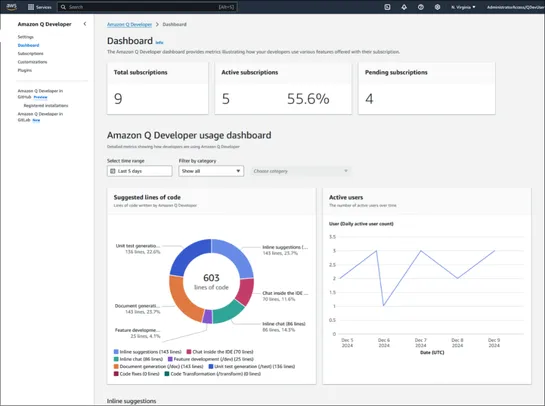
Measuring Developer Productivity with Amazon Q Developer and Jellyfish
Link
@faun shared a link, 9 months, 1 week ago
FAUN.dev()

Sandboxed to Compromised: New Research Exposes Credential Exfiltration Paths in AWS Code Interpreters

Researchers poked holes insandboxed Bedrock AgentCore code interpreters—and found a way to leak execution role credentials through theMicroVM Metadata Service (MMDS). No outside network? Doesn’t matter. The exploit dodges basic string filters in requests and lets non-agentic code swipe AWS creds to .. read more  

Link
@faun shared a link, 9 months, 1 week ago
FAUN.dev()

AWS, Microsoft and Google unite behind Linux Foundation DocumentDB database to cut enterprise costs and limit vendor lock-in

Document databases are crucial for AI apps in the gen AI era. Microsoft's open-source DocumentDB project, based on PostgreSQL, is moving to the Linux Foundation, offering a vendor-neutral, open-source alternative to MongoDB. DocumentDB's compatibility with MongoDB drivers and open source governance .. read more  

Link
@faun shared a link, 9 months, 1 week ago
FAUN.dev()

Deploy a containerized application with Kamal and Terraform

A Docker-first workflow combinesTerraformandKamalinto a lean, Elastic Beanstalk-ish alternative—without the bloat. Terraform spins up a three-tier VPC and wires it toECR. Kamal takes it from there, booting containers on a raw EC2 box: app, proxy, monitor. One script. Done... read more  

Deploy a containerized application with Kamal and Terraform
Link
@faun shared a link, 9 months, 1 week ago
FAUN.dev()

Which LLM writes the best analytical SQL?

Tinybird threw 19 top LLMs at a 200M-row GitHub dataset, testing how well they could turn plain English into solid SQL. Most models kept their syntax clean—but when it came to writing SQL that actually ran well and returned the right results, they lagged behind human pros. Messy schemas or tricky pr.. read more  

Which LLM writes the best analytical SQL?
Link
@faun shared a link, 9 months, 1 week ago
FAUN.dev()

Being on the Same Page During an Incident: Not Actually Telepathy

Collaboration in incident response is crucial for effective resolution, starting with establishing a basic compact among responders. Grounding is a process that ensures alignment and common ground is maintained throughout an incident, encompassing initial common ground, public events so far, and the.. read more  

Link
@faun shared a link, 9 months, 1 week ago
FAUN.dev()

Container Logs in Kubernetes: How to View and Collect Them

This guide shows how to wrangle container logs in Kubernetes—usingkubectl, shell tools, structured logging, and the Kubernetes Dashboard. It covers the basics and dives into how to scale up log collection and make observability less painful across clusters... read more  

Container Logs in Kubernetes: How to View and Collect Them
Link
@faun shared a link, 9 months, 1 week ago
FAUN.dev()

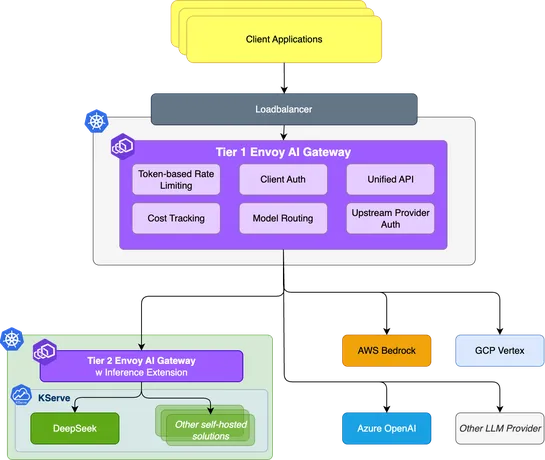
Building a Scalable, Flexible, Cloud-Native GenAI Platform with Open Source Solutions

A fresh reference architecture built withEnvoy AI GatewayandKServebrings order to the GenAI chaos. One clean interface to route requests across internal and external LLMs—locked down with policies. It’s called aTwo-Tier Gateway Architecture. Think of it like a split-brain: external API traffic goes.. read more  

Building a Scalable, Flexible, Cloud-Native GenAI Platform with Open Source Solutions
Link
@faun shared a link, 9 months, 1 week ago
FAUN.dev()

v1.34: Service Account Token Integration for Image Pulls Graduates to Beta

Kubernetes v1.34 bumpsServiceAccount token integration for Kubelet Credential Providersto beta. That means image pulls can now ditch long-lived secrets for workload-scoped tokens. Cleaner, safer, and more locked down per ServiceAccount... read more  

Link
@faun shared a link, 9 months, 1 week ago
FAUN.dev()

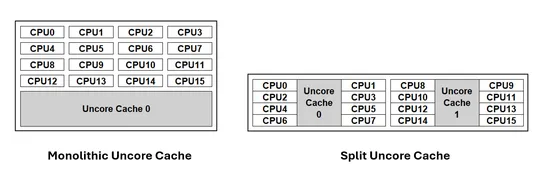
v1.34: Introducing CPU Manager Static Policy Option for Uncore Cache Alignment

Kubernetes 1.34 bumps theCPU Manager uncore-cache alignment policyto beta. It’s aimed at nodes withsplit uncore cache architectures. The policy groups all a container’s CPUs under the same uncore cache—cutting latency and easing contention for workloads that hate waiting. System shift:Kubernetes kee.. read more  

v1.34: Introducing CPU Manager Static Policy Option for Uncore Cache Alignment
Kata Containers is a Cloud Native Computing Foundation (CNCF) project designed to close the security gap between traditional Linux containers and virtual machines. Instead of sharing a single host kernel like standard containers, Kata Containers launches each pod or container inside its own lightweight virtual machine using hardware virtualization.

This approach dramatically reduces the attack surface and prevents container escape vulnerabilities, making Kata ideal for multi-tenant, untrusted, or sensitive workloads. Despite using VMs under the hood, Kata is optimized for fast startup times and integrates seamlessly with Kubernetes through the Container Runtime Interface (CRI), allowing it to be used alongside runtimes like containerd and CRI-O.

Kata Containers is commonly used in scenarios such as multi-tenant Kubernetes clusters, confidential computing, sandboxed AI workloads, serverless platforms, and agent execution environments where strong isolation is mandatory. It supports multiple hypervisors, including QEMU, Firecracker, and Cloud Hypervisor, and continues to evolve toward faster boot times, lower memory overhead, and better hardware acceleration support.