Join us

ContentUpdates and recent posts about k3d..
Story
@laura_garcia shared a post, 1 month, 1 week ago
Software Developer, RELIANOID

🚀 FinovateEurope 2026

📍 London, UK | 🗓️ 10–11 February 2026 Market-ready innovations. Executive-level networking. Inspiring insights. FinovateEurope brings together banking leaders, fintech innovators, investors, and technology providers to shape the future of financial services at a critical moment for the global fint..

finovate europe 2026 london relianoid
News FAUN.dev() Team
@kala shared an update, 1 month, 1 week ago
FAUN.dev()

This Is the First AI That Helped Build Itself - Meet GPT-5.3-Codex

GPT-5.3-Codex

GPT-5.3-Codex, an advanced model, enhances coding performance and reasoning, operating 25% faster than its predecessor. It excels in industry benchmarks, supports the software lifecycle, and can autonomously build complex applications. The model is available on multiple platforms with plans for API access.

This Is the First AI That Helped Build Itself - Meet GPT-5.3-Codex
 Activity
@kala added a new tool GPT-5.3-Codex , 1 month, 1 week ago.
Story
@laura_garcia shared a post, 1 month, 2 weeks ago
Software Developer, RELIANOID

🔐 CISO Sydney 2026

📍 Sydney, Australia | 🗓 10–11 February 2026 CISO Sydney returns for its 5th edition, bringing together New South Wales’ most senior Information Security leaders to explore how cybersecurity can truly enable business growth. From AI-driven threats and shared risk responsibility to culture-first secur..

ciso sydney 2026 relianoid
 Activity
@nelly96 added a new tool GPTHuman , 1 month, 2 weeks ago.
Story
@laura_garcia shared a post, 1 month, 2 weeks ago
Software Developer, RELIANOID

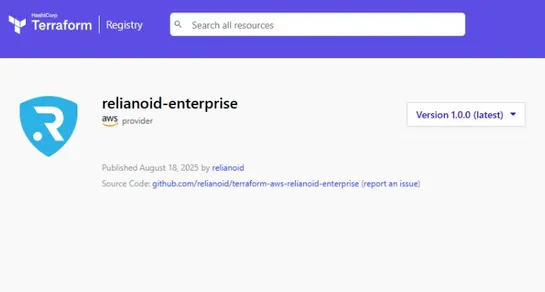
Want to deploy RELIANOID Load Balancer Enterprise Edition v8 on AWS using Terraform in a clean, automated way?

We’ve got you covered. In this step-by-step guide, you’ll learn how to: Use the official Terraform module from the Terraform Registry Automatically provision VPC, subnet, security groups, and EC2 Deploy the RELIANOID Enterprise Edition AMI Access the VM via SSH and Web GUI Easily destroy all resourc..

terraform_relianoid_enterprise_img2
Story Keploy Team
@sancharini shared a post, 1 month, 2 weeks ago

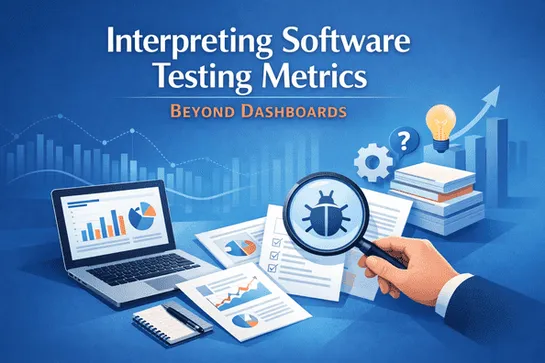
Interpreting Software Testing Metrics Beyond Dashboards

Learn how to interpret software testing metrics beyond dashboards, turning raw data into actionable insights that improve release decisions and reduce risk.

Interpreting Software Testing Metrics Beyond Dashboards
Story
@idjuric660 shared a post, 1 month, 2 weeks ago
Technical Content Writer, Mailtrap

5 Best Email API for Python Developers Tested & Compared

The best email APIs for Python developers are Mailtrap, Mailgun, SendGrid, Amazon SES, and Postmark. SDK quality & framework compatibility All five providers offerPythonSDKs and they’re compatible with popular frameworks. I tested each withDjango,Flask, and FastAPI to assess real-world integration. ..

 Activity
@jordanunix created an organization DevOpsDayLA , 1 month, 2 weeks ago.
k3d is an open-source utility designed to simplify running Kubernetes locally by wrapping K3s (Rancher’s lightweight Kubernetes distribution) inside Docker containers. Instead of creating virtual machines, k3d uses Docker as the execution layer, allowing developers to spin up multi-node Kubernetes clusters in seconds using minimal system resources.

k3d is especially popular for local development, CI pipelines, demos, and testing Kubernetes-native applications. It supports advanced setups such as multi-node clusters, load balancers, custom container registries, port mappings, and volume mounts, while remaining easy to tear down and recreate.

Because it uses K3s, k3d inherits a simplified control plane, bundled components, and reduced memory footprint compared to full Kubernetes distributions. This makes it ideal for developers who want a realistic Kubernetes environment without the overhead of tools like Minikube or full VM-based clusters.

k3d integrates cleanly with common Kubernetes workflows and tools such as kubectl, Helm, Skaffold, and Argo CD. It is frequently used to validate manifests, test Helm charts, and simulate production-like environments locally before deploying to cloud or on-prem clusters.