Join us

ContentUpdates and recent posts about k3d..
Link
@varbear shared a link, 1 month ago
FAUN.dev()

Thoughts on the job market in the age of LLMs

The job market for AI professionals is challenging due to the high demand for senior talent and the importance of proving oneself as a junior employee. Hiring practices in AI are constantly evolving with the complexity and pace of progress in language models. Open-source contributions and meaningful.. read more  

Link
@kaptain shared a link, 1 month ago
FAUN.dev()

The State of Java on Kubernetes 2026: Why Defaults are Killing Your Performance

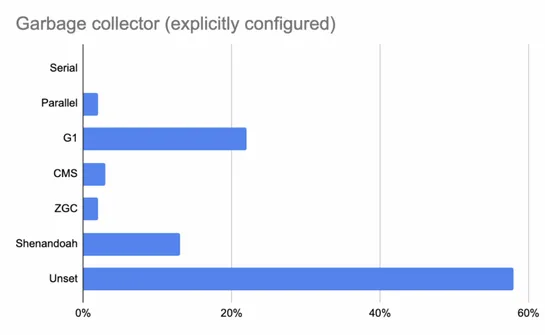
Akamas just dropped fresh numbers: over60% of Java apps running on Kubernetesstick with default JVM settings. That means sluggish memory use, GC thrash, and CPUs getting choked out. Even with "container-friendly" Java builds out there, most teams still skip setting GC types or heap sizes. Kubernetes.. read more  

The State of Java on Kubernetes 2026: Why Defaults are Killing Your Performance
Link
@kaptain shared a link, 1 month ago
FAUN.dev()

LLMs on Kubernetes: Same Cluster, Different Threat Model

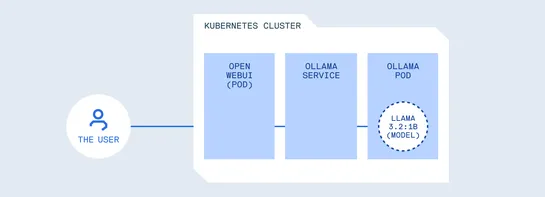
Running LLMs on Kubernetes opens up a new can of worms - stuff infra hardening won’t catch. You need a policy-smart gateway to vet inputs, lock down tool use, and whitelist models. No shortcuts. This post drops a reference gateway build usingmirrord(for fast, in-cluster tinkering) andCloudsmith(to t.. read more  

LLMs on Kubernetes: Same Cluster, Different Threat Model
Link
@kaptain shared a link, 1 month ago
FAUN.dev()

Zero-Downtime Ingress Controller Migration in Kubernetes

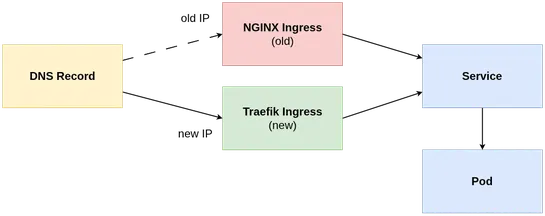
Ingress-nginxis heading for the exits - end-of-life drops March 2026. That puts Kubernetes operators on the hook to swap in a new ingress controller. The migration path? Run both old and new in parallel. Use DNS cutover. Point explicitly with Ingress classes. Done right, the switchover hits zero dow.. read more  

Zero-Downtime Ingress Controller Migration in Kubernetes
Link
@kaptain shared a link, 1 month ago
FAUN.dev()

Migrating from Slurm to Kubernetes

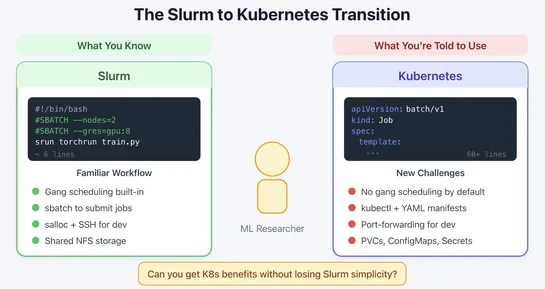
SkyPilot drops a clean interface that blendsSlurmwithKubernetes. AI/ML teams get to keep their Slurm-style comforts - job scripts, gang scheduling, GPU guarantees, interactive workflows - but pick up Kubernetes perks like container isolation and rich ecosystem hooks. It handles the messy bits: pods,.. read more  

Migrating from Slurm to Kubernetes
Link
@kala shared a link, 1 month ago
FAUN.dev()

Building a TUI is easy now

Hatchet usedClaude Code, a terminal-native coding agent, to build and ship a real TUI-based workflow manager - fast. Like, days-fast. Powered by theCharm stack(Bubble Tea, Lip Gloss, Huh), it leans hard into CLI-heavy development. Claude Code handled live testing intmux, whipped up frontend views fr.. read more  

Building a TUI is easy now
Link
@kala shared a link, 1 month ago
FAUN.dev()

GPT-5.2 derives a new result in theoretical physics

GPT-5.2 Pro spotted something wild: a nonzero gluon scattering amplitude in the half-collinear regime. That’s supposed to vanish, according to standard QFT gospel. Not anymore. OpenAI’s own model backed it up with a formal proof. Humans triple-checked it analytically. And yep - it holds. Now it’s bl.. read more  

GPT-5.2 derives a new result in theoretical physics
Link
@kala shared a link, 1 month ago
FAUN.dev()

Why Trying to Secure OpenClaw is Ridiculous

OpenClaw, an open-source autonomous AI agent with full device access, racked up 179K GitHub stars - and walked straight into a security nightmare. It shipped wide open: default ports exposed to the internet, its plugin hub laced with malicious packages. Slapped-on fixes followed, warning labels, Vir.. read more  

Why Trying to Secure OpenClaw is Ridiculous
Link
@kala shared a link, 1 month ago
FAUN.dev()

YOLO Mode: Hidden Risks in Claude Code Permissions

A scrape of 18,470 Claude Code configs on GitHub shows a pattern: developers are handing their AI agents the keys to the castle. Unrestricted file, shell, and network accessis common. Among them: - 21.3% let Claude runcurl - 14.5% allowarbitrary Python execution - 19.7% give itgit pushprivileges Tha.. read more  

YOLO Mode: Hidden Risks in Claude Code Permissions
Link
@kala shared a link, 1 month ago
FAUN.dev()

Adventures in Neural Rendering

A graphics dev took a swing at encoding rendering signals - radiance, irradiance, depth, AO, BRDFs - using tightMLPs in HLSL. They benchmarked size, storage, and runtime cost. Turns out, MLPs beatL2 spherical harmonicsfor packing radiance. But they stumble on irradiance and specular BRDFs. Bring inR.. read more  

Adventures in Neural Rendering
k3d is an open-source utility designed to simplify running Kubernetes locally by wrapping K3s (Rancher’s lightweight Kubernetes distribution) inside Docker containers. Instead of creating virtual machines, k3d uses Docker as the execution layer, allowing developers to spin up multi-node Kubernetes clusters in seconds using minimal system resources.

k3d is especially popular for local development, CI pipelines, demos, and testing Kubernetes-native applications. It supports advanced setups such as multi-node clusters, load balancers, custom container registries, port mappings, and volume mounts, while remaining easy to tear down and recreate.

Because it uses K3s, k3d inherits a simplified control plane, bundled components, and reduced memory footprint compared to full Kubernetes distributions. This makes it ideal for developers who want a realistic Kubernetes environment without the overhead of tools like Minikube or full VM-based clusters.

k3d integrates cleanly with common Kubernetes workflows and tools such as kubectl, Helm, Skaffold, and Argo CD. It is frequently used to validate manifests, test Helm charts, and simulate production-like environments locally before deploying to cloud or on-prem clusters.