Join us

ContentUpdates and recent posts about k3d..
 Activity
@yelbur started using tool Node.js , 2 weeks, 2 days ago.
 Activity
@yelbur started using tool Go , 2 weeks, 2 days ago.
 Activity
@yelbur started using tool Fedora , 2 weeks, 2 days ago.
 Activity
@yelbur started using tool Docker , 2 weeks, 2 days ago.
 Activity
@yelbur started using tool BigQuery , 2 weeks, 2 days ago.
Link
@kala shared a link, 2 weeks, 4 days ago
FAUN.dev()

Realtime Prompting Guide

OpenAI shipsgpt-realtimeand declares GA for theRealtime API. It's a speech-to-speech model that tightens instruction-following, steadiestool calling, and lifts voice fidelity. Latency drops. True realtime agents become possible. The release prescribesprompt skeletons,JSON envelopetool outputs,sessio.. read more  

Realtime Prompting Guide
Link
@kala shared a link, 2 weeks, 4 days ago
FAUN.dev()

The Pentagon is making a mistake by threatening Anthropic

Anthropic's Claude Gov, optimized for national security uses, has fewer restrictions than regular versions. The Pentagon is threatening retaliation if Anthropic does not waive these restrictions by Friday, including invoking the Defense Production Act or declaring Anthropic a supply chain risk. Anth.. read more  

Link
@kala shared a link, 2 weeks, 4 days ago
FAUN.dev()

Do you need an MCP to build your native app?

Do you need an MCP to build your native app? Surprisingly, modern agents succeed either way. The real difference is how much time, cost, and context you waste along the way... read more  

Do you need an MCP to build your native app?
Link
@kala shared a link, 2 weeks, 4 days ago
FAUN.dev()

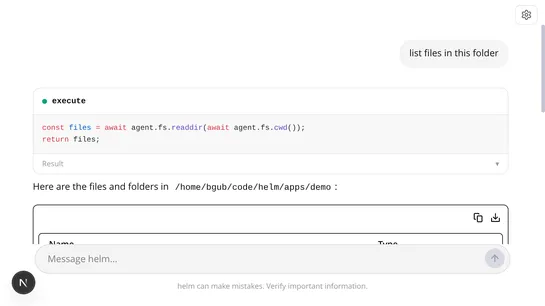
Introducing helm

helm usesTypeScripttypes to registerskillsas typed functions with structured I/O. Permissions follow a clear precedence: exact→wildcard→skill→global. Agents get a keywordsearchtool and a code-execution tool that runs JS inside anSESsandbox. A recursiveproxyforwards calls overIPCto the parent, which .. read more  

Introducing helm
Link
@kaptain shared a link, 2 weeks, 4 days ago
FAUN.dev()

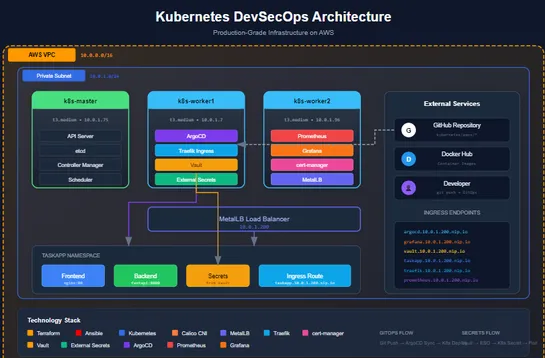
I Built a Production-Grade Kubernetes Platform in 48 Hours.

A dev built a production-grade Kubernetes platform in 48 hours, encountering challenges and solutions along the way. The setup included multiple layers such as infrastructure, cluster, platform, delivery, and observability, each requiring troubleshooting and adjustments. The process involved deployi.. read more  

I Built a Production-Grade Kubernetes Platform in 48 Hours.
k3d is an open-source utility designed to simplify running Kubernetes locally by wrapping K3s (Rancher’s lightweight Kubernetes distribution) inside Docker containers. Instead of creating virtual machines, k3d uses Docker as the execution layer, allowing developers to spin up multi-node Kubernetes clusters in seconds using minimal system resources.

k3d is especially popular for local development, CI pipelines, demos, and testing Kubernetes-native applications. It supports advanced setups such as multi-node clusters, load balancers, custom container registries, port mappings, and volume mounts, while remaining easy to tear down and recreate.

Because it uses K3s, k3d inherits a simplified control plane, bundled components, and reduced memory footprint compared to full Kubernetes distributions. This makes it ideal for developers who want a realistic Kubernetes environment without the overhead of tools like Minikube or full VM-based clusters.

k3d integrates cleanly with common Kubernetes workflows and tools such as kubectl, Helm, Skaffold, and Argo CD. It is frequently used to validate manifests, test Helm charts, and simulate production-like environments locally before deploying to cloud or on-prem clusters.