Send Emails with Lovable and Mailtrap

Learn how to integrate Mailtrap with your Lovable application to send transactional emails, manage contacts, and create powerful email workflows without writing complex code.
Join us
 Updates and recent posts about Grafana Tempo..
Learn how to integrate Mailtrap with your Lovable application to send transactional emails, manage contacts, and create powerful email workflows without writing complex code.


As cyber threats continue to evolve, traditional firewalls that operate at the network or transport layers are no longer sufficient. That’s where Application-Level Firewalls (ALFs) come in — offering deep inspection, application-aware filtering, and real-time protection against sophisticated attacks..

The Cybersecurity and Infrastructure Security Agency (CISA), alongside 11 international partners, has released the ‘Secure by Demand’ guide to help OT owners and operators integrate robust security measures into their procurement processes. The guide highlights 12 essential security elements that cr..

When developers think of the global adoption of Clojure, they often cite giants like Netflix, Walmart, or Nubank. There is, however, a thriving Clojure ecosystem that has been stealthily powering innovation from an unsuspecting part of the world: Ukraine. With over 633 tech companies and some unicor..

On August 21, 2025, DevOps practitioners and tech leaders will gather to share insights on CI/CD, SRE, DevSecOps, AI/MLOps, and CloudOps. 🔹 RELIANOID will be there—showcasing how our platform empowers secure, scalable, observability-driven DevOps operations. #DevOpsDays#DevOps#SRE#DevSecOps#CloudOps..

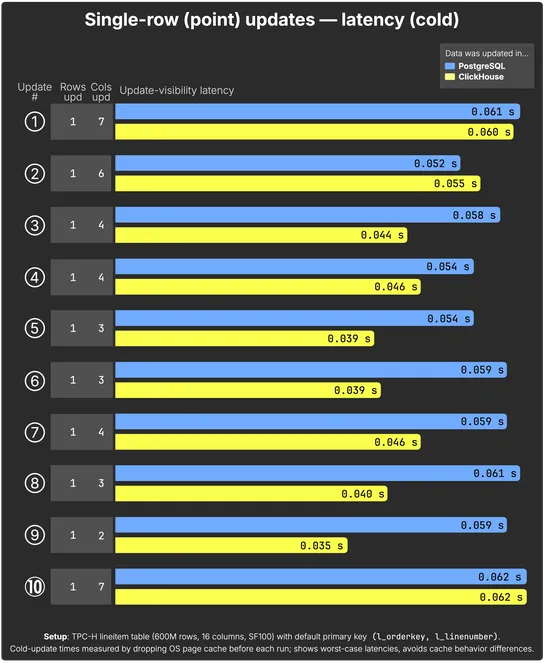
ClickHouse just leveled up. Its new SQL-standardUPDATEis fast—PostgreSQL-fast on single-row changes, and up to4,000×faster on bulk updates. That’s pure columnar speed plus parallelism in the driver’s seat. Yes, both use MVCC. But unlike Postgres, ClickHouse dodges transaction bloat by default. That.. read more
An indie dev just went full mad scientist and built a full-stack, transformer-powered search engine—solo. They indexed 280 million pages from scratch with hundreds of crawlers, a fully sharded backend, and serious metal:64 RocksDB nodes,200 CPU cores, and82 TB of SSD. Under the hood: custom HTML pa.. read more
AWS ECR is an OCI repository supporting different types of artifacts, from Docker images to machine learning models, allowing for simplified management and unified access. Users can interact with ECR using CLI tools like ORAS, Helm, and Terraform, providing integration with CI/CD pipelines for effic.. read more
Node.js just got spicier. You can now runTypeScript files out of the box—no transpile step, no weird configs. It’s experimental, and only supports a trimmed-down syntax, but still: big move. Elsewhere, it’s tacklingburst fs eventswith AsyncIterator support, tightening upCJS/ESM cycle resolution, an.. read more
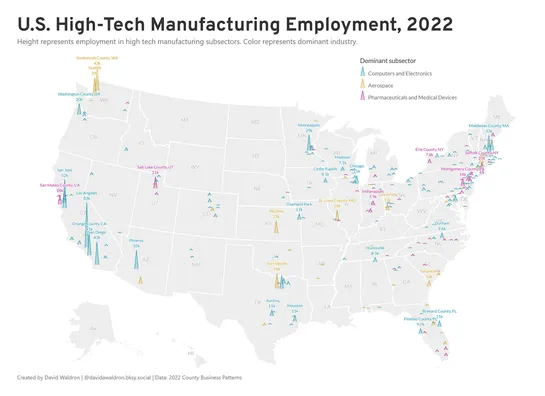
High-tech manufacturing used to employ 2.8% of U.S. workers back in 1990. Now it’s down to 1.3%. The sharpest losses hitcomputers, electronics, and aerospace—industries that once defined the future. Onlypharma and med devicesmanaged to buck the trend, adding 189,000 jobs while the rest bled over a .. read more