Join us

ContentUpdates and recent posts about GPT..
Link
@faun shared a link, 9 months, 3 weeks ago
FAUN.dev()

I used NotebookLM to learn a new programming language, and it actually worked

A CS student taught themselvesSwiftusingNotebookLM, Google’s AI that sticks to sources you feed it. They pulled in handpicked docs, YouTube transcripts, and visual mind maps—all dropped into a custom notebook. No generic guesses. No hallucinated trivia. Just clean, source-grounded answers on syntax .. read more  

Link
@faun shared a link, 9 months, 3 weeks ago
FAUN.dev()

GenAI vs. Agentic AI: What Developers Need to Know

Docker’s getting serious about agent-based AI. It just rolled out tools tailor-made for building modular, goal-chasing LLM systems. Model Runnerlets devs spin up LLMs locally—zero cloud, zero wait.Offloadtaps cloud GPUs when local ones tap out. And theMCP Gatewaypipes in external tools without duct.. read more  

Link
@faun shared a link, 9 months, 3 weeks ago
FAUN.dev()

How we discovered, and recovered from, Postgres corruption on the homeserver

PostgreSQL index corruption silently broke the matrix.org homeserver. State groups were corrupted, active data was deleted, and restoring consistency took a week of forensic debugging and reindexing. The root cause? Unclear. Hardware, maybe. But not Postgres or Synapse. The team’s fix involved disab.. read more  

Story
@laura_garcia shared a post, 9 months, 3 weeks ago
Software Developer, RELIANOID

📌 New: netstat Command Cheatsheet

Need to check active connections, monitor listening ports, or debug network issues? The Linux netstat command remains a go-to tool for quick and effective diagnostics. We’ve created a clear, quick-reference cheatsheet with: 🔍 Essential command flags 📊 Real-world use cases ⚙️ Integration tips for REL..

The_Linux_netstat_command_Cheatsheet
Link
@faun shared a link, 9 months, 3 weeks ago
FAUN.dev()

Building Reproducible ML Systems with Apache Iceberg and SparkSQL

Apache Iceberg +SparkSQLbringsACID transactions,schema evolution, andtime travelto data lakes. That means ML pipelines finally get reproducibility and consistency without the hacks. Iceberg’s snapshot-based guts track every version, handle parallel writes without stepping on toes, and keep training .. read more  

Building Reproducible ML Systems with Apache Iceberg and SparkSQL
Link
@faun shared a link, 9 months, 3 weeks ago
FAUN.dev()

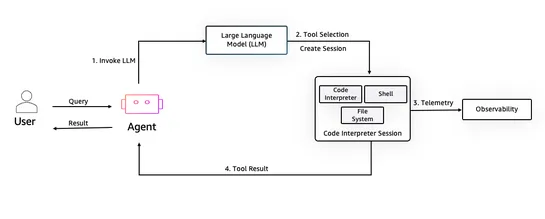
Introducing the Amazon Bedrock AgentCore Code Interpreter

AWS just droppedAgentCore Code Interpreter—a managed box where AI agents can run Python, JavaScript, and TypeScript in isolation. Think of it as a secure playground with autoscaling, controlled file access, and deep hooks into frameworks likeLangChain,LangGraph,Strands, andCrewAI. Big picture: This.. read more  

Introducing the Amazon Bedrock AgentCore Code Interpreter
Link
@faun shared a link, 9 months, 3 weeks ago
FAUN.dev()

How to Build an Agent

A new framework lays out six sharp steps for building agents that actually ship. It kicks off with a grounded task, locks in SOPs, then tunes high-leverage prompts. The real choke point? LLM reasoning. Everything else—architecture, data flow, testing—is scoped to chase tight, measurable gains there... read more  

Link
@faun shared a link, 9 months, 3 weeks ago
FAUN.dev()

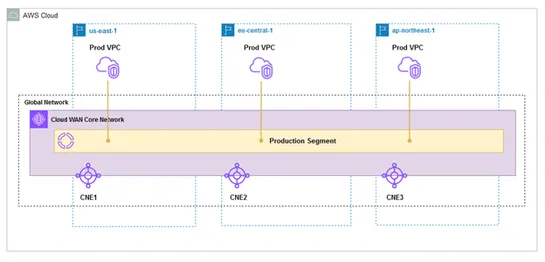
Using generative AI for building AWS networks

Amazon Q Developer CLI and Bedrock just leveled up. You can now spin up AWS Cloud WANs and VPCs using plain English. Type what you need—get full deployments, phased migrations, and IaC for both CloudFormation and Terraform. Agents handle the whole stack: network discovery, rollout, and config. No m.. read more  

Using generative AI for building AWS networks
Link
@faun shared a link, 9 months, 3 weeks ago
FAUN.dev()

AWS AgentCore: The Overlooked Privilege Escalation Path in Bedrock’s AI Tooling

AWS Bedrock AgentCore just got a new trick: agents (and anyone IAM-blessed) can now runCode Interpreters. Think arbitrary code execution—with custom or predefined IAM roles. But here’s the kicker: these interpreters skipresource policies, lean on control plane APIs, and don’t log squat—unlessyou fl.. read more  

Link
@faun shared a link, 9 months, 3 weeks ago
FAUN.dev()

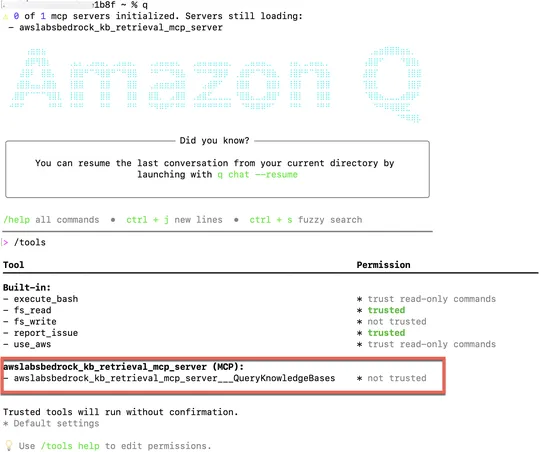
Building AIOps with Amazon Q Developer CLI and MCP Server

Amazon Q Developer CLI now hooks into Model Context Protocol (MCP) servers, unlocking AIOps tasks—incident detection, remediation, security fixes—through plain English. Natural language in, real-time control out. It fetches data and talks to your AWS stack via a low-code UI. Tinkerable, scriptable,.. read more  

Building AIOps with Amazon Q Developer CLI and MCP Server
GPT (Generative Pre-trained Transformer) is a deep learning model developed by OpenAI that has been pre-trained on massive amounts of text data using unsupervised learning techniques. GPT is designed to generate human-like text in response to prompts, and it is capable of performing a variety of natural language processing tasks, including language translation, summarization, and question-answering. The model is based on the transformer architecture, which allows it to handle long-range dependencies and generate coherent, fluent text. GPT has been used in a wide range of applications, including chatbots, language translation, and content generation.

GPT is a family of language models that have been trained on large amounts of text data using a technique called unsupervised learning. The model is pre-trained on a diverse range of text sources, including books, articles, and web pages, which allows it to capture a broad range of language patterns and styles. Once trained, GPT can be fine-tuned on specific tasks, such as language translation or question-answering, by providing it with task-specific data.

One of the key features of GPT is its ability to generate coherent and fluent text that is indistinguishable from human-generated text. This is achieved by training the model to predict the next word in a sentence given the previous words. GPT also uses a technique called attention, which allows it to focus on relevant parts of the input text when generating a response.

GPT has become increasingly popular in recent years, particularly in the field of natural language processing. The model has been used in a wide range of applications, including chatbots, content generation, and language translation. GPT has also been used to create AI-generated stories, poetry, and even music.