Join us

ContentUpdates and recent posts about GPT..
Link
@faun shared a link, 9 months, 2 weeks ago
FAUN.dev()

Introducing Approvals in Pulumi ESC

Pulumi ESC just leveled up withApprovals—structured reviews for environment config changes, straight from Console, CLI, SDK, or VS Code. Think pull requests, but for your infra settings. No more YOLO updates. Teams can now lock down config changes with required sign-offs. More control. Cleaner logs.. read more  
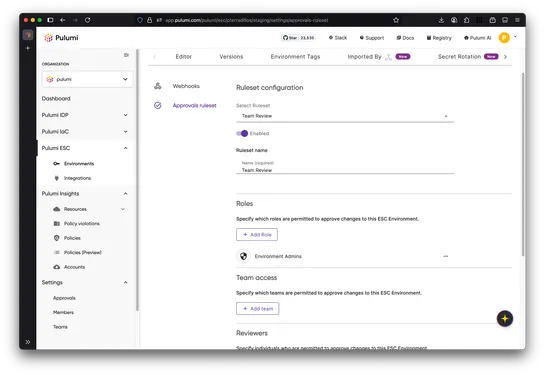
Introducing Approvals in Pulumi ESC
Link
@faun shared a link, 9 months, 2 weeks ago
FAUN.dev()

Kali Linux can now run in Apple containers on macOS systems

Cybersecurity professionals can now launch Kali Linux in a virtualized container on macOS Sequoia using Apple's new containerization framework. Apple announced a new framework at WWDC 2025, allowing Apple Silicon hardware to run isolated Linux distros in a virtualized environment. There are limitati.. read more  

Link
@faun shared a link, 9 months, 2 weeks ago
FAUN.dev()

Cloud native is not just for hyperscalers

CNCF just dropped anAI workload conformance program, built like the Kubernetes one—so AI tools play nice across clusters. Portability, meet your referee. It’s tightening the loop betweenOpenTelemetry and OpenSearch, turning ad-hoc hacks into actual cross-project coordination. AndBackstage and GitOp.. read more  

Cloud native is not just for hyperscalers
Link
@faun shared a link, 9 months, 2 weeks ago
FAUN.dev()

MariaDB Kubernetes Operator 25.08.0 Adds AI Vector Support and Disaster Recovery Enhancements

MariaDB Kubernetes Operator 25.08.0 drops some real upgrades. First up:physical backups. Now supported through native MariaDB tools and Kubernetes CSI snapshots—huge win if you're dealing with chunky datasets and tight recovery windows. It alsodefaults to MariaDB 11.8, which brings in anative vect.. read more  

MariaDB Kubernetes Operator 25.08.0 Adds AI Vector Support and Disaster Recovery Enhancements
Link
@faun shared a link, 9 months, 2 weeks ago
FAUN.dev()

How I eliminated networking complexity

A fresh pattern’s gaining traction:Docker + Tailscale sidecarsreplacing old-school reverse proxies and clunky VPNs. Each service runs as its ownmesh-routed node, containerized and independent. The trick?Network namespace sharing.App containers hook into the Tailscale mesh with no exposed ports, no .. read more  

Link
@faun shared a link, 9 months, 2 weeks ago
FAUN.dev()

AI inference supercharges on Google Kubernetes Engine

Google Cloud's pushingGKEbeyond container orchestration, framing it as an AI inference engine. Meet the new crew: theInference Gateway(smart load balancer, talks models and hardware),custom compute classes, and aDynamic Workload Schedulerthat tunes for both speed and spend. The setup handles GPU an.. read more  

Link
@faun shared a link, 9 months, 2 weeks ago
FAUN.dev()

Kubernetes Will Solve YAML Headaches with KYAML

Kubernetes is eyeing a YAML remix. Version 1.34 may bring inKYAML—a stricter, YAML-compatible subset built to cut down on sloppy configs and sneaky formatting bugs. KYAML keeps the good parts: comments, trailing commas, unquoted keys. But it dumps YAML’s whitespace drama. Existing manifests and Hel.. read more  

Kubernetes Will Solve YAML Headaches with KYAML
Link
@faun shared a link, 9 months, 2 weeks ago
FAUN.dev()

Kubernetes Observability: Pillars, Tools & Best Practices

Kubernetes observability isn’t just about catching metrics or tailing logs. It’s about stitching togethermetrics, logs, and tracesto see what’s actually happening—across services, over time, and through the chaos. Thing is, Kubernetes doesn’t come with this built in. So teams hack together toolchai.. read more  

Link
@faun shared a link, 9 months, 2 weeks ago
FAUN.dev()

Cloudera Acquires Taikun for Managing Kubernetes and Cloud

Cloudera acquired Taikun for seamless deployment of data and AI workloads in any environment. This move reinforces Cloudera's commitment to flexibility and innovation in managing complex IT infrastructures... read more  

Link
@faun shared a link, 9 months, 2 weeks ago
FAUN.dev()

Introducing Headlamp AI Assistant

Headlamp just dropped an AI Assistant plugin that foldsLLM-driven actions and queriesstraight into the Kubernetes UI. It taps intocontext-aware promptsto spot issues, restart deployments, and hunt down flaky pods—without leaving the interface. System shift:This pushes Kubernetes toward intent-based.. read more  

GPT (Generative Pre-trained Transformer) is a deep learning model developed by OpenAI that has been pre-trained on massive amounts of text data using unsupervised learning techniques. GPT is designed to generate human-like text in response to prompts, and it is capable of performing a variety of natural language processing tasks, including language translation, summarization, and question-answering. The model is based on the transformer architecture, which allows it to handle long-range dependencies and generate coherent, fluent text. GPT has been used in a wide range of applications, including chatbots, language translation, and content generation.

GPT is a family of language models that have been trained on large amounts of text data using a technique called unsupervised learning. The model is pre-trained on a diverse range of text sources, including books, articles, and web pages, which allows it to capture a broad range of language patterns and styles. Once trained, GPT can be fine-tuned on specific tasks, such as language translation or question-answering, by providing it with task-specific data.

One of the key features of GPT is its ability to generate coherent and fluent text that is indistinguishable from human-generated text. This is achieved by training the model to predict the next word in a sentence given the previous words. GPT also uses a technique called attention, which allows it to focus on relevant parts of the input text when generating a response.

GPT has become increasingly popular in recent years, particularly in the field of natural language processing. The model has been used in a wide range of applications, including chatbots, content generation, and language translation. GPT has also been used to create AI-generated stories, poetry, and even music.