Join us

ContentUpdates and recent posts about GPT..
Link
@faun shared a link, 9 months ago
FAUN.dev()

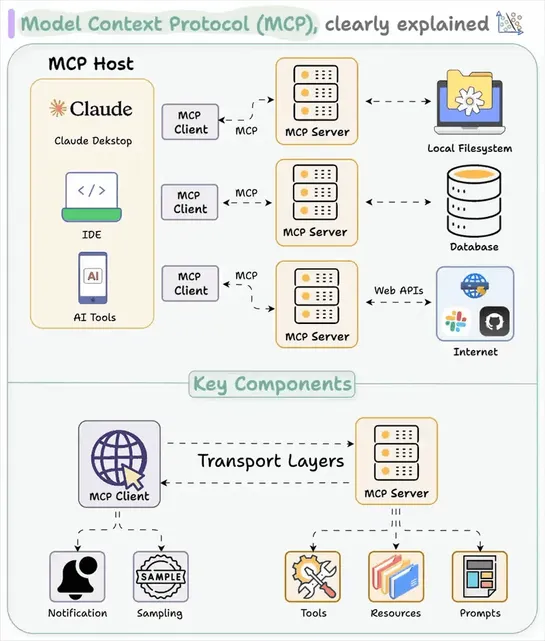
Tiny Agents in Python: a MCP-powered agent in ~70 lines of code

A new demo walks through buildingTiny Agents in Python—just ~70 lines using theModel Context Protocol (MCP). No boilerplate. Just clean LLM-to-tool hookups with standardized agent configs. Agents plug into multiple MCP servers out of the box—from local filesystems to Playwright browsers—and handle .. read more  
Link
@faun shared a link, 9 months ago
FAUN.dev()

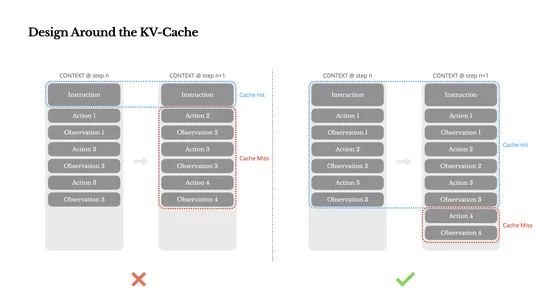
Context Engineering for AI Agents: Lessons from Building Manus

Failures make great teachers—especially for LLMs. Stuffing failed attempts right into the prompt helps agents recalibrate. It nudges their internal priors, cuts down on repeat mistakes, and sparks smarter behavior... read more  

Context Engineering for AI Agents: Lessons from Building Manus
Link
@faun shared a link, 9 months ago
FAUN.dev()

MCP Vulnerabilities Every Developer Should Know

MCP’s blowing up across platforms—but the security? Still sketchy. Think tool description injection. Botched OAuth. Open doors to supply chain attacks. The new MCP 2025-06-18 spec tries to clean house (no token passthrough, mandatory user consent), but most real-world setups either drag their feet .. read more  

MCP Vulnerabilities Every Developer Should Know
Link
@faun shared a link, 9 months ago
FAUN.dev()

Is GPT-5 really worse than GPT-4o? Ars puts them to the test.

OpenAI walked back its latest release after users flaggedGPT-5for sounding flat, hallucinating more, and losing creative spark. The fix? Rolling back to the friendlierGPT-4o. Head-to-head tests told a nuanced story:GPT-5nailed accuracy and structure across most prompts. But when the task called for.. read more  

Is GPT-5 really worse than GPT-4o? Ars puts them to the test.
Link
@faun shared a link, 9 months ago
FAUN.dev()

Building AI Products In The Probabilistic Era

Modern AI broke the rulebook. By spitting outstochastic outputs from unbounded inputs, it flipped software dev from a game of precision to one of probability. Old tools—funnels, SLO dashboards, crisp A/B tests—don’t quite fit anymore. They were built for systems that behaved. Today’s AI stacks mov.. read more  

Building AI Products In The Probabilistic Era
Link
@faun shared a link, 9 months ago
FAUN.dev()

Building an AI-Powered E-commerce Chat Assistant with MongoDB

freeCodeCamp dropped a new course that walks devs through building an AI-powered shopping agent from scratch. It ties togetherLangGraphfor orchestration,Geminifor reasoning, andMongoDB Atlasas the vector memory layer. The build covers aNode.js backend, aReact frontend, and wires inmulti-step agent .. read more  

Building an AI-Powered E-commerce Chat Assistant with MongoDB
Link
@faun shared a link, 9 months ago
FAUN.dev()

Myth Or Reality: Will AI Replace Computer Programmers?

Generative AI tools likeGPT-4oandClaude Sonnetnow handle the grunt work—fixing bugs, cranking out code, writing docs—with scary accuracy. Amazon and Anthropic are already hinting at hiring fewer engineers. But the jobs aren’t vanishing; they’re mutating... read more  

Myth Or Reality: Will AI Replace Computer Programmers?
Link
@faun shared a link, 9 months ago
FAUN.dev()

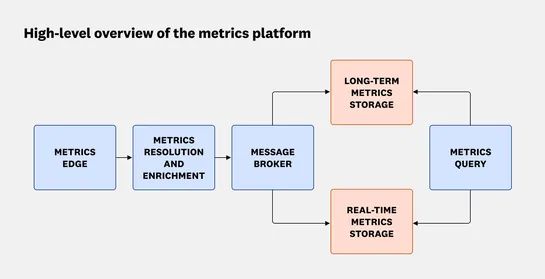
Evolving our real-time timeseries storage again: Built in Rust for performance at scale

Datadog just dropped its 6th-gen real-time timeseries engine:RTDB. It's built inRust, sharded per core, and backed by LSM trees that don’t blink under pressure. The secret sauce? A custom storage engine calledMonocle—optimized for high-cardinality chaos and bursty workloads. It’s pulling60x faster .. read more  

Evolving our real-time timeseries storage again: Built in Rust for performance at scale
Link
@faun shared a link, 9 months ago
FAUN.dev()

Can LLMs replace on call SREs today?

ClickHouse ran five LLMs through an autonomous root cause gauntlet using OpenTelemetry data. None nailed it solo. OpenAI’s o3 and Claude Sonnet 4 came closest. GPT-4.1 was the cheapest brain on the block. Things got weird under the hood. Token usage spiked unpredictably. Queries slammed observabili.. read more  

Can LLMs replace on call SREs today?
Link
@faun shared a link, 9 months ago
FAUN.dev()

Best Linux distro for developers of 2025

TechRadar rounds up the best Linux distros for devs.Manjarodelivers Arch power without the pain.DebianandUbuntu LTShold steady for those who put uptime over edge.Fedorakeeps the new stuff flowing. Solusrolls with a tight curation hand—smooth updates, no chaos.Mocaccinoaims at Gentoo lovers who want.. read more  

Best Linux distro for developers of 2025
GPT (Generative Pre-trained Transformer) is a deep learning model developed by OpenAI that has been pre-trained on massive amounts of text data using unsupervised learning techniques. GPT is designed to generate human-like text in response to prompts, and it is capable of performing a variety of natural language processing tasks, including language translation, summarization, and question-answering. The model is based on the transformer architecture, which allows it to handle long-range dependencies and generate coherent, fluent text. GPT has been used in a wide range of applications, including chatbots, language translation, and content generation.

GPT is a family of language models that have been trained on large amounts of text data using a technique called unsupervised learning. The model is pre-trained on a diverse range of text sources, including books, articles, and web pages, which allows it to capture a broad range of language patterns and styles. Once trained, GPT can be fine-tuned on specific tasks, such as language translation or question-answering, by providing it with task-specific data.

One of the key features of GPT is its ability to generate coherent and fluent text that is indistinguishable from human-generated text. This is achieved by training the model to predict the next word in a sentence given the previous words. GPT also uses a technique called attention, which allows it to focus on relevant parts of the input text when generating a response.

GPT has become increasingly popular in recent years, particularly in the field of natural language processing. The model has been used in a wide range of applications, including chatbots, content generation, and language translation. GPT has also been used to create AI-generated stories, poetry, and even music.