Join us

ContentUpdates and recent posts about GPT..
Link
@faun shared a link, 8 months, 2 weeks ago
FAUN.dev()

Why language models hallucinate

OpenAI sheds light on the persistence ofhallucinationsin language models due to evaluation methods favoring guessing over honesty, requiring a shift towards rewarding uncertainty acknowledgment. High model accuracy does not equate to the eradication of hallucinations, as some questions are inherentl.. read more  

Why language models hallucinate
Link
@faun shared a link, 8 months, 2 weeks ago
FAUN.dev()

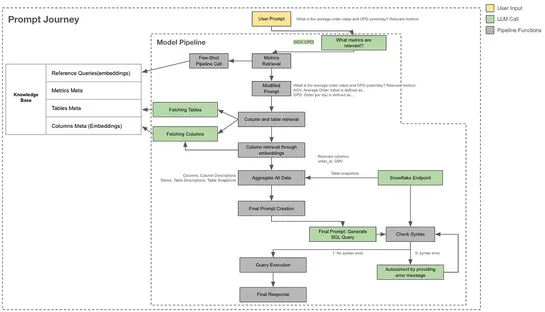
Hermes V3: Building Swiggy’s Conversational AI Analyst

Swiggy just gave its GenAI tool, Hermes, a serious glow-up. What started as a simple text-to-SQL bot is now acontext-aware AI analystthat lives inside Slack. The upgrade? Not just tweaks—an overhaul. Think: vector-based prompt retrieval, session-level memory, an Agent orchestration layer, and a SQL.. read more  

Hermes V3: Building Swiggy’s Conversational AI Analyst
Link
@faun shared a link, 8 months, 2 weeks ago
FAUN.dev()

Simplifying Large-Scale LLM Processing across Instacart with Maple

Instacart builtMaple, a backend brain for handling millions of LLM prompts—fast, cheap, and shared across teams. It’s not just another service. Maple runs onTemporal,PyArrow, andS3, strip-mines away provider-specific boilerplate, auto-batches prompts, retries failures, and slashes LLM costs by up t.. read more  

Simplifying Large-Scale LLM Processing across Instacart with Maple
Link
@faun shared a link, 8 months, 2 weeks ago
FAUN.dev()

From Zero to GPU: A Guide to Building and Scaling Production-Ready CUDA Kernels

Hugging Face just dropped Kernel Builder—a full-stack toolchain for building, versioning, and shippingcustom CUDA kernels as native PyTorch ops. Kernels arearchitecture-aware,semantically versioned, andpullable straight from the Hub. It tracks changes with lockfiles and bakes inDocker deploysout of.. read more  

Link
@faun shared a link, 8 months, 2 weeks ago
FAUN.dev()

GPT-5 Thinking in ChatGPT (aka Research Goblin) is shockingly good at search

GPT-5's“thinking” modeljust leveled up. It's not just answering queries—it’s doing full-on research. Picture deep, multi-step Bing searches mixed with tool use and reasoning chains. It reads PDFs. Analyzes them. Suggests what to do next. Then actually does it. All from your phone. What’s changing:L.. read more  

GPT-5 Thinking in ChatGPT (aka Research Goblin) is shockingly good at search
Story
@laura_garcia shared a post, 8 months, 2 weeks ago
Software Developer, RELIANOID

RELIANOID Load Balancer Community Edition v7 on AWS using Terraform

🚀 New Guide Available! Learn how to quickly deploy RELIANOID Load Balancer Community Edition v7 on AWS using Terraform. Our step-by-step article shows you how to provision everything automatically — from VPCs and subnets to EC2 and key pairs — in just minutes. 👉 https://www.relianoid.com/resources/k..

Knowledge base Deploy RELIANOID Load Balancer Community Edition v7 with Terraform on AWS
Link
@faun shared a link, 8 months, 2 weeks ago
FAUN.dev()

Deploy a containerized application with Kamal and Terraform

A Docker-first workflow combinesTerraformandKamalinto a lean, Elastic Beanstalk-ish alternative—without the bloat. Terraform spins up a three-tier VPC and wires it toECR. Kamal takes it from there, booting containers on a raw EC2 box: app, proxy, monitor. One script. Done... read more  

Deploy a containerized application with Kamal and Terraform
Link
@faun shared a link, 8 months, 2 weeks ago
FAUN.dev()

AWS, Microsoft and Google unite behind Linux Foundation DocumentDB database to cut enterprise costs and limit vendor lock-in

Document databases are crucial for AI apps in the gen AI era. Microsoft's open-source DocumentDB project, based on PostgreSQL, is moving to the Linux Foundation, offering a vendor-neutral, open-source alternative to MongoDB. DocumentDB's compatibility with MongoDB drivers and open source governance .. read more  

Link
@faun shared a link, 8 months, 2 weeks ago
FAUN.dev()

Sandboxed to Compromised: New Research Exposes Credential Exfiltration Paths in AWS Code Interpreters

Researchers poked holes insandboxed Bedrock AgentCore code interpreters—and found a way to leak execution role credentials through theMicroVM Metadata Service (MMDS). No outside network? Doesn’t matter. The exploit dodges basic string filters in requests and lets non-agentic code swipe AWS creds to .. read more  

Link
@faun shared a link, 8 months, 2 weeks ago
FAUN.dev()

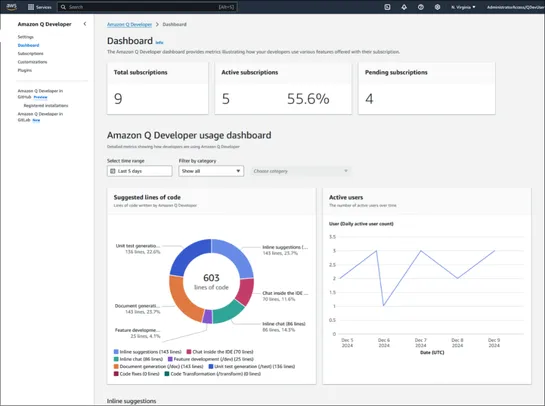
Measuring Developer Productivity with Amazon Q Developer and Jellyfish

Amazon Q Developer now plugs into Jellyfish. Teams get a clearer view of how AI fits into the real flow of work—prompt usage, code adoption, PR throughput. Not just surface stats. The setup pipes data from AWS S3 straight into Jellyfish’s analytics engine. It tags AI users, tracks velocity gains, an.. read more  

Measuring Developer Productivity with Amazon Q Developer and Jellyfish
GPT (Generative Pre-trained Transformer) is a deep learning model developed by OpenAI that has been pre-trained on massive amounts of text data using unsupervised learning techniques. GPT is designed to generate human-like text in response to prompts, and it is capable of performing a variety of natural language processing tasks, including language translation, summarization, and question-answering. The model is based on the transformer architecture, which allows it to handle long-range dependencies and generate coherent, fluent text. GPT has been used in a wide range of applications, including chatbots, language translation, and content generation.

GPT is a family of language models that have been trained on large amounts of text data using a technique called unsupervised learning. The model is pre-trained on a diverse range of text sources, including books, articles, and web pages, which allows it to capture a broad range of language patterns and styles. Once trained, GPT can be fine-tuned on specific tasks, such as language translation or question-answering, by providing it with task-specific data.

One of the key features of GPT is its ability to generate coherent and fluent text that is indistinguishable from human-generated text. This is achieved by training the model to predict the next word in a sentence given the previous words. GPT also uses a technique called attention, which allows it to focus on relevant parts of the input text when generating a response.

GPT has become increasingly popular in recent years, particularly in the field of natural language processing. The model has been used in a wide range of applications, including chatbots, content generation, and language translation. GPT has also been used to create AI-generated stories, poetry, and even music.