Join us

ContentUpdates and recent posts about GPT-5.4..
Link
@anjali shared a link, 5 months, 2 weeks ago
Customer Marketing Manager, Last9

Grafana Tempo: Setup, Configuration, and Best Practices

A practical guide to setting up Grafana Tempo, configuring key components, and understanding how to use tracing across your services.

grafana_tempo
Story
@laura_garcia shared a post, 5 months, 2 weeks ago
Software Developer, RELIANOID

🍺 Cyberattack on Asahi Group: A Wake-Up Call for Japan’s Industrial Sector

Just after Japan’s new Active Cyberdefence Law (ACD Law) came into effect — a major step toward reshaping the country’s cybersecurity posture — Japan’s largest brewer, Asahi Group, has suffered a ransomware attack that disrupted production and logistics nationwide. ⚠️ This incident starkly illustrat..

japan_brewery_ransomware_relianoid
Link
@varbear shared a link, 5 months, 2 weeks ago
FAUN.dev()

Free software scares normal people

A developer rolled outMagicbrake- a no-fuss GUI forHandbrakeaimed at folks who don’t speak command line. One button. Drag, drop, convert. Done. It strips Handbrake down to the bones for anyone who just wants their video in a different format without decoding flags and presets... read more  

Link
@varbear shared a link, 5 months, 2 weeks ago
FAUN.dev()

uv is the best thing to happen to the Python ecosystem in a decade

uvis a new Rust-powered CLI from Astral that tosses Python versioning, virtualenvs, and dependency syncing into one blisteringly fast tool. It handles yourpyproject.tomllike a grown-up—auto-generates it, updates it, keeps your environments identical across machines. Need to run a tool once without t.. read more  

uv is the best thing to happen to the Python ecosystem in a decade
Link
@varbear shared a link, 5 months, 2 weeks ago
FAUN.dev()

The bug that taught me more about PyTorch than years of using it

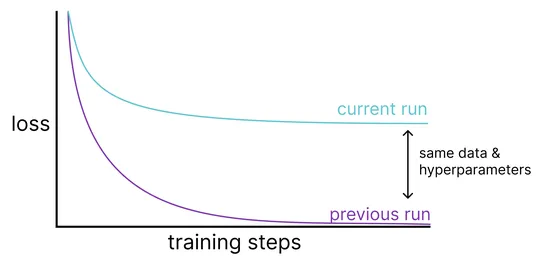
A sneaky bug inPyTorch’s MPS backendlet non-contiguous tensors silently ignore in-place ops likeaddcmul_. That’s optimizer-breaking stuff. The culprit? ThePlaceholder abstraction- meant to handle temp buffers under the hood - forgot to actually write results back to the original tensor... read more  
The bug that taught me more about PyTorch than years of using it
Link
@varbear shared a link, 5 months, 2 weeks ago
FAUN.dev()

Kafka is fast -- I'll use Postgres

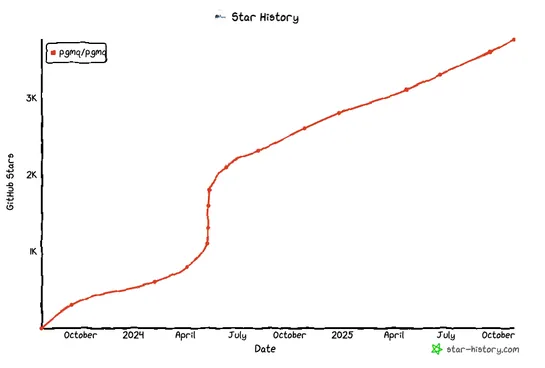
Postgres is pulling Kafka moves—without the Kafka. On a humble 3-node cluster, it held 5MB/s ingest and 25MB/s egress like a champ. Low latency. Rock-solid durability. Crank things up, andsingle-node Postgresflexed hard: 240 MiB/s in, 1.16 GiB/s out for pub/sub. Thousands of messages per second in q.. read more  
Kafka is fast -- I'll use Postgres
Link
@varbear shared a link, 5 months, 2 weeks ago
FAUN.dev()

How Netflix Tudum Supports 20 Million Users With CQRS

Netflix gutted Tudum’s old read path—Kafka, Cassandra, layers of cache—and swapped inRAW Hollow, a compressed, distributed, in-memory object store baked right into each microservice. Result? Homepage renders dropped from 1.4s to 0.4s. Editors get near-instant previews. No more read caches. No extern.. read more  
How Netflix Tudum Supports 20 Million Users With CQRS
Link
@varbear shared a link, 5 months, 2 weeks ago
FAUN.dev()

Aggressive bots ruined my weekend

Bear Blog went dark after getting swarmed by scrapers. The reverse proxy choked first - too many requests, not enough heads-up. Downstream defenses didn’t catch it in time. So: fire, meet upgrades. What changed: Proxies scaled 5×. Upstream got strict with rate limits. Failover now has a pulse. Resta.. read more  

Link
@kaptain shared a link, 5 months, 2 weeks ago
FAUN.dev()

eBPF Beginner Skill Path

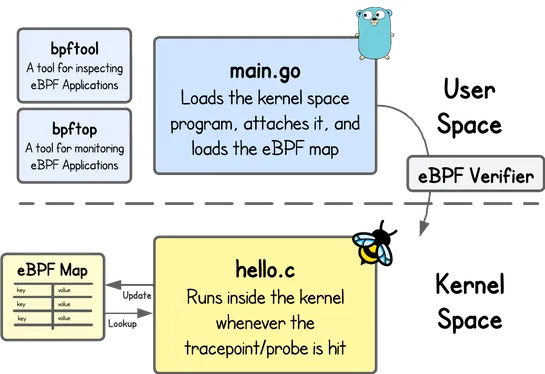
This hands-on path drops devs straight into writing, loading, and poking at basiceBPFprograms withlibbpf,maps, and those all-important kernel safety checks. It starts simple - with a beginner-friendly challenge - then dives deeper into theverifierand tools for runtime introspection... read more  
eBPF Beginner Skill Path
Link
@kaptain shared a link, 5 months, 2 weeks ago
FAUN.dev()

How to build highly available Kubernetes applications with Amazon EKS Auto Mode

Amazon EKS Auto Mode now runs the cluster for you—handling control plane updates, add-on management, and node rotation. It sticks to Kubernetes best practices so your apps stay up through node drains, pod failures, AZ outages, and rolling upgrades. It also respectsPod Disruption Budgets,Readiness Ga.. read more  
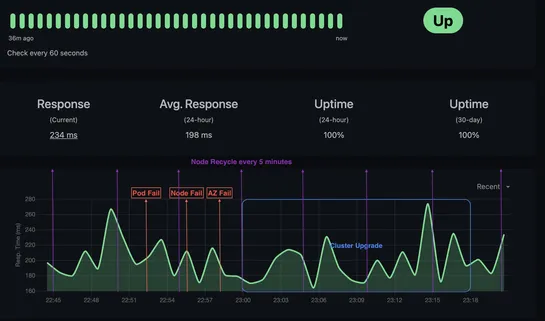
How to build highly available Kubernetes applications with Amazon EKS Auto Mode
GPT-5.4 is OpenAI’s latest frontier AI model designed to perform complex professional and technical work more reliably. It combines advances in reasoning, coding, tool use, and long-context understanding into a single system capable of handling multi-step workflows across software environments. The model builds on earlier GPT-5 releases while integrating the strong coding capabilities previously introduced with GPT-5.3-Codex.

One of the defining features of GPT-5.4 is its ability to operate as part of agent-style workflows. The model can interact with tools, APIs, and external systems to complete tasks that extend beyond simple text generation. It also introduces native computer-use capabilities, allowing AI agents to operate applications using keyboard and mouse commands, screenshots, and browser automation frameworks such as Playwright.

GPT-5.4 supports context windows of up to one million tokens, enabling it to process and reason over very large documents, long conversations, or complex project contexts. This makes it suitable for tasks such as analyzing codebases, generating technical documentation, working with large spreadsheets, or coordinating long-running workflows. The model also introduces a feature called tool search, which allows it to dynamically retrieve tool definitions only when needed. This reduces token usage and makes it more efficient to work with large ecosystems of tools, including environments with dozens of APIs or MCP servers.

In addition to improved reasoning and automation capabilities, GPT-5.4 focuses on real-world productivity tasks. It performs better at generating and editing spreadsheets, presentations, and documents, and it is designed to maintain stronger context across longer reasoning processes. The model also improves factual accuracy and reduces hallucinations compared with previous versions.

GPT-5.4 is available across OpenAI’s ecosystem, including ChatGPT, the OpenAI API, and Codex. A higher-performance variant, GPT-5.4 Pro, is also available for users and developers who require maximum performance for complex tasks such as advanced research, large-scale automation, and demanding engineering workflows. Together, these capabilities position GPT-5.4 as a model aimed not just at conversation, but at executing real work across software systems.