Join us

ContentUpdates and recent posts about GPT-5.4..
Link
@kaptain shared a link, 5 months, 2 weeks ago
FAUN.dev()

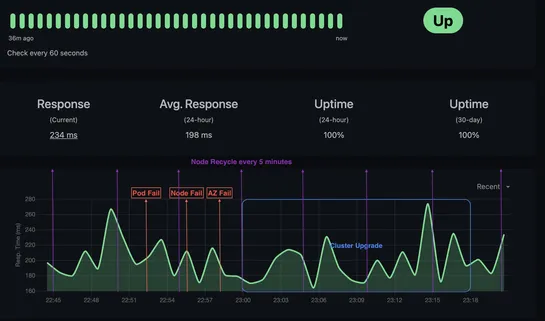
How to build highly available Kubernetes applications with Amazon EKS Auto Mode

Amazon EKS Auto Mode now runs the cluster for you—handling control plane updates, add-on management, and node rotation. It sticks to Kubernetes best practices so your apps stay up through node drains, pod failures, AZ outages, and rolling upgrades. It also respectsPod Disruption Budgets,Readiness Ga.. read more  
How to build highly available Kubernetes applications with Amazon EKS Auto Mode
Link
@kaptain shared a link, 5 months, 2 weeks ago
FAUN.dev()

Building a Kubernetes Platform — Think Big, Think in Planes

Thinking in planes, as introduced by the Platform Engineering reference model, helps teams describe their platform in a simple, shared language, turning a collection of tools into a platform. It forces you to think horizontally, connecting teams and technologies instead of adding more layers, creati.. read more  

Link
@kaptain shared a link, 5 months, 2 weeks ago
FAUN.dev()

Helm 4 Overview

Helm 4 ditches the old plugin model for a sharper, plugin-first architecture powered by WebAssembly. That means isolation/control, and deeper customization - if you're ready to adapt! Post-renderers are now plugins. That breaks compatibility with earlier exec-based setups, so expect some rewiring. .. read more  

Link
@kaptain shared a link, 5 months, 2 weeks ago
FAUN.dev()

Unlocking next-generation AI performance with Dynamic Resource Allocation on Amazon EKS and Amazon EC2 P6e-GB200

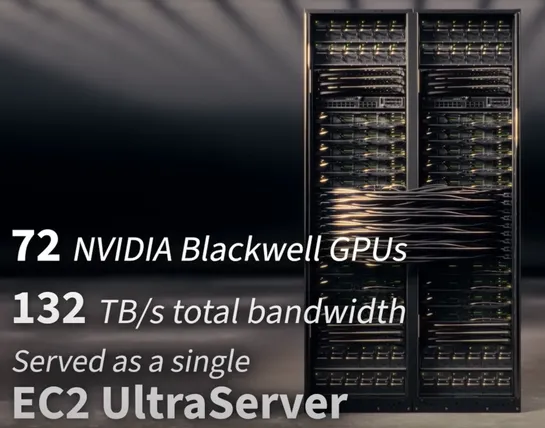
Amazon just droppedEC2 P6e-GB200 UltraServers, packingNVIDIA GB200 Grace Blackwellchips. Built for running trillion-parameter AI models onAmazon EKSwithout losing sleep over scaling. Under the hood:NVLink 5.0,IMEX, andEFAv4stitch up to 72 Blackwell GPUs into one memory-coherent cluster per UltraServ.. read more  

Unlocking next-generation AI performance with Dynamic Resource Allocation on Amazon EKS and Amazon EC2 P6e-GB200
Link
@kaptain shared a link, 5 months, 2 weeks ago
FAUN.dev()

The State of OCI Artifacts for AI/ML

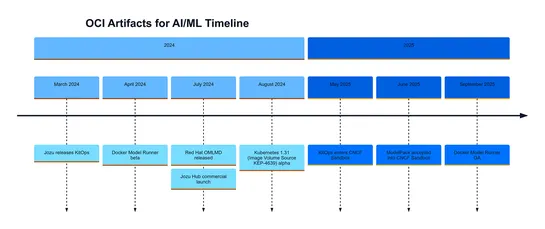
OCI artifacts quietly leveled up. Over the last 18 months, they’ve gone from a niche hack to production muscle for AI/ML workloads on Kubernetes. The signs? Clear enough:KitOpsandModelPacklanded in the CNCF Sandbox. Kubernetes 1.31 got native support forImage Volume Source. Docker pushedModel Runner.. read more  

The State of OCI Artifacts for AI/ML
Link
@kala shared a link, 5 months, 2 weeks ago
FAUN.dev()

Build AI Agents Worth Keeping: The Canvas Framework

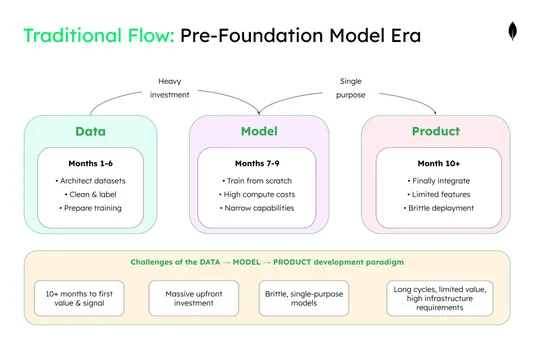
MIT and McKinsey found a gap the size of the Grand Canyon: 80% of companies claim they’re using generative AI, but fewer than 1 in 10 use cases actually ship. Blame it on scattered data, fuzzy goals, and governance that's still MIA. A new stack is stepping in:product → agent → data → model. It flips.. read more  

Build AI Agents Worth Keeping: The Canvas Framework
Link
@kala shared a link, 5 months, 2 weeks ago
FAUN.dev()

Detect inappropriate images in S3 with AWS Rekognition + Terraform

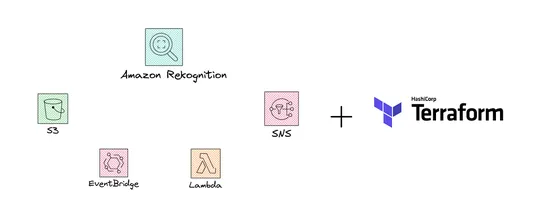
A serverless AWS pipeline runs image moderation on autopilot - withS3,Lambda,Rekognition,SNS, andEventBridgeall wired up throughTerraform. When a photo gets flagged, it’s tagged, maybe quarantined, and triggers an email alert. Daily scan? Handled... read more  

Detect inappropriate images in S3 with AWS Rekognition + Terraform
Link
@kala shared a link, 5 months, 2 weeks ago
FAUN.dev()

Grokipedia

Grokipedia just dropped - a Wikipedia remix built from LLM output, pitched as an escape from "woke" bias. The pitch? Bold. The execution? Rough. Entries run long. Facts bend. Citations wander. And the tone? Cold, context-free, and unmistakably machine-made. The usual LLM suspects are here: hallucina.. read more  

Link
@kala shared a link, 5 months, 2 weeks ago
FAUN.dev()

Agentic AI and Security

Agentic LLM apps come with a glaring security flaw: they can't tell the difference between data and code. That blind spot opens the door to prompt injection and similar attacks. The fix? Treat them like they're radioactive. Run sensitive tasks in containers. Break up agent workflows so they never ju.. read more  

Agentic AI and Security
Link
@kala shared a link, 5 months, 2 weeks ago
FAUN.dev()

Why GPUs accelerate AI learning: The power of parallel math

Modern AI eats GPUs for breakfast - training, inference, all of it. Matrix ops? Parallel everything. Models like LLaMA don’t blink without a gang of H100s working overtime... read more  

Why GPUs accelerate AI learning: The power of parallel math
GPT-5.4 is OpenAI’s latest frontier AI model designed to perform complex professional and technical work more reliably. It combines advances in reasoning, coding, tool use, and long-context understanding into a single system capable of handling multi-step workflows across software environments. The model builds on earlier GPT-5 releases while integrating the strong coding capabilities previously introduced with GPT-5.3-Codex.

One of the defining features of GPT-5.4 is its ability to operate as part of agent-style workflows. The model can interact with tools, APIs, and external systems to complete tasks that extend beyond simple text generation. It also introduces native computer-use capabilities, allowing AI agents to operate applications using keyboard and mouse commands, screenshots, and browser automation frameworks such as Playwright.

GPT-5.4 supports context windows of up to one million tokens, enabling it to process and reason over very large documents, long conversations, or complex project contexts. This makes it suitable for tasks such as analyzing codebases, generating technical documentation, working with large spreadsheets, or coordinating long-running workflows. The model also introduces a feature called tool search, which allows it to dynamically retrieve tool definitions only when needed. This reduces token usage and makes it more efficient to work with large ecosystems of tools, including environments with dozens of APIs or MCP servers.

In addition to improved reasoning and automation capabilities, GPT-5.4 focuses on real-world productivity tasks. It performs better at generating and editing spreadsheets, presentations, and documents, and it is designed to maintain stronger context across longer reasoning processes. The model also improves factual accuracy and reduces hallucinations compared with previous versions.

GPT-5.4 is available across OpenAI’s ecosystem, including ChatGPT, the OpenAI API, and Codex. A higher-performance variant, GPT-5.4 Pro, is also available for users and developers who require maximum performance for complex tasks such as advanced research, large-scale automation, and demanding engineering workflows. Together, these capabilities position GPT-5.4 as a model aimed not just at conversation, but at executing real work across software systems.