Join us

ContentUpdates and recent posts about GPT-5.4..
Link
@varbear shared a link, 6 days, 3 hours ago
FAUN.dev()

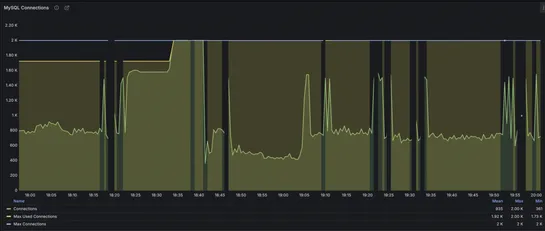
The AWS Lambda 'Kiss of Death'

A Galera writer node froze afterInnoDBundo history ballooned. PooledAWS Lambdaconnections left transactions open and pinned MVCC read views. The team killed stalled sessions, enabledinnodb_undo_log_truncate, and cappedinnodb_max_undo_log_size. They also set sessiontransaction_isolation=READ-COMMITTE.. read more  
The AWS Lambda 'Kiss of Death'
Link
@varbear shared a link, 6 days, 3 hours ago
FAUN.dev()

PostgreSQL MVCC, Byte by Byte

PostgreSQL's MVCC stores two 32-bit XIDs per tuple -xminandxmax. The transaction snapshot decides visibility per tuple. Updates append new tuples and mark the old withxmax.VACUUMreclaims versions only when no active snapshot can see them. Long-runningREPEATABLE READsnapshots pin versions and cause b.. read more  

PostgreSQL MVCC, Byte by Byte
Link
@varbear shared a link, 6 days, 3 hours ago
FAUN.dev()

How The Heck Does Shazam Work? (An Interactive Exploration)

A phone captures audio and runs aFast Fourier Transform (FFT)on short windows. It builds aspectrogramand extractspeaks. Nearby peak pairs form compacthashes(two frequencies + time delta). Aninverted indexmaps those hashes to songs, and timing validates matches. Most services run lookups onserversaga.. read more  

How The Heck Does Shazam Work? (An Interactive Exploration)
Link
@kaptain shared a link, 6 days, 3 hours ago
FAUN.dev()

From public static void main to Golden Kubestronaut: The Art of unlearning

The author left JVM monolith ops forKubernetes. They stacked certs:CKA,CKAD,CKS,KCNA,KCSA,CNCF Golden Kubestronaut. They treatPodsas the atomic deployable. They pick fights:IngressvsNodePort. They warn aboutConfigMapdrift. They spotlight runtime primitives:Horizontal Pod Autoscalerandservice meshfor.. read more  

From public static void main to Golden Kubestronaut: The Art of unlearning
Link
@kaptain shared a link, 6 days, 3 hours ago
FAUN.dev()

Building a fault-tolerant metrics storage system at Airbnb

Airbnb built a metrics system that ingests50M samples/s, stores2.5PBof logical time series, and hosts1.3B active series. They use tenant-per-service grouping andshuffle sharding. They enforce per-tenant guardrails and a consolidatedcontrol plane. They shard queries and compaction. They run zone-awar.. read more  

Building a fault-tolerant metrics storage system at Airbnb
Link
@kaptain shared a link, 6 days, 3 hours ago
FAUN.dev()

Why MicroVMs: The Architecture Behind Sandboxes

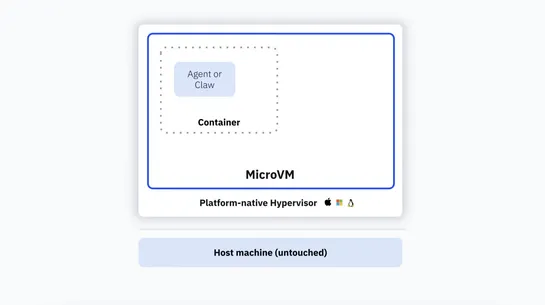
Docker Sandboxes puts each agent session in a dedicatedmicroVM. Each microVM runs a privateDocker daemoninside the VM boundary. That blocks access to the host. A new cross‑platformVMMruns on macOS, Windows, and Linux hypervisors. It slashes cold starts and runs fullDockerbuild, run, and compose work.. read more  

Why MicroVMs: The Architecture Behind Sandboxes
Link
@kaptain shared a link, 6 days, 3 hours ago
FAUN.dev()

The AI-driven shift in vulnerability discovery: What maintainers and bug finders need to know

AI modelslet non-experts craft real and fake vulnerabilities at scale. They spit out low-quality noise and the occasional high-value report. Reports floodOSS maintainers. Triage, patching, release cadences, and downstreamupgrade/compliancepipelines buckle under the load. Guidance recommends publishi.. read more  

The AI-driven shift in vulnerability discovery: What maintainers and bug finders need to know
Link
@kaptain shared a link, 6 days, 3 hours ago
FAUN.dev()

v1.36: User Namespaces in are finally GA

Kubernetesv1.36promotesUser Namespacesto GA on Linux. It brings rootless workload isolation. Kubelet leans on kernelID-mapped mounts. It sidesteps expensivechownby remappingUID/GIDat mount time and confines privileged processes. No more mass-chown screams... read more  

Link
@kala shared a link, 6 days, 3 hours ago
FAUN.dev()

Introducing Coregit

Coregit reimplements Git's object model inTypeScriptand runs onCloudflare Workersas a serverless edge Git API. Its commit endpoint accepts up to 1,000 file changes per request and replaces 105+ GitHub calls with one. Yes - one. It acknowledges writes inDurable Objects(~2ms), then flushes objects toR.. read more  

Link
@kala shared a link, 6 days, 3 hours ago
FAUN.dev()

Introducing Ternary Bonsai: Top Intelligence at 1.58 Bits

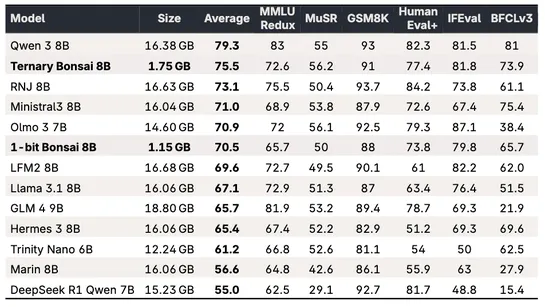
PrismML unveilsTernary Bonsai: a family of1.58-bitLMs in1.7B,4B, and8Bsizes. Models use ternary weights {-1,0,+1} with group-wise quantization. Weights are ternary (-1,0,+1). Each group of128weights shares anFP16scale. That cuts memory by ~9x versus 16-bit and boosts benchmark scores. The8Bhits 75.5.. read more  

Introducing Ternary Bonsai: Top Intelligence at 1.58 Bits
GPT-5.4 is OpenAI’s latest frontier AI model designed to perform complex professional and technical work more reliably. It combines advances in reasoning, coding, tool use, and long-context understanding into a single system capable of handling multi-step workflows across software environments. The model builds on earlier GPT-5 releases while integrating the strong coding capabilities previously introduced with GPT-5.3-Codex.

One of the defining features of GPT-5.4 is its ability to operate as part of agent-style workflows. The model can interact with tools, APIs, and external systems to complete tasks that extend beyond simple text generation. It also introduces native computer-use capabilities, allowing AI agents to operate applications using keyboard and mouse commands, screenshots, and browser automation frameworks such as Playwright.

GPT-5.4 supports context windows of up to one million tokens, enabling it to process and reason over very large documents, long conversations, or complex project contexts. This makes it suitable for tasks such as analyzing codebases, generating technical documentation, working with large spreadsheets, or coordinating long-running workflows. The model also introduces a feature called tool search, which allows it to dynamically retrieve tool definitions only when needed. This reduces token usage and makes it more efficient to work with large ecosystems of tools, including environments with dozens of APIs or MCP servers.

In addition to improved reasoning and automation capabilities, GPT-5.4 focuses on real-world productivity tasks. It performs better at generating and editing spreadsheets, presentations, and documents, and it is designed to maintain stronger context across longer reasoning processes. The model also improves factual accuracy and reduces hallucinations compared with previous versions.

GPT-5.4 is available across OpenAI’s ecosystem, including ChatGPT, the OpenAI API, and Codex. A higher-performance variant, GPT-5.4 Pro, is also available for users and developers who require maximum performance for complex tasks such as advanced research, large-scale automation, and demanding engineering workflows. Together, these capabilities position GPT-5.4 as a model aimed not just at conversation, but at executing real work across software systems.