Join us

ContentUpdates and recent posts about GPT-5.4..
Link
@faun shared a link, 1 year, 1 month ago
FAUN.dev()

1.33: Job's SuccessPolicy Goes GA

Kubernetes v1.33 just unleashedJob success policy GA. Now you can set your own victory conditions for Jobs, which will make life a whole lot easier for AI/ML andHPC workloads... read more  

Link
@faun shared a link, 1 year, 1 month ago
FAUN.dev()

v1.33: In-Place Pod Resize Graduated to Beta

Kubernetes v1.33hits the scene within-place Pod resize. Now, tweak CPU and memory settings without hitting restart. Perfect for keeping stateful apps sturdy. Expect faster scaling and smarter resource juggling. Plus, fancy new subresources and conditions polish up management and error reporting. In .. read more  

Link
@faun shared a link, 1 year, 1 month ago
FAUN.dev()

v1.33: Updates to Container Lifecycle

Kubernetesv1.33just got a little smarter. Now you can use azero-duration Sleepaction in container lifecycle hooks. That means no more juggling extra binaries—nice and tidy. With alpha support, you get to tweak stop signals within containers. Forget those pesky image-level defaults. The catch? Your c.. read more  

Link
@faun shared a link, 1 year, 1 month ago
FAUN.dev()

Announcing Native Azure Functions Support in Azure Container Apps

UnleashAzure FunctionsonAzure Container Appswith the fresh deployment model. Tap into the complete ACA toolkit—auto-scaling magic, no more juggling infrastructure. Transition turbocharges performance, smooths out deployment snags via CLI or Portal. Just set up with"kind=functionapp"and watch simplic.. read more  
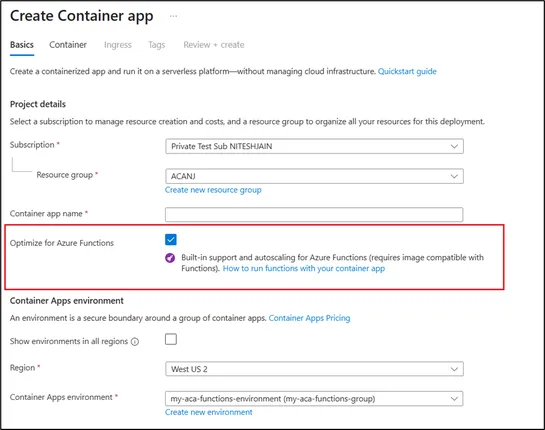
Announcing Native Azure Functions Support in Azure Container Apps
Link
@faun shared a link, 1 year, 1 month ago
FAUN.dev()

Announcing etcd v3.6.0

etcd v3.6.0slashes its memory footprint by half, ditching v2store like yesterday's leftovers. Performance leaps by10%, powered by a string of clever tweaks. Kubernetes-style gates now govern upgrades; they promise to tame chaos but may demand a secret handshake... read more  
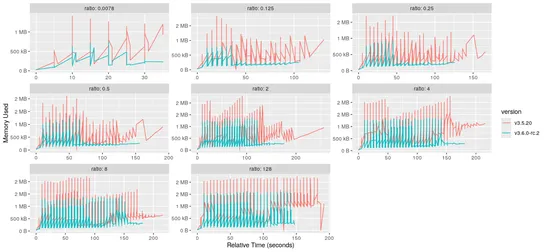
Announcing etcd v3.6.0
Link
@faun shared a link, 1 year, 1 month ago
FAUN.dev()

v1.33: Image Pull Policy the way you always thought it worked!

Kubernetes v1.33finally crushesIssue 18787. Now, every pod must authenticate before playing with already pulled private images. Security toughens without missing a beat. A fresh credential verification system zaps a decade-old loophole, slamming the door on unauthorized access... read more  

Link
@faun shared a link, 1 year, 1 month ago
FAUN.dev()

v1.33: Job's Backoff Limit Per Index Goes GA

Kubernetes v1.33just got a shiny new toy:Backoff Limit Per Index GA. Now, you can wrangle retries per job index like a pro. Say goodbye to those impatient failure-hungry beasts! 🎉.. read more  

Link
@faun shared a link, 1 year, 1 month ago
FAUN.dev()

kuberc is Here! Customizing kubectl with Kubernetes 1.33

Kuberc, introduced inKubernetes 1.33as an alpha feature, allows users to personalize their kubectl command-line experience with aliases and default flags. This configuration file separates personal preferences from the kubeconfig file, simplifying complex commands and reducing errors. Teams can pote.. read more  

Link
@faun shared a link, 1 year, 1 month ago
FAUN.dev()

OrbStack: A Deep Dive for Container and Kubernetes Development

OrbStackrockets ahead with 2-5× faster I/O and harnesses Rosetta for blinding x86 speeds on Apple Silicon. For Mac users, it's a zippy Docker alternative. Unified Kubernetes, Linux machines, and effortless file sharing turbocharge development workflows. Meanwhile,Docker Desktopsulks in the corner, w.. read more  
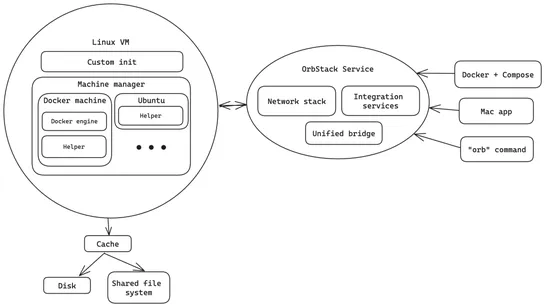
OrbStack: A Deep Dive for Container and Kubernetes Development
Link
@faun shared a link, 1 year, 1 month ago
FAUN.dev()

How Kubernetes is Built

Kubernetessprang from Google'sBorglike a tech prodigy. It's a lesson in open-source wizardry, orchestrated by 150-200 zealous maintainers who roll out fresh updates every 14-16 weeks like clockwork. But here’s the magic trick: the "lead" and "shadow" setup. It’s a clever mentorship dance that lets r.. read more  
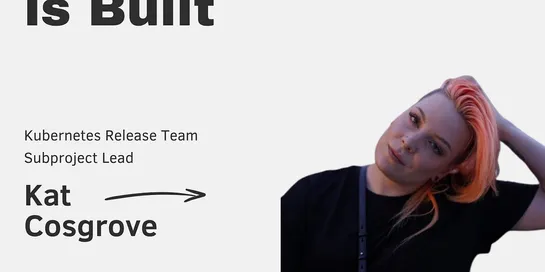
How Kubernetes is Built
GPT-5.4 is OpenAI’s latest frontier AI model designed to perform complex professional and technical work more reliably. It combines advances in reasoning, coding, tool use, and long-context understanding into a single system capable of handling multi-step workflows across software environments. The model builds on earlier GPT-5 releases while integrating the strong coding capabilities previously introduced with GPT-5.3-Codex.

One of the defining features of GPT-5.4 is its ability to operate as part of agent-style workflows. The model can interact with tools, APIs, and external systems to complete tasks that extend beyond simple text generation. It also introduces native computer-use capabilities, allowing AI agents to operate applications using keyboard and mouse commands, screenshots, and browser automation frameworks such as Playwright.

GPT-5.4 supports context windows of up to one million tokens, enabling it to process and reason over very large documents, long conversations, or complex project contexts. This makes it suitable for tasks such as analyzing codebases, generating technical documentation, working with large spreadsheets, or coordinating long-running workflows. The model also introduces a feature called tool search, which allows it to dynamically retrieve tool definitions only when needed. This reduces token usage and makes it more efficient to work with large ecosystems of tools, including environments with dozens of APIs or MCP servers.

In addition to improved reasoning and automation capabilities, GPT-5.4 focuses on real-world productivity tasks. It performs better at generating and editing spreadsheets, presentations, and documents, and it is designed to maintain stronger context across longer reasoning processes. The model also improves factual accuracy and reduces hallucinations compared with previous versions.

GPT-5.4 is available across OpenAI’s ecosystem, including ChatGPT, the OpenAI API, and Codex. A higher-performance variant, GPT-5.4 Pro, is also available for users and developers who require maximum performance for complex tasks such as advanced research, large-scale automation, and demanding engineering workflows. Together, these capabilities position GPT-5.4 as a model aimed not just at conversation, but at executing real work across software systems.