Join us

ContentUpdates and recent posts about GPT-5.4..
Link
@faun shared a link, 1 year ago
FAUN.dev()

Mastering Kubernetes Migrations From Planning to Execution

Managed K8slike Amazon EKS or GKE? A ticket to smoother ops, but at the expense of control. Enterautoscaling, service meshes, andGitOps—they shift the deployment game dramatically. But don’t fall into the trap of thinking every app belongs on K8s. High-latency, tightly bound apps flounder there. Tos.. read more  

Link
@faun shared a link, 1 year ago
FAUN.dev()

Building Kubernetes Controllers in Node.js

Kubenodeis the secret weapon forNode.jsdevelopers diving intoKubernetes. Forget about wrestling with Go—this tool empowers you to wield custom resources and automate like a boss... read more  

Link
@faun shared a link, 1 year ago
FAUN.dev()

Gateway API v1.3.0: Advancements in Request Mirroring, CORS, Gateway Merging, and Retry Budgets

Gateway API v1.3.0lands with a killer feature:percentage-based request mirroringthat makes traffic handling a whole lot savvier. Fancy a peek at the cutting-edge? Dive into theCORS filtersandretry budgets, all shiny and experimental. Just a heads-up: these feature names sport an "X" at the front—mea.. read more  

Gateway API v1.3.0: Advancements in Request Mirroring, CORS, Gateway Merging, and Retry Budgets
Link
@faun shared a link, 1 year ago
FAUN.dev()

ClusterAPI Provider for AWS and Cilium

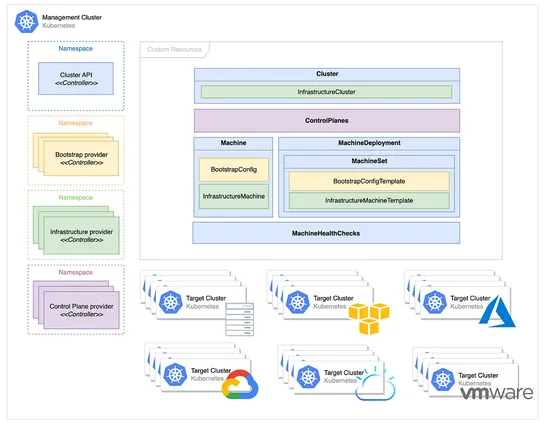
Cluster APIis the aspirin for Kubernetes cluster migraines, especially when tangoing with AWS. With neat tricks likeEKS upgradesandself-managed nodes, it’s a godsend.KinDsteps up as the management cluster sidekick in this AWS adventure, while CAPA rolls up its sleeves, threading infrastructure provi.. read more  

ClusterAPI Provider for AWS and Cilium
Link
@faun shared a link, 1 year ago
FAUN.dev()

Improving Cost Efficiency with Karpenter 1.0: An Upgrade Guide

Karpenter 1.0is the speedy barista of Kubernetes. It whips up nodes on demand, slashing AWS EC2 costs by 30-50%. Why? Real-time scaling magic, Spot instance wizardry, and APIs that won't stab you in the back. Sure,Cluster Autoscalerhas an extensive resume of compatibility and control, but it's like .. read more  

Improving Cost Efficiency with Karpenter 1.0: An Upgrade Guide
Link
@faun shared a link, 1 year ago
FAUN.dev()

Deep Dive: Amazon EKS Dashboard for Visibility into Multi-Cluster Operations and Governance

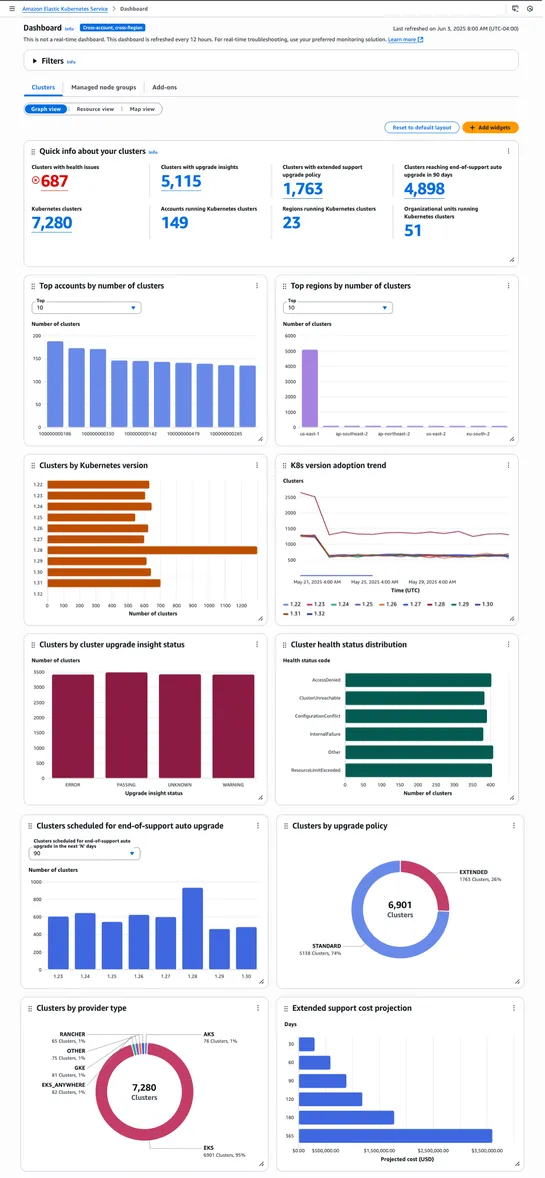
Amazon EKS Dashboardtames the Kubernetes chaos with finesse. It brings all your clusters into one sharp, centralized view on AWS. Sprawl, security snags, ballooning support costs—gone in a flash. Assess upgrade needs, peek into cost forecasts, and manage add-ons without breaking a sweat. Wave farewe.. read more  

Deep Dive: Amazon EKS Dashboard for Visibility into Multi-Cluster Operations and Governance
Link
@faun shared a link, 1 year ago
FAUN.dev()

Securing Kubernetes: Integrating AKS with Tetragon for eBPF-Powered Observability

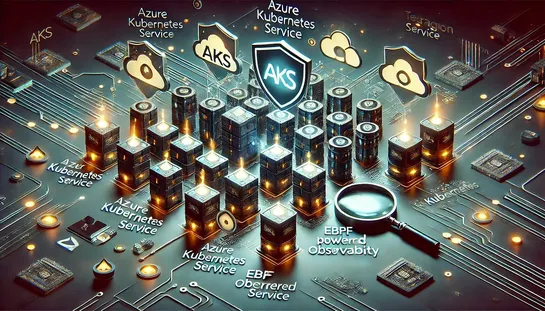
Tetragontaps into the kernel usingeBPF, giving containers an all-access pass without the agent baggage. When you pair Tetragon with AKS, you unlock crystal-clear views of process executions and system calls. Security teams revel in this treasure trove, primed for spotting and squashing threats swift.. read more  

Securing Kubernetes: Integrating AKS with Tetragon for eBPF-Powered Observability
Link
@faun shared a link, 1 year ago
FAUN.dev()

Introducing Gateway API Inference Extension

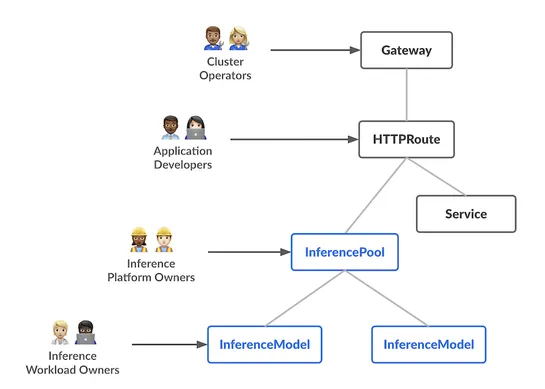
Gateway API Inference Extensiontakes AI workload routing on Kubernetes and infuses it with model-savvy powers. It slices latency on GPU clusters like a samurai. Meanwhile, theEndpoint Selection Extensionacts like a traffic cop on caffeine, using live metrics to steer pods and trim those nagging tail.. read more  

Introducing Gateway API Inference Extension
Link
@faun shared a link, 1 year ago
FAUN.dev()

Tracing Syscalls with eBPF in Docker: A Practical Example

This post walks through an example of combining a FastAPI service with an eBPF tracer to monitor syscalls. It covers common pitfalls encountered during development on macOS, the shift to containerizing the environment, and how the author ultimately succeeded in capturing the desired syscalls—a hands.. read more  

Link
@faun shared a link, 1 year ago
FAUN.dev()

How to Use AI to Detect PPE Compliance in Edge Environments

Meet the motley crew that is theYOLOv8-based AI team. These guys get serious about detecting hard hats across countless video streams and they do it in real time. Their secret weapon? The metallic trio ofZEDEDA,Rancher, andTerraform.ZEDEDAtames edge management.Rancherwrangles Kubernetes.Terraform? I.. read more  

GPT-5.4 is OpenAI’s latest frontier AI model designed to perform complex professional and technical work more reliably. It combines advances in reasoning, coding, tool use, and long-context understanding into a single system capable of handling multi-step workflows across software environments. The model builds on earlier GPT-5 releases while integrating the strong coding capabilities previously introduced with GPT-5.3-Codex.

One of the defining features of GPT-5.4 is its ability to operate as part of agent-style workflows. The model can interact with tools, APIs, and external systems to complete tasks that extend beyond simple text generation. It also introduces native computer-use capabilities, allowing AI agents to operate applications using keyboard and mouse commands, screenshots, and browser automation frameworks such as Playwright.

GPT-5.4 supports context windows of up to one million tokens, enabling it to process and reason over very large documents, long conversations, or complex project contexts. This makes it suitable for tasks such as analyzing codebases, generating technical documentation, working with large spreadsheets, or coordinating long-running workflows. The model also introduces a feature called tool search, which allows it to dynamically retrieve tool definitions only when needed. This reduces token usage and makes it more efficient to work with large ecosystems of tools, including environments with dozens of APIs or MCP servers.

In addition to improved reasoning and automation capabilities, GPT-5.4 focuses on real-world productivity tasks. It performs better at generating and editing spreadsheets, presentations, and documents, and it is designed to maintain stronger context across longer reasoning processes. The model also improves factual accuracy and reduces hallucinations compared with previous versions.

GPT-5.4 is available across OpenAI’s ecosystem, including ChatGPT, the OpenAI API, and Codex. A higher-performance variant, GPT-5.4 Pro, is also available for users and developers who require maximum performance for complex tasks such as advanced research, large-scale automation, and demanding engineering workflows. Together, these capabilities position GPT-5.4 as a model aimed not just at conversation, but at executing real work across software systems.