Join us

ContentUpdates and recent posts about GPT-5.4..
Link
@faun shared a link, 9 months, 2 weeks ago
FAUN.dev()

Parsing 1 Billion Rows in Bun/Typescript Under 10 Seconds

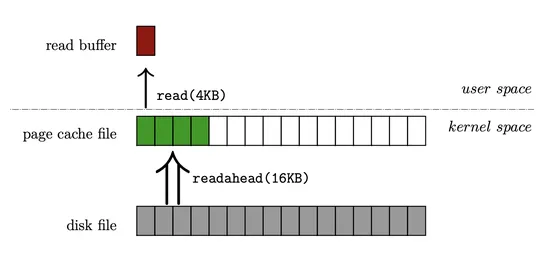
Buntries to swallow files over 4GB and promptly chokes. The culprit? ItsBuffercaps out at 4GB. The fix? Slice files into chunks under 4GB but keep the buffer lean, no more than 128KB, to keep things zippy. Pull out the big guns—workers. This move fires up all CPU cores, slashing processing time from.. read more  
Parsing 1 Billion Rows in Bun/Typescript Under 10 Seconds
Link
@faun shared a link, 9 months, 2 weeks ago
FAUN.dev()

Scalability is not performance

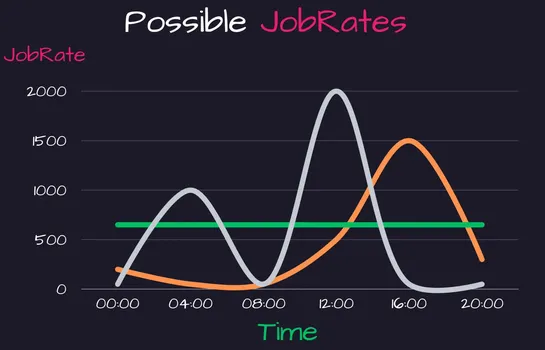
Boostingscalabilityin distributed systems isn't just a mad dash for speed. It's about morphing resources to tackle shifting demand. Nail scalability, and you balance infrastructure costs with job handling efficiency, all while juggling resource utilization at a sweet spot around 0.5. Crave a drama-f.. read more  

Scalability is not performance
Link
@faun shared a link, 9 months, 2 weeks ago
FAUN.dev()

Lessons from scaling PostgreSQL queues to 100K events

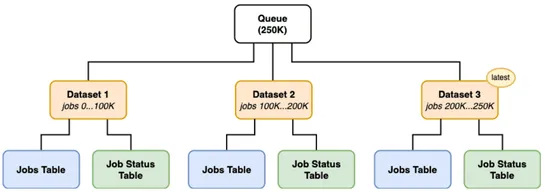
PostgreSQLjuggles 100,000 events per second. Just needs some index wizardry and query twerking. The problem? Table bloat and Write Amplification. Gross. Enter the mightyCOPY—it bulldozes through bulk data, politely ignoring the usualInsertdrag. And those recursiveCTEs? They pull off loose index scan.. read more  

Lessons from scaling PostgreSQL queues to 100K events
Link
@faun shared a link, 9 months, 2 weeks ago
FAUN.dev()

How Go 1.24's Swiss Tables saved us hundreds of gigabytes

Uncovered a memory regression inGo 1.24. Pored over memory patterns in countless pods like a detective with too much caffeine. Pinpointed sneaky allocation blunders... read more  

Link
@faun shared a link, 9 months, 2 weeks ago
FAUN.dev()

AV1 @ Scale: Film Grain Synthesis, The Awakening

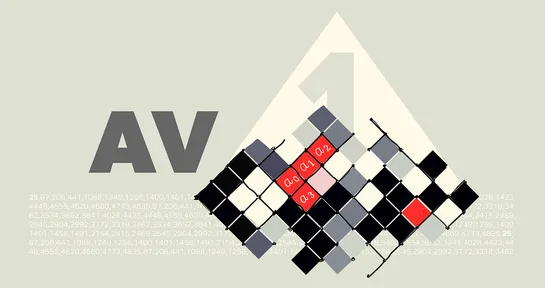
AV1 Film Grain Synthesis (FGS)tricks the eye by imitating film grain after compression. Cuts bitrates like a ninja and keeps the artistry alive. Models grasp grain's pattern and punch, ensuring sharp visuals on bandwidth-challenged gadgets. Grainy magic, delivered neatly!.. read more  

AV1 @ Scale: Film Grain Synthesis, The Awakening
Link
@faun shared a link, 9 months, 2 weeks ago
FAUN.dev()

The Micro-Frontend Architecture Handbook

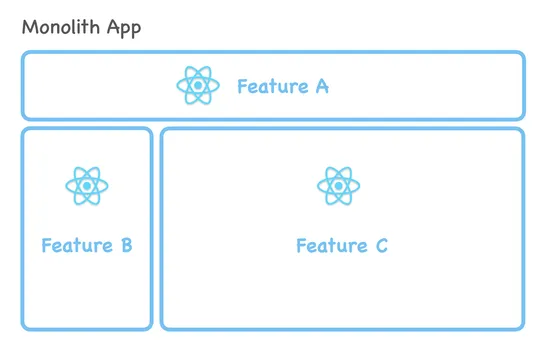
iframes: Secure and isolated, but clunky as dial-up. Best for legacy cleanup missions.Web Components: Native and framework-agnostic, perfect for reusable UI with Shadow DOM flair.single-spa: Juggles multiple SPAs with the finesse of a circus, though it gets chatty.Module Federation: Real-time module.. read more  

The Micro-Frontend Architecture Handbook
Link
@faun shared a link, 9 months, 2 weeks ago
FAUN.dev()

Death by a thousand slops

By 2025,AI slopwill infect20%of curl's security submissions. Meanwhile, a mere5%reveal actual threats. Cutting the$90,000bounty might fend off the slopsters, but it'll scare away the real wizards, too... read more  

Death by a thousand slops
Link
@faun shared a link, 9 months, 2 weeks ago
FAUN.dev()

OpenAI deputizes ChatGPT to serve as an agent

OpenAI's ChatGPTnow flexes its muscles as an agent. It juggles complex tasks, dives into spreadsheets, and pokes at APIs. But hey, watch your back—new levels of power mean fresh data security headaches. While it shrugs off most prompt injection attacks, the bot's got strict manners. It always asks b.. read more  

OpenAI deputizes ChatGPT to serve as an agent
Link
@faun shared a link, 9 months, 2 weeks ago
FAUN.dev()

Rethinking CLI interfaces for AI

LLMs fumble with CLI tools because they lack context. Tweaking APIs and tools for LLM savvy could cut mistakes and boost context efficiency.Smarter interfaces might keep them from getting stuck in infinite loops or bungling directories, slashing tool calls and making automation crisp and tidy... read more  

Rethinking CLI interfaces for AI
Link
@faun shared a link, 9 months, 2 weeks ago
FAUN.dev()

AWS goes full speed ahead on the AI agent train

AWS Bedrock AgentCorepromises AI agent deployment at ungodly scales. But hang onto your hats: by 2027, up to 40% of these endeavors might implode without a squeak of success... read more  

AWS goes full speed ahead on the AI agent train
GPT-5.4 is OpenAI’s latest frontier AI model designed to perform complex professional and technical work more reliably. It combines advances in reasoning, coding, tool use, and long-context understanding into a single system capable of handling multi-step workflows across software environments. The model builds on earlier GPT-5 releases while integrating the strong coding capabilities previously introduced with GPT-5.3-Codex.

One of the defining features of GPT-5.4 is its ability to operate as part of agent-style workflows. The model can interact with tools, APIs, and external systems to complete tasks that extend beyond simple text generation. It also introduces native computer-use capabilities, allowing AI agents to operate applications using keyboard and mouse commands, screenshots, and browser automation frameworks such as Playwright.

GPT-5.4 supports context windows of up to one million tokens, enabling it to process and reason over very large documents, long conversations, or complex project contexts. This makes it suitable for tasks such as analyzing codebases, generating technical documentation, working with large spreadsheets, or coordinating long-running workflows. The model also introduces a feature called tool search, which allows it to dynamically retrieve tool definitions only when needed. This reduces token usage and makes it more efficient to work with large ecosystems of tools, including environments with dozens of APIs or MCP servers.

In addition to improved reasoning and automation capabilities, GPT-5.4 focuses on real-world productivity tasks. It performs better at generating and editing spreadsheets, presentations, and documents, and it is designed to maintain stronger context across longer reasoning processes. The model also improves factual accuracy and reduces hallucinations compared with previous versions.

GPT-5.4 is available across OpenAI’s ecosystem, including ChatGPT, the OpenAI API, and Codex. A higher-performance variant, GPT-5.4 Pro, is also available for users and developers who require maximum performance for complex tasks such as advanced research, large-scale automation, and demanding engineering workflows. Together, these capabilities position GPT-5.4 as a model aimed not just at conversation, but at executing real work across software systems.