Join us

ContentUpdates and recent posts about GPT-5.4..
Link
@faun shared a link, 9 months, 1 week ago
FAUN.dev()

How GitHub engineers tackle platform problems

Product engineersare like builders ofGundam models, construcing the final product, whileplatform engineerssupply the tools needed to build these kits. Understanding theGundam analogyhelps differentiate engineering roles at GitHub... read more  

Link
@faun shared a link, 9 months, 1 week ago
FAUN.dev()

What Is IDOR? Finding and Preventing Insecure Direct Object References in AWS APIs

Attackers swap predictable IDs. They slip intoAWS APIs,Lambda functions, internal tools. Fuzzers likeffufflag sneaky HTTP 200s.Burp Intruderbubbles up 404 probes.CloudWatchlogs trace every call. Random UUIDs seal ID gaps... read more  

What Is IDOR? Finding and Preventing Insecure Direct Object References in AWS APIs
Link
@faun shared a link, 9 months, 1 week ago
FAUN.dev()

How Zapier runs isolated tasks on AWS Lambda and upgrades functions at scale

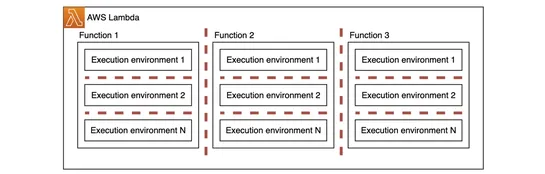
Zapier snaps each customer Zap into its ownAWS Lambda, cradled inside leanFirecracker microVMs. It wrangles 100k+ functions under anEKScontrol plane and inventory DB. When runtimes retire, Zapier swings into action: a set ofTerraform modulespaired with a customLambda canary tool. Traffic trickles in.. read more  

How Zapier runs isolated tasks on AWS Lambda and upgrades functions at scale
Link
@faun shared a link, 9 months, 1 week ago
FAUN.dev()

Self-hosting Trigger.dev v4 using Docker

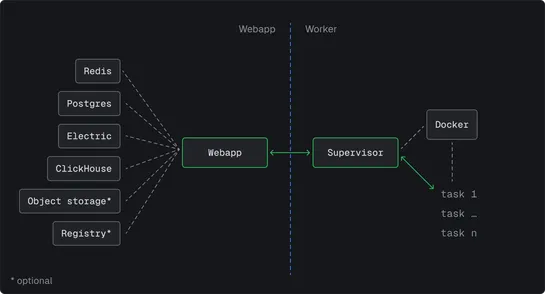
Trigger.dev v4 sharpens self-hosting. It pins everything toDocker Compose. It bakesregistryandobject storagein. It chops YAML bloat. Env-var docs unify configs. Resource caps lock down security. Scaling? Spin up more worker containers... read more  

Self-hosting Trigger.dev v4 using Docker
Link
@faun shared a link, 9 months, 1 week ago
FAUN.dev()

kubriX: Your Out-of-the-Box Internal Developer Platform (IDP) for Kubernetes

Discover how kubriX seamlessly integrates leading open-source tools like Argo CD, Kargo, and Backstage to deliver a fully functional IDP out of the box. This blog post provides a deep dive into the technical aspects of kubriX, showcasing its capabilities and value proposition within the realm of Int.. read more  

Link
@faun shared a link, 9 months, 1 week ago
FAUN.dev()

The Cybersecurity Blind Spot in DevOps Pipelines

DevOps pipelines serve as superhighways for cybercriminals to target with credential leaks, supply chain infiltration, misconfigurations, and dependency vulnerabilities. Security must evolve with development to combat these sophisticated attacks... read more  

Link
@faun shared a link, 9 months, 1 week ago
FAUN.dev()

10 Best API Monitoring Tools in 2025

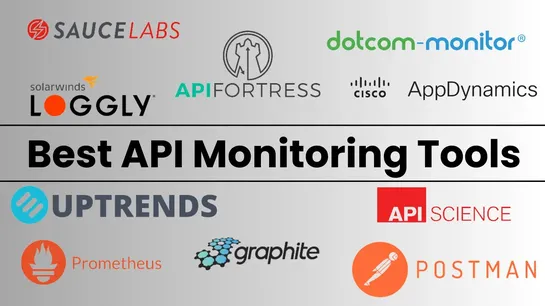
API monitoring tracks latency, errors and uptime. Tools tag real-time metrics. They fire alerts. They map traces. They automate tests. They crunch analytics. Examples span OSS starsPrometheus,Graphiteand SaaS champsAppDynamics,Postman. Each hooks into CI/CD pipelines and plants global synthetic prob.. read more  

10 Best API Monitoring Tools in 2025
Link
@faun shared a link, 9 months, 1 week ago
FAUN.dev()

Building a Secure, Scalable, and Automated Cloud-Native Platform on AWS with EKS, GitOps, and…

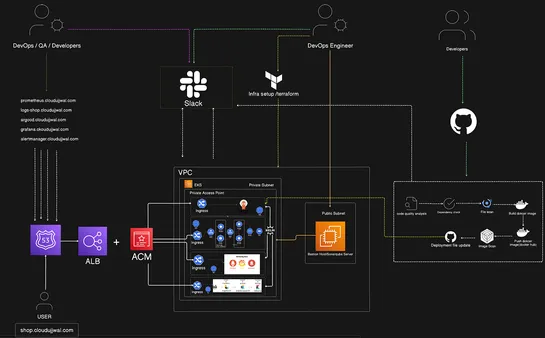
The blueprint carves out production-grade AWS infra. Terraform orchestrates VPCs with public and private subnets, deploys a Bastion host, spins up private EKS clusters, and stands up an internet-facing ALB armed with SSL/TLS. Argo CD drives GitOps. The CI pipeline runs SAST, builds Docker images, hu.. read more  

Building a Secure, Scalable, and Automated Cloud-Native Platform on AWS with EKS, GitOps, and…
Link
@faun shared a link, 9 months, 1 week ago
FAUN.dev()

Serverless: The Illusion of Choice

A LinkedIn thread exposes a hack around AWS EventBridge’s256KBlimit. Someone chains Lambdas tocompressthendecompressevents. Serverless traps lurk: blown-upIAMpermissions. Triggers with zero validation. Wide-openegress. Unscanned packages fueling supply chain bombs... read more  

Serverless: The Illusion of Choice
Link
@faun shared a link, 9 months, 1 week ago
FAUN.dev()

MCP Catalog: Finding the Right AI Tools for Your Project

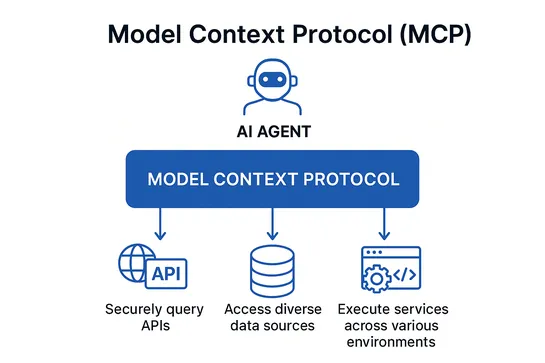
Docker Desktop hatches a betaMCP CatalogandToolkit. It unleashes 100+ containerized Model Context Protocol servers loaded with metadata and use-case filters. Teams fire them via GUI or CLI. The catalog carvesDocker-builtimages from community builds, runs supply-chain scans, and seals isolation. Cust.. read more  

MCP Catalog: Finding the Right AI Tools for Your Project
GPT-5.4 is OpenAI’s latest frontier AI model designed to perform complex professional and technical work more reliably. It combines advances in reasoning, coding, tool use, and long-context understanding into a single system capable of handling multi-step workflows across software environments. The model builds on earlier GPT-5 releases while integrating the strong coding capabilities previously introduced with GPT-5.3-Codex.

One of the defining features of GPT-5.4 is its ability to operate as part of agent-style workflows. The model can interact with tools, APIs, and external systems to complete tasks that extend beyond simple text generation. It also introduces native computer-use capabilities, allowing AI agents to operate applications using keyboard and mouse commands, screenshots, and browser automation frameworks such as Playwright.

GPT-5.4 supports context windows of up to one million tokens, enabling it to process and reason over very large documents, long conversations, or complex project contexts. This makes it suitable for tasks such as analyzing codebases, generating technical documentation, working with large spreadsheets, or coordinating long-running workflows. The model also introduces a feature called tool search, which allows it to dynamically retrieve tool definitions only when needed. This reduces token usage and makes it more efficient to work with large ecosystems of tools, including environments with dozens of APIs or MCP servers.

In addition to improved reasoning and automation capabilities, GPT-5.4 focuses on real-world productivity tasks. It performs better at generating and editing spreadsheets, presentations, and documents, and it is designed to maintain stronger context across longer reasoning processes. The model also improves factual accuracy and reduces hallucinations compared with previous versions.

GPT-5.4 is available across OpenAI’s ecosystem, including ChatGPT, the OpenAI API, and Codex. A higher-performance variant, GPT-5.4 Pro, is also available for users and developers who require maximum performance for complex tasks such as advanced research, large-scale automation, and demanding engineering workflows. Together, these capabilities position GPT-5.4 as a model aimed not just at conversation, but at executing real work across software systems.