Join us

ContentUpdates and recent posts about GPT-5.4..
Link
@faun shared a link, 9 months ago
FAUN.dev()

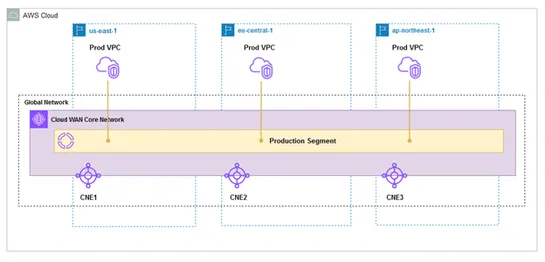
Using generative AI for building AWS networks

Amazon Q Developer CLI and Bedrock just leveled up. You can now spin up AWS Cloud WANs and VPCs using plain English. Type what you need—get full deployments, phased migrations, and IaC for both CloudFormation and Terraform. Agents handle the whole stack: network discovery, rollout, and config. No m.. read more  
Using generative AI for building AWS networks
Link
@faun shared a link, 9 months ago
FAUN.dev()

AWS AgentCore: The Overlooked Privilege Escalation Path in Bedrock’s AI Tooling

AWS Bedrock AgentCore just got a new trick: agents (and anyone IAM-blessed) can now runCode Interpreters. Think arbitrary code execution—with custom or predefined IAM roles. But here’s the kicker: these interpreters skipresource policies, lean on control plane APIs, and don’t log squat—unlessyou fl.. read more  

Link
@faun shared a link, 9 months ago
FAUN.dev()

Typed languages are better suited for vibecoding

Claude’s making typed, compiled languages feel like cheating. Rust, Go, TypeScript—rising fast where Python used to reign. Why? AI coding tools now catch bugs early, validate sprawling diffs, and help devs grok unfamiliar codebases without breaking a sweat. Compiler guarantees + AI pair = fast, safe.. read more  

Link
@faun shared a link, 9 months ago
FAUN.dev()

Azure AI Speech Service Configuration

Azure AI Speech now splits config paths forTTS(text-to-speech) andSTT(speech-to-text) when usingmanaged identity—and yes, they're different enough to matter. Roles, env vars, and auth flows don’t line up. Private endpoints? They nuke regional fallbacks, so you’ll need to pass full URLs. A shared ut.. read more  

Link
@faun shared a link, 9 months ago
FAUN.dev()

Browser-Based LLMs: WebGPU Enables AI in Your Browser

Browser-based LLMs likeBrowser-LLMnow run models likeLlama 2entirely in the browser—no server round-trips, no cloud bill. Just you, WebGPU, and up to7B parametershumming along on your machine. System shift:WebGPU cracks open real AI horsepower in the browser. Local inference gets faster, more priva.. read more  

Browser-Based LLMs: WebGPU Enables AI in Your Browser
Link
@faun shared a link, 9 months ago
FAUN.dev()

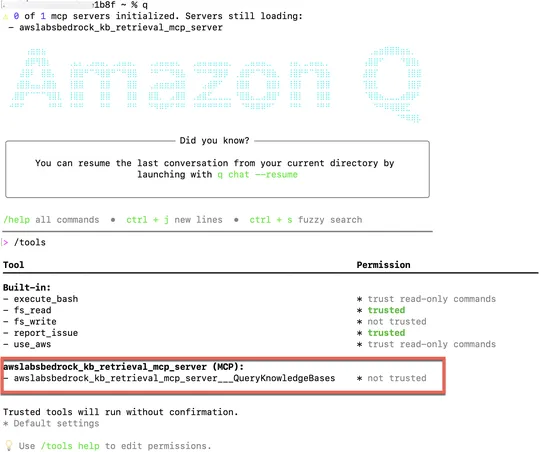
Building AIOps with Amazon Q Developer CLI and MCP Server

Amazon Q Developer CLI now hooks into Model Context Protocol (MCP) servers, unlocking AIOps tasks—incident detection, remediation, security fixes—through plain English. Natural language in, real-time control out. It fetches data and talks to your AWS stack via a low-code UI. Tinkerable, scriptable,.. read more  

Building AIOps with Amazon Q Developer CLI and MCP Server
Link
@faun shared a link, 9 months ago
FAUN.dev()

OpenAI prepares to launch GPT-5, but big leaps are unlikely

Internal testing showsGPT-5edges ahead of GPT-4—better code, cleaner math, sharper step-by-step thinking. But no breakthrough. No leap. OpenAI even scrapped “Orion,” the original GPT-5 push, and settled on GPT-4.5 instead. Translation: scaling Transformers is hitting a wall. System pivot:OpenAI’s n.. read more  

OpenAI prepares to launch GPT-5, but big leaps are unlikely
Link
@faun shared a link, 9 months ago
FAUN.dev()

Code Execution Through Deception: Gemini AI CLI Hijack

Tracebit discovered a silent attack on Gemini CLI due to improper validation, prompt injection, and misleading UX leading to execution of malicious commands without user awareness. Google fixed this in v0.1.14... read more  

Link
@faun shared a link, 9 months ago
FAUN.dev()

6 Weeks of Claude Code

Puzzmo just nuked years of tech debt in six weeks thanks toClaude Code, Anthropic’s AI-powered dev sidekick. With a clean monorepo, tight tooling (React, GraphQL, Relay), and some well-aimed prompts, one engineer knocked out core migrations, unified the UI, and abstracted the CMS—all without derail.. read more  

6 Weeks of Claude Code
Link
@faun shared a link, 9 months ago
FAUN.dev()

One Dataset. No Warning. Google Took Everything. You’re Not Safe Either.

An indie dev got their Google account nuked—no warning—right after unzipping an NSFW dataset on Drive. It was for benchmarking a private, on-device AI model that actually beat the cloud. Didn’t matter. The system flagged a CSAM violation, locked everything, and offered no appeals. Key takeway:If yo.. read more  

GPT-5.4 is OpenAI’s latest frontier AI model designed to perform complex professional and technical work more reliably. It combines advances in reasoning, coding, tool use, and long-context understanding into a single system capable of handling multi-step workflows across software environments. The model builds on earlier GPT-5 releases while integrating the strong coding capabilities previously introduced with GPT-5.3-Codex.

One of the defining features of GPT-5.4 is its ability to operate as part of agent-style workflows. The model can interact with tools, APIs, and external systems to complete tasks that extend beyond simple text generation. It also introduces native computer-use capabilities, allowing AI agents to operate applications using keyboard and mouse commands, screenshots, and browser automation frameworks such as Playwright.

GPT-5.4 supports context windows of up to one million tokens, enabling it to process and reason over very large documents, long conversations, or complex project contexts. This makes it suitable for tasks such as analyzing codebases, generating technical documentation, working with large spreadsheets, or coordinating long-running workflows. The model also introduces a feature called tool search, which allows it to dynamically retrieve tool definitions only when needed. This reduces token usage and makes it more efficient to work with large ecosystems of tools, including environments with dozens of APIs or MCP servers.

In addition to improved reasoning and automation capabilities, GPT-5.4 focuses on real-world productivity tasks. It performs better at generating and editing spreadsheets, presentations, and documents, and it is designed to maintain stronger context across longer reasoning processes. The model also improves factual accuracy and reduces hallucinations compared with previous versions.

GPT-5.4 is available across OpenAI’s ecosystem, including ChatGPT, the OpenAI API, and Codex. A higher-performance variant, GPT-5.4 Pro, is also available for users and developers who require maximum performance for complex tasks such as advanced research, large-scale automation, and demanding engineering workflows. Together, these capabilities position GPT-5.4 as a model aimed not just at conversation, but at executing real work across software systems.