Join us

ContentUpdates and recent posts about GPT-5.4..
Link
@faun shared a link, 8 months, 3 weeks ago
FAUN.dev()

Manus AI Launches ‘Wide Research,’ Pitting 100-Agent Swarms Against ‘Deep Research‘ from Google and OpenAI

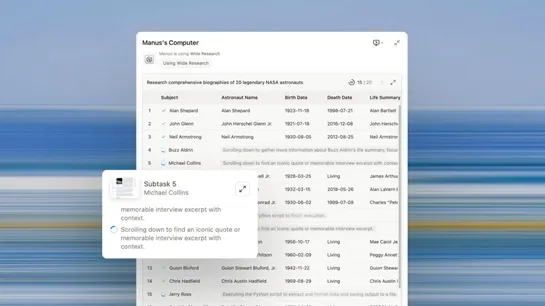
Manus just droppedWide Research—a swarm of 100+ AI agents, each spun up as a Turing-complete VM. They don’t follow orders. They solve massive tasks in parallel, straight from natural language prompts. Forget rigid chains of command. These agents don’t play roles—they run jobs. No hierarchies. No br.. read more  
Manus AI Launches ‘Wide Research,’ Pitting 100-Agent Swarms Against ‘Deep Research‘ from Google and OpenAI
Link
@faun shared a link, 8 months, 3 weeks ago
FAUN.dev()

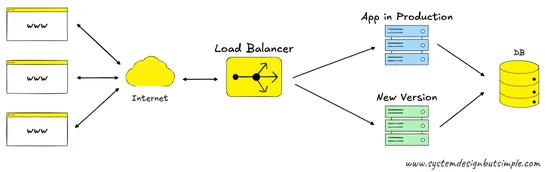
Blue‑Green Deployment in 1 diagram and 195 words

Blue-Green deployment runs two matching environments so you can flip traffic with zero downtime—and yank it back fast if something breaks. Kubernetes + IstioandSpinnakerhandle the heavy lifting. They steer traffic between versions and keep infra lean... read more  

Blue‑Green Deployment in 1 diagram and 195 words
Link
@faun shared a link, 8 months, 3 weeks ago
FAUN.dev()

Perplexity is using stealth, undeclared crawlers to evade website no-crawl directives

Perplexity AI’s stealth crawling behavior includes modifying user agents and source ASNs to avoid website blocks, highlighting the importance of transparent bot behavior... read more  

Link
@faun shared a link, 8 months, 3 weeks ago
FAUN.dev()

Project Ire autonomously identifies malware at scale

Microsoft just droppedProject Ire, an autonomous AI that tears through software like a experienced reverse engineer. It decompiles, analyzes, classifies malware—all on its own. Under the hood: LLMs, decompilers, and a tool-use API running the show. On public Windows driver datasets, it scored0.98 p.. read more  

Project Ire autonomously identifies malware at scale
Link
@faun shared a link, 8 months, 3 weeks ago
FAUN.dev()

Kali Linux can now run in Apple containers on macOS systems

Cybersecurity professionals can now launch Kali Linux in a virtualized container on macOS Sequoia using Apple's new containerization framework. Apple announced a new framework at WWDC 2025, allowing Apple Silicon hardware to run isolated Linux distros in a virtualized environment. There are limitati.. read more  

Link
@faun shared a link, 8 months, 3 weeks ago
FAUN.dev()

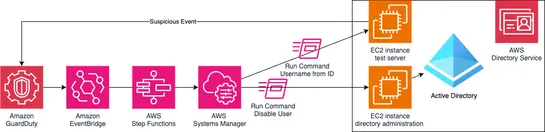
How to automatically disable users in AWS Managed Microsoft AD based on GuardDuty findings

AWS just dropped a new threat-response setup that tiesGuardDuty,EventBridge,Step Functions, andSystems Manager Run Commandinto one clean pipeline. The goal? Hunt for EC2 threats and lock downActive Directoryaccounts—automatically. GuardDuty kicks off the flow when it spots trouble. From there, Even.. read more  

How to automatically disable users in AWS Managed Microsoft AD based on GuardDuty findings
Link
@faun shared a link, 8 months, 3 weeks ago
FAUN.dev()

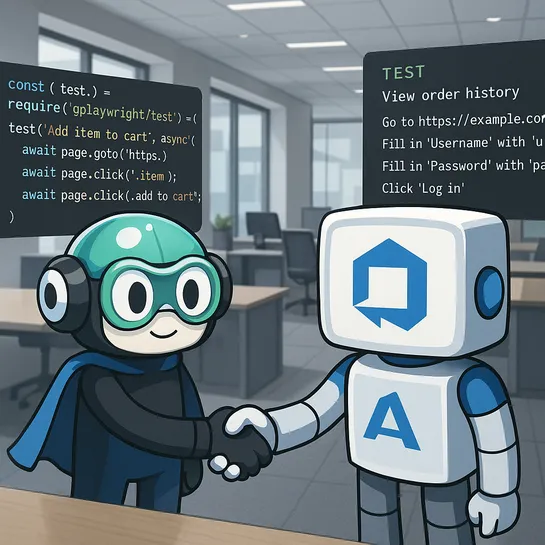
From Manual Testing to AI-Generated Automation: Our Azure DevOps MCP + Playwright Success Story

A team wired up Azure DevOps’MCP serverwithGitHub Copilotto crank outPlaywrightend-to-end tests from manual test cases. They now run tests on demand from Azure Test Plans, convert entire test suites in bulk, and drop the results into CI pipelines—no hand-holding required. System shift:AI's not just.. read more  

From Manual Testing to AI-Generated Automation: Our Azure DevOps MCP + Playwright Success Story
Link
@faun shared a link, 8 months, 3 weeks ago
FAUN.dev()

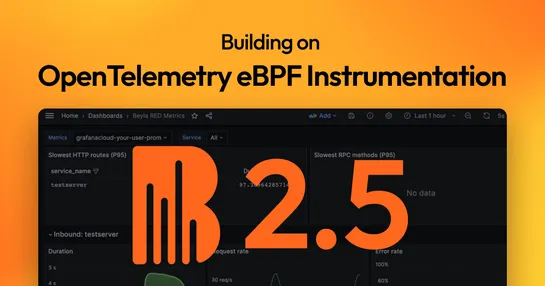
Building on the foundation of OpenTelemetry eBPF Instrumentation: what’s new in Grafana Beyla 2.5

Grafana Beyla 2.5 goes all-in on upstreamOpenTelemetry eBPF Instrumentation, baking it right into the core. This release addsauto-instrumentation for MongoDB and JSON-RPC,manual spans in Go, and tightertrace correlation for NodeJS. New in town:survey mode. Think lightweight service discovery—no ful.. read more  

Building on the foundation of OpenTelemetry eBPF Instrumentation: what’s new in Grafana Beyla 2.5
Link
@faun shared a link, 8 months, 3 weeks ago
FAUN.dev()

Writing an internal Terraform provider from A to Z

Typeform rolled their ownTerraform providerto wrangle runtime data through an internal API. Built with HashiCorp’sGo SDK, the official scaffolding framework, and wired up withacceptance testsfor full lifecycle muscle. They skipped the publicTerraform Registryentirely. Instead, they shipped provider.. read more  

Writing an internal Terraform provider from A to Z
Link
@faun shared a link, 8 months, 3 weeks ago
FAUN.dev()

Introducing Approvals in Pulumi ESC

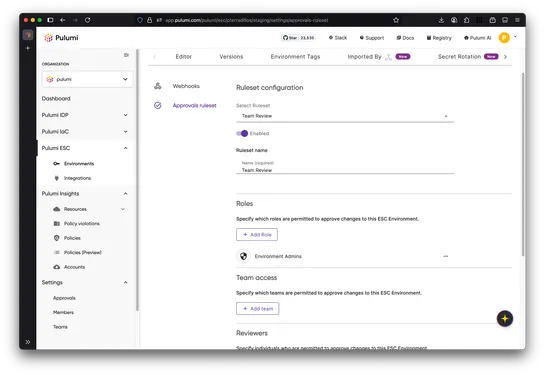
Pulumi ESC just leveled up withApprovals—structured reviews for environment config changes, straight from Console, CLI, SDK, or VS Code. Think pull requests, but for your infra settings. No more YOLO updates. Teams can now lock down config changes with required sign-offs. More control. Cleaner logs.. read more  

Introducing Approvals in Pulumi ESC
GPT-5.4 is OpenAI’s latest frontier AI model designed to perform complex professional and technical work more reliably. It combines advances in reasoning, coding, tool use, and long-context understanding into a single system capable of handling multi-step workflows across software environments. The model builds on earlier GPT-5 releases while integrating the strong coding capabilities previously introduced with GPT-5.3-Codex.

One of the defining features of GPT-5.4 is its ability to operate as part of agent-style workflows. The model can interact with tools, APIs, and external systems to complete tasks that extend beyond simple text generation. It also introduces native computer-use capabilities, allowing AI agents to operate applications using keyboard and mouse commands, screenshots, and browser automation frameworks such as Playwright.

GPT-5.4 supports context windows of up to one million tokens, enabling it to process and reason over very large documents, long conversations, or complex project contexts. This makes it suitable for tasks such as analyzing codebases, generating technical documentation, working with large spreadsheets, or coordinating long-running workflows. The model also introduces a feature called tool search, which allows it to dynamically retrieve tool definitions only when needed. This reduces token usage and makes it more efficient to work with large ecosystems of tools, including environments with dozens of APIs or MCP servers.

In addition to improved reasoning and automation capabilities, GPT-5.4 focuses on real-world productivity tasks. It performs better at generating and editing spreadsheets, presentations, and documents, and it is designed to maintain stronger context across longer reasoning processes. The model also improves factual accuracy and reduces hallucinations compared with previous versions.

GPT-5.4 is available across OpenAI’s ecosystem, including ChatGPT, the OpenAI API, and Codex. A higher-performance variant, GPT-5.4 Pro, is also available for users and developers who require maximum performance for complex tasks such as advanced research, large-scale automation, and demanding engineering workflows. Together, these capabilities position GPT-5.4 as a model aimed not just at conversation, but at executing real work across software systems.