Join us

ContentUpdates and recent posts about GPT-5.4..
Link
@faun shared a link, 7 months, 3 weeks ago
FAUN.dev()

Claude Code Ushers in a New Era of Agentic Programming

The rapid evolution of agentic coding is transforming software development, moving beyond traditional methods to intelligent, autonomous systems. Anthropic's Claude Code represents a significant leap in AI assistance for developers, shifting the paradigm from direct text manipulation to hands-off co.. read more  
Link
@faun shared a link, 7 months, 3 weeks ago
FAUN.dev()

Top Tech Conferences & Events to Add to Your Calendar in 2025

Check out TechRepublic's events guide for a list of upcoming conferences, some of which are in-person and others that are virtual or hybrid. This list will be updated periodically to include new events and details... read more  

Link
@faun shared a link, 7 months, 3 weeks ago
FAUN.dev()

Le Chat now integrates with 20+ enterprise platforms—powered by MCP—and remembers what matters with Memories.

Le Chat now includes20+ secure, MCP-based connectorsfor tools like GitHub, Snowflake, Stripe, and Jira. That means in-chat search, summaries, and actions—straight from enterprise systems. Developers can plug in their owncustom MCP connectors, and run Le Chat wherever it fits: on-prem, private cloud.. read more  

Le Chat now integrates with 20+ enterprise platforms—powered by MCP—and remembers what matters with Memories.
Link
@faun shared a link, 7 months, 3 weeks ago
FAUN.dev()

OpenAI to launch its first AI chip in 2026 with Broadcom, FT reports

OpenAI’s firstin-house AI chipis nearly out of the oven. It’s headed for fabrication atTSMCand built to handle OpenAI’s own workloads—no outside sales, according to theFinancial Times. Why it matters:Big AI shops are going vertical. Custom silicon means tighter control over runtime, reliability, an.. read more  

OpenAI to launch its first AI chip in 2026 with Broadcom, FT reports
Link
@faun shared a link, 7 months, 3 weeks ago
FAUN.dev()

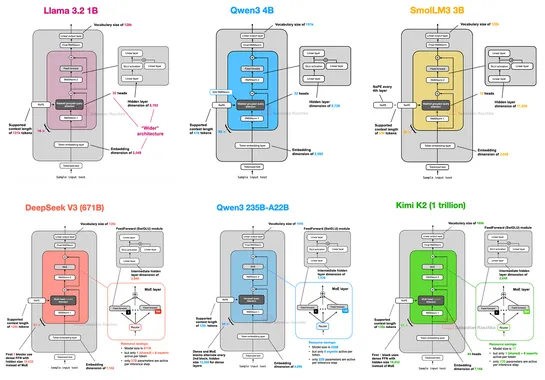
The Big LLM Architecture Comparison

Architectures since GPT-2 still ride transformers. They crank memory and performance withRoPE, swapGQAforMLA, sprinkle in sparseMoE, and roll sliding-window attention. Teams shiftRMSNorm. They tweak layer norms withQK-Norm, locking in training stability across modern models. Trend to watch:In 2025,.. read more  

The Big LLM Architecture Comparison
Link
@faun shared a link, 7 months, 3 weeks ago
FAUN.dev()

GPT-5 Thinking in ChatGPT (aka Research Goblin) is shockingly good at search

GPT-5's“thinking” modeljust leveled up. It's not just answering queries—it’s doing full-on research. Picture deep, multi-step Bing searches mixed with tool use and reasoning chains. It reads PDFs. Analyzes them. Suggests what to do next. Then actually does it. All from your phone. What’s changing:L.. read more  

GPT-5 Thinking in ChatGPT (aka Research Goblin) is shockingly good at search
Link
@faun shared a link, 7 months, 3 weeks ago
FAUN.dev()

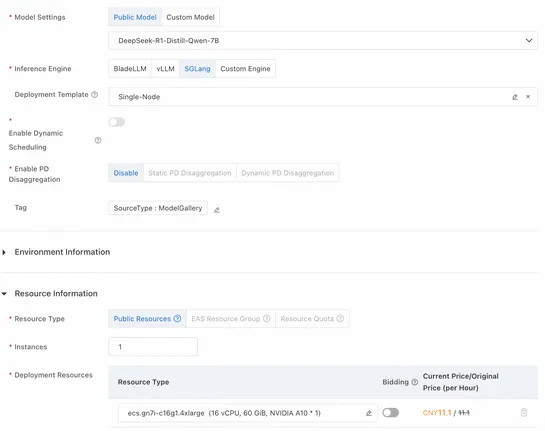
Best Practices for High Availability of LLM Based on AI Gateway

Alibaba Cloud’s AI Gateway just got sharper. It now handlesreal-time overload protectionandLLM fallback routingusing passive health checks, first packet timeouts, and traffic shaping. It proxies both BYO and cloud LLMs—think PAI-EAS, Tongyi Qianwen—and redirects load spikes or failures on the fly. F.. read more  

Best Practices for High Availability of LLM Based on AI Gateway
Link
@faun shared a link, 7 months, 3 weeks ago
FAUN.dev()

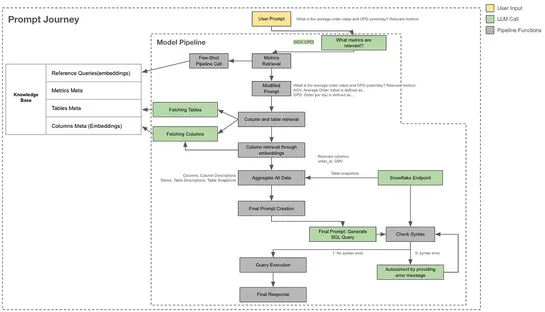
Hermes V3: Building Swiggy’s Conversational AI Analyst

Swiggy just gave its GenAI tool, Hermes, a serious glow-up. What started as a simple text-to-SQL bot is now acontext-aware AI analystthat lives inside Slack. The upgrade? Not just tweaks—an overhaul. Think: vector-based prompt retrieval, session-level memory, an Agent orchestration layer, and a SQL.. read more  

Hermes V3: Building Swiggy’s Conversational AI Analyst
Link
@faun shared a link, 7 months, 3 weeks ago
FAUN.dev()

From Zero to GPU: A Guide to Building and Scaling Production-Ready CUDA Kernels

Hugging Face just dropped Kernel Builder—a full-stack toolchain for building, versioning, and shippingcustom CUDA kernels as native PyTorch ops. Kernels arearchitecture-aware,semantically versioned, andpullable straight from the Hub. It tracks changes with lockfiles and bakes inDocker deploysout of.. read more  

Link
@faun shared a link, 7 months, 3 weeks ago
FAUN.dev()

Simplifying Large-Scale LLM Processing across Instacart with Maple

Instacart builtMaple, a backend brain for handling millions of LLM prompts—fast, cheap, and shared across teams. It’s not just another service. Maple runs onTemporal,PyArrow, andS3, strip-mines away provider-specific boilerplate, auto-batches prompts, retries failures, and slashes LLM costs by up t.. read more  

Simplifying Large-Scale LLM Processing across Instacart with Maple
GPT-5.4 is OpenAI’s latest frontier AI model designed to perform complex professional and technical work more reliably. It combines advances in reasoning, coding, tool use, and long-context understanding into a single system capable of handling multi-step workflows across software environments. The model builds on earlier GPT-5 releases while integrating the strong coding capabilities previously introduced with GPT-5.3-Codex.

One of the defining features of GPT-5.4 is its ability to operate as part of agent-style workflows. The model can interact with tools, APIs, and external systems to complete tasks that extend beyond simple text generation. It also introduces native computer-use capabilities, allowing AI agents to operate applications using keyboard and mouse commands, screenshots, and browser automation frameworks such as Playwright.

GPT-5.4 supports context windows of up to one million tokens, enabling it to process and reason over very large documents, long conversations, or complex project contexts. This makes it suitable for tasks such as analyzing codebases, generating technical documentation, working with large spreadsheets, or coordinating long-running workflows. The model also introduces a feature called tool search, which allows it to dynamically retrieve tool definitions only when needed. This reduces token usage and makes it more efficient to work with large ecosystems of tools, including environments with dozens of APIs or MCP servers.

In addition to improved reasoning and automation capabilities, GPT-5.4 focuses on real-world productivity tasks. It performs better at generating and editing spreadsheets, presentations, and documents, and it is designed to maintain stronger context across longer reasoning processes. The model also improves factual accuracy and reduces hallucinations compared with previous versions.

GPT-5.4 is available across OpenAI’s ecosystem, including ChatGPT, the OpenAI API, and Codex. A higher-performance variant, GPT-5.4 Pro, is also available for users and developers who require maximum performance for complex tasks such as advanced research, large-scale automation, and demanding engineering workflows. Together, these capabilities position GPT-5.4 as a model aimed not just at conversation, but at executing real work across software systems.