Join us

ContentUpdates and recent posts about GPT-5.4..
Link
@faun shared a link, 7 months, 1 week ago
FAUN.dev()

PostgreSQL maintenance without superuser

PostgreSQL’s moving in on superusers. As of recent releases—starting way back in v9.6 and maturing through PostgreSQL 18 (coming 2025)—there are now **15+ built-in admin roles**. No need to hand out superuser just to get things done. These roles cover the ops spectrum: monitoring, backups, fil.. read more  

PostgreSQL maintenance without superuser
Link
@faun shared a link, 7 months, 1 week ago
FAUN.dev()

Introducing Budget Controls for AWS: Automatically Manage Your Cloud Costs

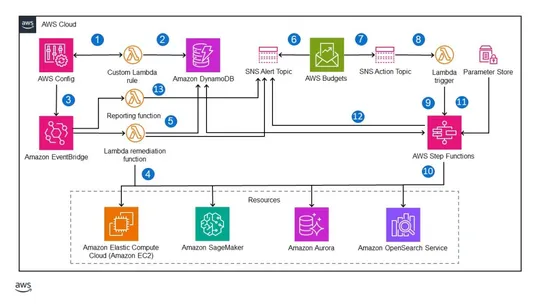
**Budget Controls for AWS** just got better. The open-source tool now reins in more than just EC2. It wrangles **RDS Aurora**, **SageMaker**, and **OpenSearch** too. Under the hood, it taps **AWS Budgets**, **AWS Config**, and **custom tags** to watch spend like a hawk. Hit a budget threshold? It c.. read more  

Introducing Budget Controls for AWS: Automatically Manage Your Cloud Costs
Link
@faun shared a link, 7 months, 1 week ago
FAUN.dev()

%CPU Utilization Is A Lie

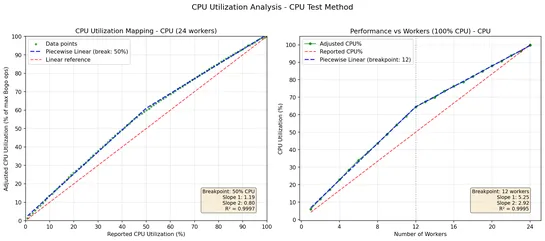
Stress tests on the Ryzen 9 5900X uncovered a big gap between **reported CPU utilization** and what the chip actually pushes. Around 50% on paper? Could mean close to full throttle in reality—thanks to sneaky behaviors from **SMT resource sharing** and **Turbo frequency scaling**. **Takeaway:** Raw.. read more  

%CPU Utilization Is A Lie
Link
@faun shared a link, 7 months, 1 week ago
FAUN.dev()

SLI Evolution Stages

A new SLI evolution model lays out a maturity roadmap—from rebranded latency/error metrics to ones that actually track business impact. It replaces shallow signals and pulls in the stuff that matters: how service failures hit user goals, tasks, and bottom lines... read more  

SLI Evolution Stages
Link
@faun shared a link, 7 months, 1 week ago
FAUN.dev()

Best 20 Linux Commands for Daily Use in Production Servers

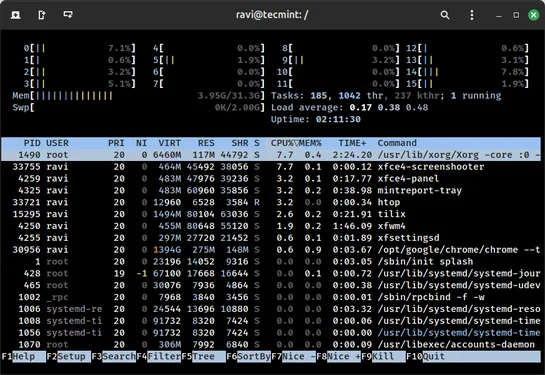
A fresh roundup drops20 go-to Linux commandsfor production sysadmins, dialing in on modern defaults likehtop > top,ss > netstat, andip > ifconfig. The shift? Faster tools that actually get updates. Built with systemd in mind, too. Expect the usual suspects—journalctl,rsync,crontab—all still pulling.. read more  

Best 20 Linux Commands for Daily Use in Production Servers
Link
@faun shared a link, 7 months, 1 week ago
FAUN.dev()

Fast, Secure Kubernetes with AKS Automatic

Azure dropped **AKS Automatic**, a new managed Kubernetes tier that tries to do it all—so you don’t have to. It comes with baked-in best practices: autoscaling via HPA, VPA, KEDA, and Karpenter. Automated patching. Node repair. Monitoring. All wired up by default. You still get full access to the .. read more  

Fast, Secure Kubernetes with AKS Automatic
Link
@faun shared a link, 7 months, 1 week ago
FAUN.dev()

v1.34: Pods Report DRA Resource Health

Kubernetes v1.34 lands with an alpha upgrade to **[KEP-4680](https://github.com/kubernetes/enhancements/tree/master/keps/sig-node/4680-add-resource-health-to-pod-status)**, pushing **Dynamic Resource Allocation (DRA)** into smarter territory: health-aware Pods. DRA drivers can now stream device heal.. read more  

Link
@faun shared a link, 7 months, 1 week ago
FAUN.dev()

v1.34: Recovery From Volume Expansion Failure (GA)

Kubernetes v1.34 bumps **automated recovery from botched PVC expansions** to GA. Users can now fix bad volume size requests—no admin, no drama. It cleans up unused quota, slows down retry spam, and surfaces progress with new PVC status fields... read more  

Link
@faun shared a link, 7 months, 1 week ago
FAUN.dev()

Kubernetes Security: Best Practices to Protect Your Cluster

A new JetBrains IDE plugin throws Kubernetes security best practices straight into your deployment manifests—right where they belong. Think: checks for `runAsRoot`, privileged mode, `hostPath`, host ports, and sketchy sysctls. No hand-waving. It enforces stuff like: - Default `runAsNonRoot` - Drop .. read more  

Kubernetes Security: Best Practices to Protect Your Cluster
Link
@faun shared a link, 7 months, 1 week ago
FAUN.dev()

v1.34: DRA Consumable Capacity

Kubernetes 1.34 rolls in **consumable capacity** for Dynamic Resource Allocation (DRA). That means device plugins can now carve up resources—GPU memory, NIC bandwidth, etc.—into precise slices for Pods, ResourceClaims, and namespaces. The scheduler tracks it all, so nothing spills over... read more  

GPT-5.4 is OpenAI’s latest frontier AI model designed to perform complex professional and technical work more reliably. It combines advances in reasoning, coding, tool use, and long-context understanding into a single system capable of handling multi-step workflows across software environments. The model builds on earlier GPT-5 releases while integrating the strong coding capabilities previously introduced with GPT-5.3-Codex.

One of the defining features of GPT-5.4 is its ability to operate as part of agent-style workflows. The model can interact with tools, APIs, and external systems to complete tasks that extend beyond simple text generation. It also introduces native computer-use capabilities, allowing AI agents to operate applications using keyboard and mouse commands, screenshots, and browser automation frameworks such as Playwright.

GPT-5.4 supports context windows of up to one million tokens, enabling it to process and reason over very large documents, long conversations, or complex project contexts. This makes it suitable for tasks such as analyzing codebases, generating technical documentation, working with large spreadsheets, or coordinating long-running workflows. The model also introduces a feature called tool search, which allows it to dynamically retrieve tool definitions only when needed. This reduces token usage and makes it more efficient to work with large ecosystems of tools, including environments with dozens of APIs or MCP servers.

In addition to improved reasoning and automation capabilities, GPT-5.4 focuses on real-world productivity tasks. It performs better at generating and editing spreadsheets, presentations, and documents, and it is designed to maintain stronger context across longer reasoning processes. The model also improves factual accuracy and reduces hallucinations compared with previous versions.

GPT-5.4 is available across OpenAI’s ecosystem, including ChatGPT, the OpenAI API, and Codex. A higher-performance variant, GPT-5.4 Pro, is also available for users and developers who require maximum performance for complex tasks such as advanced research, large-scale automation, and demanding engineering workflows. Together, these capabilities position GPT-5.4 as a model aimed not just at conversation, but at executing real work across software systems.