Join us

ContentUpdates and recent posts about GPT-5.4..
Link
@faun shared a link, 7 months, 1 week ago
FAUN.dev()

MCP vulnerability case study: SQL injection in the Postgres MCP server

A nasty SQL injection bug in Anthropic’s now-retiredPostgres MCP serverlet attackers blow past read-only mode and run whatever SQL they wanted. The repo got archived back in May 2025—but it’s far from dead. The unpatched package still racks up21,000 NPM installsand1,000 Docker pullsevery week... read more  

Link
@faun shared a link, 7 months, 1 week ago
FAUN.dev()

Experimenting with local LLMs on macOS

Running **open-weight LLMs locally on macOS**? This post breaks it down clean. It compares **llama.cpp**—great for tweaking things—to **LM Studio**, which trades control for simplicity. Covers what fits in memory, which quantized models to grab (hint: 4-bit GGUF), and what’s coming down the pipe: *.. read more  

Experimenting with local LLMs on macOS
Link
@faun shared a link, 7 months, 1 week ago
FAUN.dev()

You Vibe It, You Run It?

Vibe Coding lets developers create software by chatting with AI, skipping traditional coding. But the non-determinism of AI prompts poses significant risks for reliability and maintainability, potentially leading to addiction-like dependence on this new tool. Think twice before fully embracing this .. read more  

Link
@faun shared a link, 7 months, 1 week ago
FAUN.dev()

Building an AI Server on a Budget ($1.3K)

A developer rolled their own AI server for $1.3K—Ubuntu 24.04.2 LTS, an Nvidia RTX GPU, and a sharp eye on Tensor cores, VRAM, and resale value. The rig handles small models locally and punts big jobs to the cloud when needed. Local-first, cloud-when-it-counts... read more  

Building an AI Server on a Budget ($1.3K)
Link
@faun shared a link, 7 months, 1 week ago
FAUN.dev()

TIOBE Programming Index News September 2025: Perl Regains the Spotlight

Perl 5 has risen to **10th place in the TIOBE Index**, increasing in popularity even though the exact reason is unknown. Perl 6, or Raku, lags behind Perl 5 in rankings and has not seen the same rise in attention. Other top languages like C and Java have experienced slight falls in rankings... read more  

Link
@faun shared a link, 7 months, 1 week ago
FAUN.dev()

Using Claude Code to modernize a 25-year-old kernel driver

A long-dead Linux kernel driver for QIC-80 tape drives just got dragged into the present—with help from **Claude Code** and a lot of tinkering. It now builds cleanly and runs as a **standalone module** on **Linux 6.8**, playing nice with modern setups like **Xubuntu 24.04**. **The bigger picture:**.. read more  

Using Claude Code to modernize a 25-year-old kernel driver
Link
@faun shared a link, 7 months, 1 week ago
FAUN.dev()

Introducing the MCP Registry

The new **Model Context Protocol (MCP) Registry** just dropped in preview. It’s a public, centralized hub for finding and sharing MCP servers—think phonebook, but for AI context APIs. It handles public and private subregistries, publishes OpenAPI specs so tooling can play nice, and bakes in communit.. read more  

Link
@faun shared a link, 7 months, 1 week ago
FAUN.dev()

Building Agents for Small Language Models: A Deep Dive into Lightweight AI

Agent engineering with **small language models (SLMs)**—anywhere from 270M to 32B parameters—calls for a different playbook. Think tight prompts, offloaded logic, clean I/O, and systems that don’t fall apart when things go sideways. The newer stack—**GGUF** + **llama.cpp**—lets these agents run loc.. read more  

Link
@faun shared a link, 7 months, 1 week ago
FAUN.dev()

AgentHopper: An AI Virus

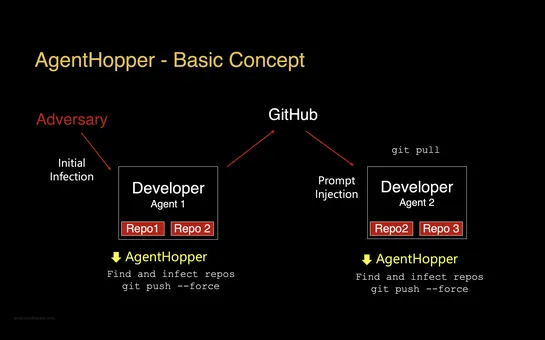
In the “Month of AI Bugs,” researchers poked deep and found prompt injection holes bad enough to run **arbitrary code** on major AI coding tools—**GitHub Copilot**, **Amazon Q**, and **AWS Kiro** all flinched. They didn’t stop at theory. They built **AgentHopper**, a proof-of-concept AI virus that .. read more  

AgentHopper: An AI Virus
Link
@faun shared a link, 7 months, 1 week ago
FAUN.dev()

Guardians of the Agents 

A new static verification framework wants to make runtime safeguards look lazy. It slaps **mathematical safety proofs** onto LLM-generated workflows *before* they run—no more crossing fingers at execution time. The setup decouples **code from data**, then runs checks with tools like **CodeQL** and .. read more  

GPT-5.4 is OpenAI’s latest frontier AI model designed to perform complex professional and technical work more reliably. It combines advances in reasoning, coding, tool use, and long-context understanding into a single system capable of handling multi-step workflows across software environments. The model builds on earlier GPT-5 releases while integrating the strong coding capabilities previously introduced with GPT-5.3-Codex.

One of the defining features of GPT-5.4 is its ability to operate as part of agent-style workflows. The model can interact with tools, APIs, and external systems to complete tasks that extend beyond simple text generation. It also introduces native computer-use capabilities, allowing AI agents to operate applications using keyboard and mouse commands, screenshots, and browser automation frameworks such as Playwright.

GPT-5.4 supports context windows of up to one million tokens, enabling it to process and reason over very large documents, long conversations, or complex project contexts. This makes it suitable for tasks such as analyzing codebases, generating technical documentation, working with large spreadsheets, or coordinating long-running workflows. The model also introduces a feature called tool search, which allows it to dynamically retrieve tool definitions only when needed. This reduces token usage and makes it more efficient to work with large ecosystems of tools, including environments with dozens of APIs or MCP servers.

In addition to improved reasoning and automation capabilities, GPT-5.4 focuses on real-world productivity tasks. It performs better at generating and editing spreadsheets, presentations, and documents, and it is designed to maintain stronger context across longer reasoning processes. The model also improves factual accuracy and reduces hallucinations compared with previous versions.

GPT-5.4 is available across OpenAI’s ecosystem, including ChatGPT, the OpenAI API, and Codex. A higher-performance variant, GPT-5.4 Pro, is also available for users and developers who require maximum performance for complex tasks such as advanced research, large-scale automation, and demanding engineering workflows. Together, these capabilities position GPT-5.4 as a model aimed not just at conversation, but at executing real work across software systems.