Join us

ContentUpdates and recent posts about GPT-5.4..
Link
@faun shared a link, 6 months, 2 weeks ago
FAUN.dev()

Automated GitHub Self-Hosted Runner Cleanup: Lambda Functions and Auto Scaling Lifecycle Hooks

When an EC2 instance in an Auto Scaling Group shuts down, event-driven plumbing kicks in. Alifecycle hookcatches the scale-in, fires off an SNS notification, and triggers aLambda. That Lambda calls the GitHub API to yank the self-hosted runner before the instance dies. No dangling runners. No manual.. read more  
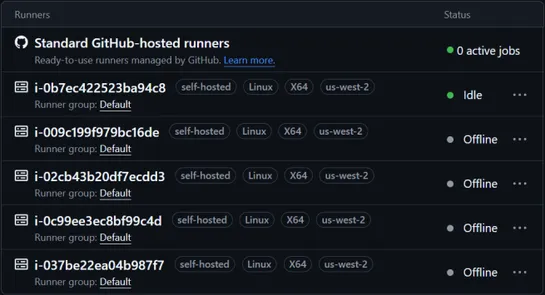
Automated GitHub Self-Hosted Runner Cleanup: Lambda Functions and Auto Scaling Lifecycle Hooks
Link
@faun shared a link, 6 months, 2 weeks ago
FAUN.dev()

Most Cloud-Native Roles are Software Engineers

Software Engineers still own the cloud-native job boards in 2025 - nearly47%of all Kubernetes-tagged listings. DevOps holds onto second. But Platform Engineers just leapfrogged SREs, which have slid 30% since 2023... read more  

Most Cloud-Native Roles are Software Engineers
Link
@faun shared a link, 6 months, 2 weeks ago
FAUN.dev()

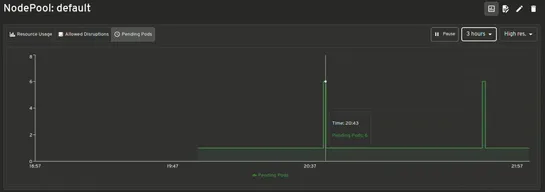
Introducing Headlamp Plugin for Karpenter

The newHeadlamp Karpenter Pluginwires real-time autoscaling insight straight into the Headlamp UI. It showsKarpenterresources, live metrics, scaling moves—no kubectl spelunking required. NodePoolsandNodeClaimsget mapped to core Kubernetes objects. You can tweak configs in the UI, get validation on t.. read more  

Introducing Headlamp Plugin for Karpenter
Link
@faun shared a link, 6 months, 2 weeks ago
FAUN.dev()

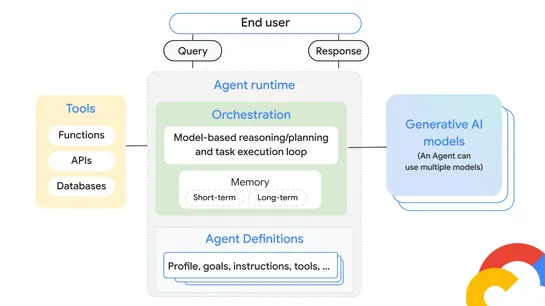
Kubernetes for agentic apps: A platform engineering perspective

Agentic AI flips the old model. Instead of stateless, event-by-event workloads, we getstateful, self-steering systemsthat observe, reason, plan, and act - on loop. Kubernetes steps up as the OS for this next phase. Boosted by platform engineering, it brings the right mix:ephemeral compute, persisten.. read more  

Kubernetes for agentic apps: A platform engineering perspective
Link
@faun shared a link, 6 months, 2 weeks ago
FAUN.dev()

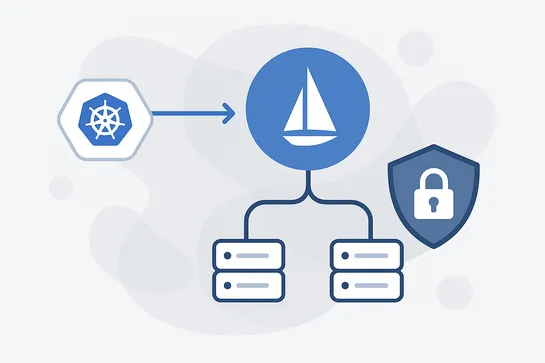
Internal HTTPS Routing in Istio.

Istio finally bringsinternal HTTPS routingwithSNI-based traffic rules. Services in the mesh can now talk over port 443—TLS fully intact. Just like in prod. TLS terminates at the ingress gateway. Routing pivots on SNI, not headers. Which makes this much closer to real-world mTLS flows. What’s the pla.. read more  

Internal HTTPS Routing in Istio.
Link
@faun shared a link, 6 months, 2 weeks ago
FAUN.dev()

How I Built My Kubernetes Command Toolkit: A Journey from kubectl Chaos to Command Mastery

A dev-built Kubernetes CLI framework reshapeskubectlfor how teams actually work. Commands get grouped by role - dev, SRE, sec, admin - instead of by resource. It bakes in defaults forKyvernopolicies, encourages muscle-memory workflows, and wires up real-time troubleshooting to shrink downtime in pro.. read more  

How I Built My Kubernetes Command Toolkit: A Journey from kubectl Chaos to Command Mastery
Link
@faun shared a link, 6 months, 2 weeks ago
FAUN.dev()

The Myths (and Costs) of Running Node.js on Kubernetes

Kubernetes struggles to scale Node.js efficiently due to a mismatch in resource usage patterns. Autoscaling can be sluggish with bursty traffic, leading to revenue risks and performance issues. Teams must rethink resource allocation and scaling strategies to optimize Node.js efficiency in Kubernetes.. read more  

Link
@faun shared a link, 6 months, 2 weeks ago
FAUN.dev()

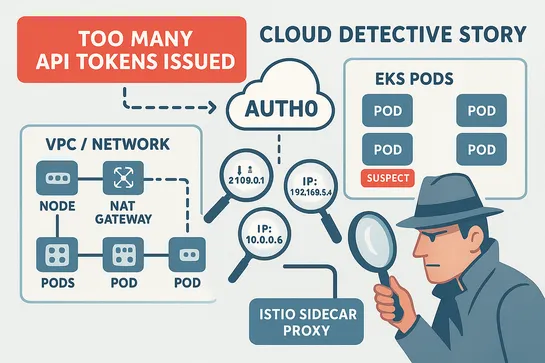
Who’s Calling That API? A Detective Story from the Depths of EKS Networking

A production network got hammered by too many Auth0 token requests. The source? EKS workloads tucked behind a shared NAT Gateway. No easy trail. Engineers stitched it together usingVPC Flow Logs,pod-to-node maps, and some sharpIstio ServiceEntry logs. Even with Kubernetes CNI doing its NAT-obscuring.. read more  

Who’s Calling That API? A Detective Story from the Depths of EKS Networking
News FAUN.dev() Team
@varbear shared an update, 6 months, 2 weeks ago
FAUN.dev()

Reo.Dev Secures $4M to Boost AI Platform for Developer Companies

HubSpot Salesforce Reo.Dev

Reo.Dev has raised $4 million in seed funding, led by Heavybit, to enhance its AI-powered go-to-market platform for developer-first companies and expand its U.S. presence.

Reo.Dev Secures $4M to Boost AI Platform for Developer Companies
News FAUN.dev() Team
@kala shared an update, 6 months, 2 weeks ago
FAUN.dev()

Anthropic's Claude Sonnet 4.5 AI Model Shows Self-Awareness in Tests

Anthropic's AI model, Claude Sonnet 4.5, exhibits self-awareness by recognizing test scenarios, complicating safety evaluations and raising concerns about potential strategic behavior, similar to observations in OpenAI models.

Anthropic's Claude Sonnet 4.5 AI Model Shows Self-Awareness in Tests
GPT-5.4 is OpenAI’s latest frontier AI model designed to perform complex professional and technical work more reliably. It combines advances in reasoning, coding, tool use, and long-context understanding into a single system capable of handling multi-step workflows across software environments. The model builds on earlier GPT-5 releases while integrating the strong coding capabilities previously introduced with GPT-5.3-Codex.

One of the defining features of GPT-5.4 is its ability to operate as part of agent-style workflows. The model can interact with tools, APIs, and external systems to complete tasks that extend beyond simple text generation. It also introduces native computer-use capabilities, allowing AI agents to operate applications using keyboard and mouse commands, screenshots, and browser automation frameworks such as Playwright.

GPT-5.4 supports context windows of up to one million tokens, enabling it to process and reason over very large documents, long conversations, or complex project contexts. This makes it suitable for tasks such as analyzing codebases, generating technical documentation, working with large spreadsheets, or coordinating long-running workflows. The model also introduces a feature called tool search, which allows it to dynamically retrieve tool definitions only when needed. This reduces token usage and makes it more efficient to work with large ecosystems of tools, including environments with dozens of APIs or MCP servers.

In addition to improved reasoning and automation capabilities, GPT-5.4 focuses on real-world productivity tasks. It performs better at generating and editing spreadsheets, presentations, and documents, and it is designed to maintain stronger context across longer reasoning processes. The model also improves factual accuracy and reduces hallucinations compared with previous versions.

GPT-5.4 is available across OpenAI’s ecosystem, including ChatGPT, the OpenAI API, and Codex. A higher-performance variant, GPT-5.4 Pro, is also available for users and developers who require maximum performance for complex tasks such as advanced research, large-scale automation, and demanding engineering workflows. Together, these capabilities position GPT-5.4 as a model aimed not just at conversation, but at executing real work across software systems.