Join us

ContentUpdates and recent posts about GPT-5.3-Codex..
Story
@angie shared a post, 10 months, 3 weeks ago
Product Marketing Analyst, manageengine

The future of observability is developer-native: A deep dive into the next wave of diagnostics

"The systems we build are becoming too complex to merely monitor. We need systems that explain themselves."

Once upon a time, just monitoring your systems was enough. You had a few servers, maybe Nagios or Zabbix, some uptime checks, and that was it.

Then everything changed. The cloud arrived, followed by containers, microservices, and serverless. Suddenly, your "app" wasn't just a server; it was dozens of services, scattered across data centers, ephemeral environments, third-party APIs, and edge locations.

Monitoring just doesn't cut it anymore.

Today, we're firmly in the era of observability.
The future of observability is developer-native: A deep dive into the next wave of diagnostics
Story FAUN.dev() Team Trending
@eon01 shared a post, 10 months, 3 weeks ago
Founder, FAUN.dev

Halfway Through 2025: These Are the Open Source Tools Everyone’s Talking About

2025 isn’t slowing down. From AI agents and lightweight frameworks to infrastructure that actually scales, open source is where the real innovation’s happening.

We’ve combed through FAUN.dev newsletters and community picks to bring you the standout projects developers are loving this year.

Every click you've made is a vote for what's hot and what's not in the open source world. We've analyzed thousands of interactions to identify the tools that have truly captured the attention and imagination of the FAUN.dev community.

If you're curious what's making waves in real dev workflows, this list is your shortcut.

The Hottest Open Source Projects
Link
@faun shared a link, 10 months, 4 weeks ago
FAUN.dev()

Policy Zones: How Meta enforces purpose limitation at scale in batch processing systems

Meta’s Privacy Aware Infrastructure (PAI) slamsGovernable Data Annotations (GDAs)at runtime. It parses SQL across itsexabyte-scalewarehouse and blocks any flow that floutspurpose-usepolicies. It welds Unified Programming Model (UPM), Policy Evaluation Service (PES), Warehouse Permission Service (WP.. read more  

Policy Zones: How Meta enforces purpose limitation at scale in batch processing systems
Link
@faun shared a link, 10 months, 4 weeks ago
FAUN.dev()

Cursor makes developers less effective?

METRtapped 16 devs to squash 136 live bugs withCursor(Sonnet 3.5/3.7). They clocked 146 h. AI users zipped through code, but stalls, reviews, and IDE lag devoured their lead. One dev who logged 50+ hours withCursorunlocked a 38% speedup. That steep learning curve and costly context pivots wipe out g.. read more  

Cursor makes developers less effective?
Link
@faun shared a link, 10 months, 4 weeks ago
FAUN.dev()

To be a better programmer, write little proofs in your head

Developer sketchesproofsmid-code. This drives first-run correctness by leaning onmonotonicity,immutability,invariants, andpre/postconditions. They carve code into atomic steps. They erectfirewallsto contain impact zones. They wield induction for recursive logic—proof-affinity blooms. They drill form.. read more  

Link
@faun shared a link, 10 months, 4 weeks ago
FAUN.dev()

Tencent’s AI-powered programming tool fully automates app development

Tencent’s AI team rolled out a 24-hour, invite-only beta of CodeBuddy to50,000 devs. CodeBuddy flips chat into code via itsconversation-is-programmingIDE. Devs forge end-to-end apps with natural language. Trend to watch:Chat-based IDEs portend a shift to natural-language dev workflows... read more  

Tencent’s AI-powered programming tool fully automates app development
Link
@faun shared a link, 10 months, 4 weeks ago
FAUN.dev()

TODOs aren’t for doing

Teams balk at trackingTODOcomments. Some funnel them into bug trackers. Others prune stale tags. The post saysTODOs stash edge-case insights, not tickets... read more  

Link
@faun shared a link, 10 months, 4 weeks ago
FAUN.dev()

Secrets Management Tools: The Complete 2025 Guide

Pulumi ESC corrals secrets from 20 + stores—Vault, AWS, Azure, GCP—into a singleYAML config-as-codeengine. It spawns dynamic short-lived credentials and locks every action behind a centralized audit log. Existing secret stores stay intact. Retrieval hitssub-secondspeeds. Envelope encryption shields .. read more  

Link
@faun shared a link, 10 months, 4 weeks ago
FAUN.dev()

Alibaba Launches Qwen3-Coder AI Model for Agentic Programming Excellence

Alibaba unleashedQwen3-Coder, a480B-parameter MoE titan. It ignites35Bparameters per token to code, debug, and automate workflows. It spans256Ktokens of context—and can stretch to a million. It ships asQwen3-Coder-480B-A35B-Instructon Hugging Face and GitHub. It hooks intoQwen CodeCLI orClaude Code... read more  

Alibaba Launches Qwen3-Coder AI Model for Agentic Programming Excellence
Link
@faun shared a link, 10 months, 4 weeks ago
FAUN.dev()

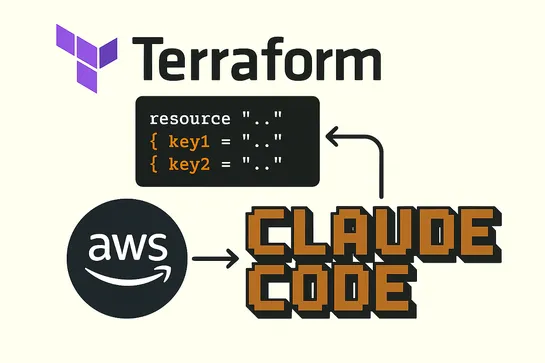
Automating Terraform Imports with Configuration Generation Using Claude Code

Terraform v1.5 debuts anexperimental flag,-generate-config-out. It grabs configs duringresource importand spits out raw HCL. Teams stash assets in animportblock, trigger the flag, then polish the generatedmain.tf. IaC onboarding feels like a sprint... read more  

Automating Terraform Imports with Configuration Generation Using Claude Code
GPT-5.3-Codex is OpenAI’s advanced agentic coding model, designed to go beyond writing code and operate as a general-purpose collaborator on a computer. It builds on GPT-5.2-Codex by combining stronger coding performance with improved reasoning and professional knowledge, while running about 25% faster. The model is optimized for long-running tasks that involve research, tool use, and complex execution, and it performs at the top of industry benchmarks such as SWE-Bench Pro and Terminal-Bench.

Unlike earlier Codex models that focused primarily on code generation and review, GPT-5.3-Codex can reason, plan, and act across the full software lifecycle. It supports activities such as debugging, deploying, monitoring, writing product requirement documents, creating tests, and analyzing metrics. It can also autonomously build and iterate on complex applications and better interpret underspecified prompts, producing more complete and production-ready results by default.

A defining feature of GPT-5.3-Codex is its interactive, agentic workflow. Users can steer the model while it is working, receive progress updates, and adjust direction without losing context, making it feel more like a teammate than a batch automation tool. The model was even used internally to help debug its own training and deployment processes. GPT-5.3-Codex is available through paid ChatGPT plans in the Codex app, CLI, IDE extension, and web, with API access planned for the future.