Join us

ContentUpdates and recent posts about GPT-5.3-Codex..
Link
@faun shared a link, 10 months, 2 weeks ago
FAUN.dev()

Azure Kubernetes Cluster with Terraform

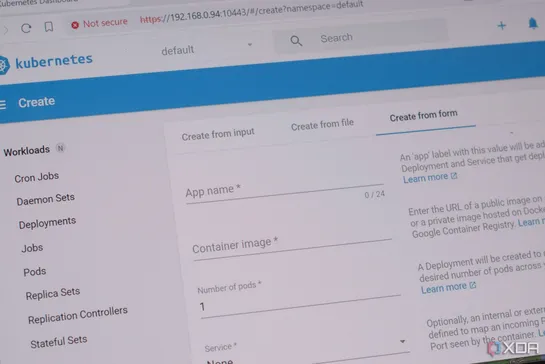
Spin up a production-gradeAKScluster withTerraform, but skip the hand-wavy theory. This new hands-on project gets into the weeds—RBAC, autoscaling, network policies, IP lockdowns, and yes,Azure Monitorwired up for observability out of the gate. Costs? Controlled. Infra? All code. It’s IaC for teams.. read more  
Link
@faun shared a link, 10 months, 2 weeks ago
FAUN.dev()

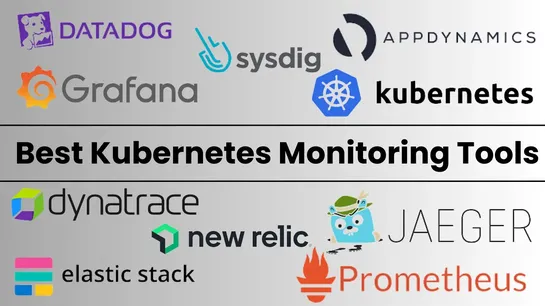
20 Best Kubernetes Monitoring Tools in 2025

Kubernetes monitoring isn't just about scraping metrics anymore. It's grown up into full-stack observability—metrics, logs, traces, plus flashy toys like AI-powered anomaly detection, real-time dashboards, and distributed tracing that actually works. The big players—Prometheus,Grafana,Datadog,Dynat.. read more  

20 Best Kubernetes Monitoring Tools in 2025
Link
@faun shared a link, 10 months, 2 weeks ago
FAUN.dev()

I've been using Talos Linux for Kubernetes, and I'll never look back

Talos Linux—an OS stripped down to the essentials and locked tighter than a production firewall—now boots cleanly as a VM onProxmox, playing nice with fullKVM/QEMUsupport. No shell, read-only filesystem, all wired forKubernetesviatalosctl. System shift:Devs are tossing old-school VM stacks for bare.. read more  

I've been using Talos Linux for Kubernetes, and I'll never look back
Link
@faun shared a link, 10 months, 2 weeks ago
FAUN.dev()

Retiring Docker Content Trust

Docker’s sunsettingDocker Content Trust (DCT)in 2025, starting withDocker Official Images. Not many used it, andNotary v1is toast. So they’re moving to modern signing tools likeSigstoreandNotation. Migration guides are on the way. What’s really happening:The container world’s ditching old trustboxe.. read more  

Link
@faun shared a link, 10 months, 2 weeks ago
FAUN.dev()

Understanding Kubernetes Commands and Arguments

Kubernetes lets you override a container’sCMDandENTRYPOINTwith thecommandandargsfields in your Pod spec. But don’t expect to change them after the Pod’s spun up—this isn’t Docker. No runtime flags here... read more  

Link
@faun shared a link, 10 months, 2 weeks ago
FAUN.dev()

Kubernetes v1.34 Sneak Peek

Kubernetes v1.34 lands in August 2025. It bringsDynamic Resource Allocation (DRA)to stable—structured resource requests, CEL filtering, and support for GPUs and custom gear. Built on new API types. Finally. Kubelet and API Server tracinglevel up with OpenTelemetry. Stable's the goal. Per-HPA autos.. read more  

Link
@faun shared a link, 10 months, 2 weeks ago
FAUN.dev()

How Freshworks optimized server provisioning using Karpenter

Freshworks optimized AWS EKS with Karpenter to handle diverse instance types, reduce costs, and achieve seamless node provisioning, disruptions, and terminations with minimal impact to service availability and resource utilization... read more  

Story ManageEngine Team
@shallin02 shared a post, 10 months, 3 weeks ago
Content Writer, ManageEngine Applications Manager

Container monitoring demystified: Real challenges and what actually works

Applications Manager

Discover the real challenges of container monitoring from ephemeral workloads to hybrid cloud complexity and learn practical solutions using tools like Prometheus, OpenTelemetry, and Applications Manager.

Story
@laura_garcia shared a post, 10 months, 3 weeks ago
Software Developer, RELIANOID

🌐 DDoS in 2025: Bigger, Smarter, and More Dangerous

DDoS attacks in 2025 are more frequent, complex, and accessible than ever—some reaching beyond 3 Tbps. From AI-driven traffic patterns to IoT botnets and multi-vector campaigns, the threat is real. Critical infrastructure, cloud APIs, and even elections are under fire. 🔐 At RELIANOID, we fight back ..

Blog DDoS Trends RELIANOID
Story ManageEngine Team
@shallin02 shared a post, 10 months, 3 weeks ago
Content Writer, ManageEngine Applications Manager

Is your docker setup actually performing well?

Applications Manager

Learn why Docker container monitoring is essential for performance, stability, and cost control. Discover must-watch metrics and explore tools like Applications Manager for real-time insights and smart alerts.

GPT-5.3-Codex is OpenAI’s advanced agentic coding model, designed to go beyond writing code and operate as a general-purpose collaborator on a computer. It builds on GPT-5.2-Codex by combining stronger coding performance with improved reasoning and professional knowledge, while running about 25% faster. The model is optimized for long-running tasks that involve research, tool use, and complex execution, and it performs at the top of industry benchmarks such as SWE-Bench Pro and Terminal-Bench.

Unlike earlier Codex models that focused primarily on code generation and review, GPT-5.3-Codex can reason, plan, and act across the full software lifecycle. It supports activities such as debugging, deploying, monitoring, writing product requirement documents, creating tests, and analyzing metrics. It can also autonomously build and iterate on complex applications and better interpret underspecified prompts, producing more complete and production-ready results by default.

A defining feature of GPT-5.3-Codex is its interactive, agentic workflow. Users can steer the model while it is working, receive progress updates, and adjust direction without losing context, making it feel more like a teammate than a batch automation tool. The model was even used internally to help debug its own training and deployment processes. GPT-5.3-Codex is available through paid ChatGPT plans in the Codex app, CLI, IDE extension, and web, with API access planned for the future.