Join us

ContentUpdates and recent posts about GPT-5.3-Codex..
Link
@faun shared a link, 9 months, 2 weeks ago
FAUN.dev()

Go is still not good

Go’s been catching flak for years, and the hits keep coming: stiff variable scoping, no destructor patterns, clunky error handling, and brittle build directives. Critics point out how Go’s design often blocks best practices like RAII and makes devs contort logic just to clean up resources or manage .. read more  

Link
@faun shared a link, 9 months, 2 weeks ago
FAUN.dev()

Bash Explained: How the Most Popular Linux Shell Works

Bash isn't going anywhere. It's still the glue for CI/CD, cron jobs, and whatever janky monitoring stack someone duct-taped together at 2am. If automation runs the show, Bash is probably in the pit orchestra. It keeps things moving on Linux, old-school macOS (think pre-Catalina), and even WSL. Stil.. read more  

Link
@faun shared a link, 9 months, 2 weeks ago
FAUN.dev()

Developer's block

Overdoing “best practices” can kill momentum. Think endless tests, wall-to-wall docs, airtight CI, and coding rules rigid enough to snap. Sounds responsible—until it slows dev to a crawl. The piece argues for flipping that script. Start scrappy. Build fast. Save the polish for later. It’s how you d.. read more  

Link
@faun shared a link, 9 months, 2 weeks ago
FAUN.dev()

Lessons learned from building a sync-engine and reactivity system with SQLite

A dev ditched Electric + PGlite for a lean, browser-native sync setup built aroundWASM SQLite,JSON polling, andBroadcastChannel reactivity. It’s running inside a local-first notes app. Changes get logged with DB triggers. Sync state? Tracked by hand. Svelte stores update via lightweight polling, wi.. read more  

Lessons learned from building a sync-engine and reactivity system with SQLite
Link
@faun shared a link, 9 months, 2 weeks ago
FAUN.dev()

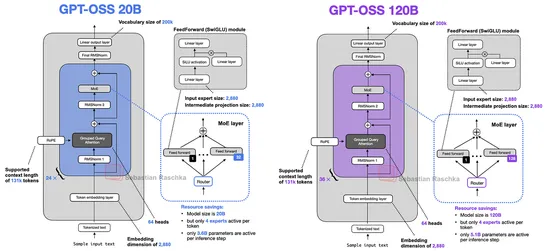
From GPT-2 to gpt-oss: Analyzing the Architectural Advances

OpenAI Returns to Openness. The company droppedgpt-oss-20Bandgpt-oss-120B—its first open-weight LLMs since GPT-2. The models pack a modern stack:Mixture-of-Experts,Grouped Query Attention,Sliding Window Attention, andSwiGLU. They're also lean. Thanks toMXFP4 quantization, 20B runs on a 16GB consume.. read more  

From GPT-2 to gpt-oss: Analyzing the Architectural Advances
Link
@faun shared a link, 9 months, 2 weeks ago
FAUN.dev()

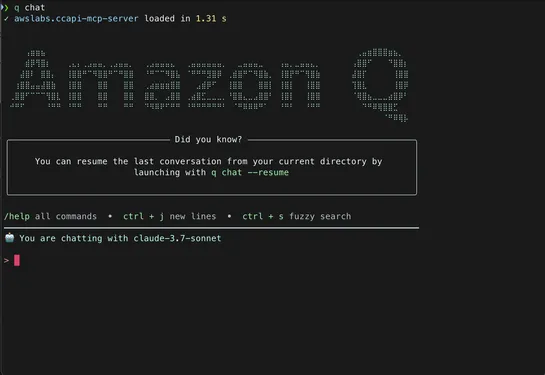
Introducing AWS Cloud Control API MCP Server: Natural Language Infrastructure Management on AWS

AWS dropped theCloud Control API MCP Server, a mouthful of a name for a tool that makes 1,200+ AWS resources manageable through a standard CRUDL API—using natural language. Think: describe what you want, and tools like Amazon Q Developer turn it into actual infra code. It doesn’t stop there. It val.. read more  

Introducing AWS Cloud Control API MCP Server: Natural Language Infrastructure Management on AWS
Link
@faun shared a link, 9 months, 2 weeks ago
FAUN.dev()

37 Things I Learned About Information Retrieval in Two Years at a Vector Database Company

A Weaviate engineer pulls back the curtain on two years of hard-earned lessons in vector search—breaking downBM25,embedding models,ANN algorithms, andRAG pipelines. The real story? Retrieval workflows keep moving—from keyword-heavy (sparse) toward embedding-driven (dense). Across IR use cases, the .. read more  

Link
@faun shared a link, 9 months, 2 weeks ago
FAUN.dev()

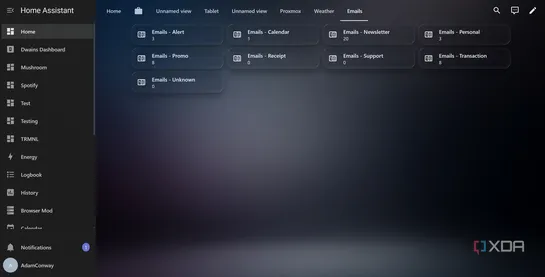
I set up an email triage system using Home Assistant and a local LLM, here's how you can too

A DIY email triage rig usingHome Assistant, IMAP, andOllamawires up local LLM smarts with YAML-fueled automation. At the core: an8B dolphin-llamamodel running on GPU, chewing through messy HTML emails, tagging them, and firing off priority-sorted summaries via notifications. Why it matters:A signal.. read more  

I set up an email triage system using Home Assistant and a local LLM, here's how you can too
Link
@faun shared a link, 9 months, 2 weeks ago
FAUN.dev()

The Most Important Machine Learning Equations: A Comprehensive Guide

A new reference rounds up the core ML equations—Bayes’ Theorem, cross-entropy, eigen decomposition, attention—and shows how they plug into real Python code using NumPy, TensorFlow, and scikit-learn. It hits the big four: probability, linear algebra, optimization, and generative modeling. Stuff that.. read more  

Link
@faun shared a link, 9 months, 2 weeks ago
FAUN.dev()

Some thoughts on LLMs and Software Development

Most LLMs still play autocomplete sidekick. But seasoned devs? They get better results when the model reads and rewrites actual source files. That gap—between how LLMs are designed to work and how prosactuallyuse them—messes with survey data and muddies the picture on real gains in code quality and.. read more  

GPT-5.3-Codex is OpenAI’s advanced agentic coding model, designed to go beyond writing code and operate as a general-purpose collaborator on a computer. It builds on GPT-5.2-Codex by combining stronger coding performance with improved reasoning and professional knowledge, while running about 25% faster. The model is optimized for long-running tasks that involve research, tool use, and complex execution, and it performs at the top of industry benchmarks such as SWE-Bench Pro and Terminal-Bench.

Unlike earlier Codex models that focused primarily on code generation and review, GPT-5.3-Codex can reason, plan, and act across the full software lifecycle. It supports activities such as debugging, deploying, monitoring, writing product requirement documents, creating tests, and analyzing metrics. It can also autonomously build and iterate on complex applications and better interpret underspecified prompts, producing more complete and production-ready results by default.

A defining feature of GPT-5.3-Codex is its interactive, agentic workflow. Users can steer the model while it is working, receive progress updates, and adjust direction without losing context, making it feel more like a teammate than a batch automation tool. The model was even used internally to help debug its own training and deployment processes. GPT-5.3-Codex is available through paid ChatGPT plans in the Codex app, CLI, IDE extension, and web, with API access planned for the future.