Join us

ContentUpdates and recent posts about GPT-5.3-Codex..
Link
@faun shared a link, 9 months ago
FAUN.dev()

Simplifying Large-Scale LLM Processing across Instacart with Maple

Instacart builtMaple, a backend brain for handling millions of LLM prompts—fast, cheap, and shared across teams. It’s not just another service. Maple runs onTemporal,PyArrow, andS3, strip-mines away provider-specific boilerplate, auto-batches prompts, retries failures, and slashes LLM costs by up t.. read more  
Simplifying Large-Scale LLM Processing across Instacart with Maple
Link
@faun shared a link, 9 months ago
FAUN.dev()

Best Practices for High Availability of LLM Based on AI Gateway

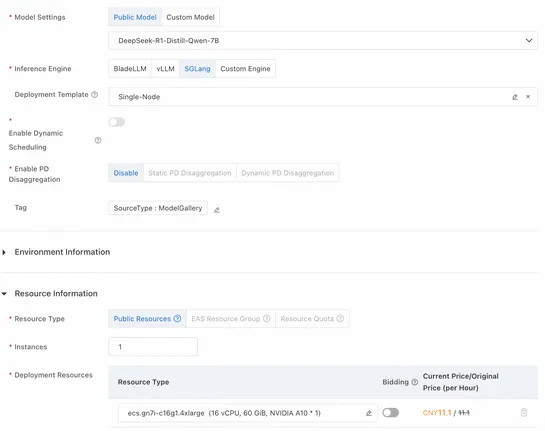
Alibaba Cloud’s AI Gateway just got sharper. It now handlesreal-time overload protectionandLLM fallback routingusing passive health checks, first packet timeouts, and traffic shaping. It proxies both BYO and cloud LLMs—think PAI-EAS, Tongyi Qianwen—and redirects load spikes or failures on the fly. F.. read more  

Best Practices for High Availability of LLM Based on AI Gateway
Link
@faun shared a link, 9 months ago
FAUN.dev()

Why language models hallucinate

OpenAI sheds light on the persistence ofhallucinationsin language models due to evaluation methods favoring guessing over honesty, requiring a shift towards rewarding uncertainty acknowledgment. High model accuracy does not equate to the eradication of hallucinations, as some questions are inherentl.. read more  

Why language models hallucinate
Link
@faun shared a link, 9 months ago
FAUN.dev()

The Big LLM Architecture Comparison

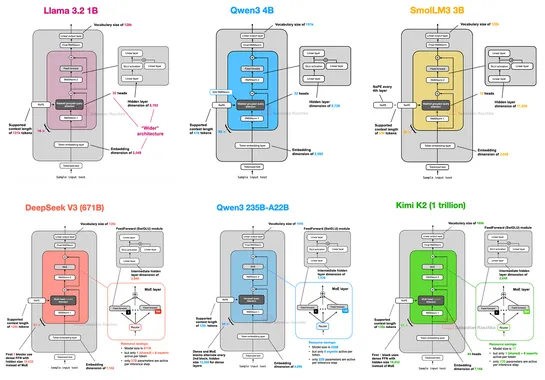
Architectures since GPT-2 still ride transformers. They crank memory and performance withRoPE, swapGQAforMLA, sprinkle in sparseMoE, and roll sliding-window attention. Teams shiftRMSNorm. They tweak layer norms withQK-Norm, locking in training stability across modern models. Trend to watch:In 2025,.. read more  

The Big LLM Architecture Comparison
Link
@faun shared a link, 9 months ago
FAUN.dev()

From Zero to GPU: A Guide to Building and Scaling Production-Ready CUDA Kernels

Hugging Face just dropped Kernel Builder—a full-stack toolchain for building, versioning, and shippingcustom CUDA kernels as native PyTorch ops. Kernels arearchitecture-aware,semantically versioned, andpullable straight from the Hub. It tracks changes with lockfiles and bakes inDocker deploysout of.. read more  

Link
@faun shared a link, 9 months ago
FAUN.dev()

Hermes V3: Building Swiggy’s Conversational AI Analyst

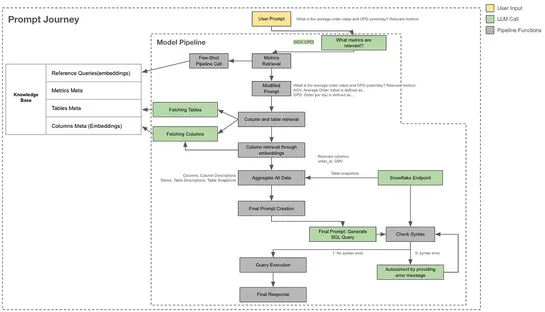
Swiggy just gave its GenAI tool, Hermes, a serious glow-up. What started as a simple text-to-SQL bot is now acontext-aware AI analystthat lives inside Slack. The upgrade? Not just tweaks—an overhaul. Think: vector-based prompt retrieval, session-level memory, an Agent orchestration layer, and a SQL.. read more  

Hermes V3: Building Swiggy’s Conversational AI Analyst
Link
@faun shared a link, 9 months ago
FAUN.dev()

GPT-5 Thinking in ChatGPT (aka Research Goblin) is shockingly good at search

GPT-5's“thinking” modeljust leveled up. It's not just answering queries—it’s doing full-on research. Picture deep, multi-step Bing searches mixed with tool use and reasoning chains. It reads PDFs. Analyzes them. Suggests what to do next. Then actually does it. All from your phone. What’s changing:L.. read more  

GPT-5 Thinking in ChatGPT (aka Research Goblin) is shockingly good at search
Story
@laura_garcia shared a post, 9 months ago
Software Developer, RELIANOID

RELIANOID Load Balancer Community Edition v7 on AWS using Terraform

🚀 New Guide Available! Learn how to quickly deploy RELIANOID Load Balancer Community Edition v7 on AWS using Terraform. Our step-by-step article shows you how to provision everything automatically — from VPCs and subnets to EC2 and key pairs — in just minutes. 👉 https://www.relianoid.com/resources/k..

Knowledge base Deploy RELIANOID Load Balancer Community Edition v7 with Terraform on AWS
Link
@faun shared a link, 9 months ago
FAUN.dev()

Measuring Developer Productivity with Amazon Q Developer and Jellyfish

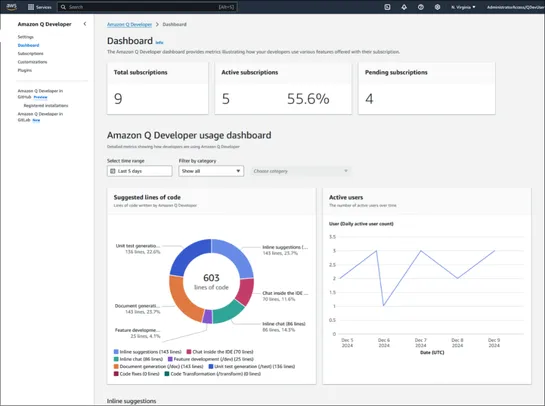
Amazon Q Developer now plugs into Jellyfish. Teams get a clearer view of how AI fits into the real flow of work—prompt usage, code adoption, PR throughput. Not just surface stats. The setup pipes data from AWS S3 straight into Jellyfish’s analytics engine. It tags AI users, tracks velocity gains, an.. read more  

Measuring Developer Productivity with Amazon Q Developer and Jellyfish
Link
@faun shared a link, 9 months ago
FAUN.dev()

Sandboxed to Compromised: New Research Exposes Credential Exfiltration Paths in AWS Code Interpreters

Researchers poked holes insandboxed Bedrock AgentCore code interpreters—and found a way to leak execution role credentials through theMicroVM Metadata Service (MMDS). No outside network? Doesn’t matter. The exploit dodges basic string filters in requests and lets non-agentic code swipe AWS creds to .. read more  

GPT-5.3-Codex is OpenAI’s advanced agentic coding model, designed to go beyond writing code and operate as a general-purpose collaborator on a computer. It builds on GPT-5.2-Codex by combining stronger coding performance with improved reasoning and professional knowledge, while running about 25% faster. The model is optimized for long-running tasks that involve research, tool use, and complex execution, and it performs at the top of industry benchmarks such as SWE-Bench Pro and Terminal-Bench.

Unlike earlier Codex models that focused primarily on code generation and review, GPT-5.3-Codex can reason, plan, and act across the full software lifecycle. It supports activities such as debugging, deploying, monitoring, writing product requirement documents, creating tests, and analyzing metrics. It can also autonomously build and iterate on complex applications and better interpret underspecified prompts, producing more complete and production-ready results by default.

A defining feature of GPT-5.3-Codex is its interactive, agentic workflow. Users can steer the model while it is working, receive progress updates, and adjust direction without losing context, making it feel more like a teammate than a batch automation tool. The model was even used internally to help debug its own training and deployment processes. GPT-5.3-Codex is available through paid ChatGPT plans in the Codex app, CLI, IDE extension, and web, with API access planned for the future.