Join us

ContentUpdates and recent posts about GPT-5.3-Codex..
Link
@faun shared a link, 8 months ago
FAUN.dev()

Building Etsy Buyer Profiles with LLMs

Every day, nearly 90M buyers look for unique items out of over 100 million listings on the Etsy. The platform uses large language models to create detailed buyer profiles anonymously capturing their interests. Adjustments in data retrieval and processing have reduced the time and cost of generating .. read more  

Link
@faun shared a link, 8 months ago
FAUN.dev()

OpenAI announces new mentorship program for budding tech founders

OpenAI introduced a new program called "OpenAI Grove" for early tech entrepreneurs to build with AI. The program is aimed at individuals in the pre-idea to pre-seed stage and offers mentoring, access to tools and models, and in-person workshops. Grove's first cohort will run from Oct. 20 to Nov. 21,.. read more  

Link
@faun shared a link, 8 months ago
FAUN.dev()

OpenAI eats jobs, then offers to help you find a new one

OpenAI just fired a shot across LinkedIn’s bow. Its new jobs platform—part ofOpenAI Academy—aims to certify AI skills, then plug users directly into hiring pipelines. Walmart's already on board. Market signal:OpenAI’s not just training people anymore. It's moving in on talent placement, pulling the .. read more  

OpenAI eats jobs, then offers to help you find a new one
Link
@faun shared a link, 8 months ago
FAUN.dev()

In a first, Google has released data on how much energy an AI prompt uses

Google dropped detailed stats on energy, water, and carbon use per query for its Gemini models. Median energy:0.24 Wh, with TPUs eating58%of that. They’re claiming a33× efficiency boostin the last year—credit goes to model and software tuning. System shift:A public hyperscaler posting this means th.. read more  

In a first, Google has released data on how much energy an AI prompt uses
Link
@faun shared a link, 8 months ago
FAUN.dev()

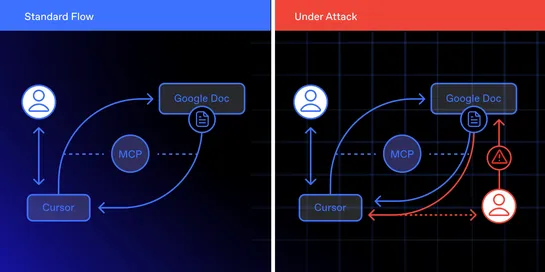
Zero-Click Remote Code Execution: Exploiting MCP & Agentic IDEs

A zero-click exploit is making the rounds—nasty stuff targeting agentic IDEs likeCursor. The trick? Slip a malicious Google Doc into the system. If MCP integration and allow-listedPython executionare on, the document gets auto-pulled, parsed, and runs code. No clicks. No prompts. Justremote code exe.. read more  

Zero-Click Remote Code Execution: Exploiting MCP & Agentic IDEs
Link
@faun shared a link, 8 months ago
FAUN.dev()

OpenAI reorganizes research team behind ChatGPT's personality

OpenAI just folded itsModel Behavior team—the crew behind AI personality design and anti-sycophant training—into thePost Training group. Behavior tuning now lives inside the same house as model refinement. Joanne Jang, who led Model Behavior, now runsOAI Labs, a fresh research unit digging intopost.. read more  

OpenAI reorganizes research team behind ChatGPT's personality
Link
@faun shared a link, 8 months ago
FAUN.dev()

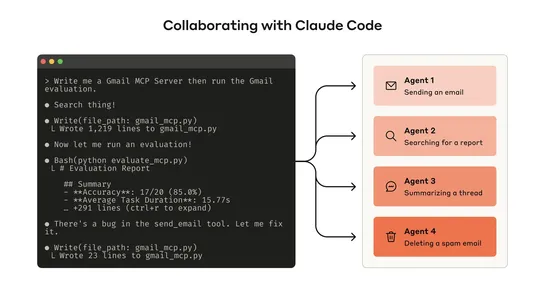
Writing effective tools for AI agents—using AI agents

Anthropic’s sharpening the blueprint for building tools that play nice withLLM agents. TheirModel Context Protocol (MCP)leans hard into three pillars: test in loops, design for humans, format like context matters—because it does. They co-develop tools with agents like Claude Code. That means protot.. read more  

Writing effective tools for AI agents—using AI agents
Link
@faun shared a link, 8 months ago
FAUN.dev()

Easy will always trump simple

Rich Hickey’s classic “Simple Made Easy” talk is making the rounds again—as a mirror held up to dev culture under pressure. The punchline: we keep picking solutions that areeasy but tangled, instead ofsimple and sane. The essay draws a sharp line between that habit and a concept from biology: exapt.. read more  

Link
@faun shared a link, 8 months ago
FAUN.dev()

Paused Kubernetes project finds path forward

TheExternal Secrets Operator (ESO)is moving again. After hitting pause from maintainer burnout, it’s back under CNCF incubation—with a rebooted structure in place. New governance, clear contributor paths, and support tracks for CI, core dev, and testing are all in. But don’t expect fresh releases ju.. read more  

Paused Kubernetes project finds path forward
Link
@faun shared a link, 8 months ago
FAUN.dev()

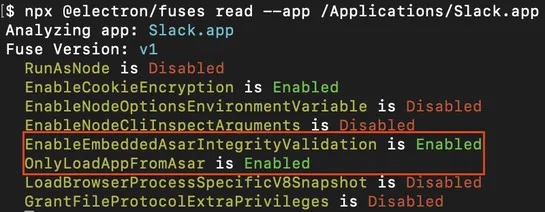
Subverting code integrity checks to locally backdoor Signal, 1Password, Slack, and more

A fresh CVE (2025-55305) just put Electron apps in the hot seat. The bug? Chromium-based apps fail to treatV8 heap snapshot filesas potential attack vectors. That crack lets unsigned JavaScript slip past code signing and run inside heavyweight targets like Slack, 1Password, and Signal. The heart of.. read more  

Subverting code integrity checks to locally backdoor Signal, 1Password, Slack, and more
GPT-5.3-Codex is OpenAI’s advanced agentic coding model, designed to go beyond writing code and operate as a general-purpose collaborator on a computer. It builds on GPT-5.2-Codex by combining stronger coding performance with improved reasoning and professional knowledge, while running about 25% faster. The model is optimized for long-running tasks that involve research, tool use, and complex execution, and it performs at the top of industry benchmarks such as SWE-Bench Pro and Terminal-Bench.

Unlike earlier Codex models that focused primarily on code generation and review, GPT-5.3-Codex can reason, plan, and act across the full software lifecycle. It supports activities such as debugging, deploying, monitoring, writing product requirement documents, creating tests, and analyzing metrics. It can also autonomously build and iterate on complex applications and better interpret underspecified prompts, producing more complete and production-ready results by default.

A defining feature of GPT-5.3-Codex is its interactive, agentic workflow. Users can steer the model while it is working, receive progress updates, and adjust direction without losing context, making it feel more like a teammate than a batch automation tool. The model was even used internally to help debug its own training and deployment processes. GPT-5.3-Codex is available through paid ChatGPT plans in the Codex app, CLI, IDE extension, and web, with API access planned for the future.