Join us

ContentUpdates and recent posts about GPT-5.3-Codex..
Link
@faun shared a link, 7 months ago
FAUN.dev()

Introducing DigitalOcean Organizations, a new and comprehensive account layer

DigitalOcean just dropped **Organizations**—a real upgrade for anyone juggling multiple Teams. Think one top-level account to rule them all: centralized user control, one invoice to track, and org-wide settings for taxes, credits, and permissions... read more  

Introducing DigitalOcean Organizations, a new and comprehensive account layer
Link
@faun shared a link, 7 months ago
FAUN.dev()

Top 30 Argo CD Anti-Patterns to Avoid When Adopting Gitops

A teardown of Argo CD anti-patterns calls out 28 common misfires—stuff like skipping Git for Application CRDs or stuffing Helm/Kustomize config right into Argo CD manifests. Yikes. It pushes for a cleaner setup: use **ApplicationSets** instead of rolling your own YAML, turn on **auto-sync/self-heal.. read more  

Link
@faun shared a link, 7 months ago
FAUN.dev()

Observability for the Invisible: Tracing Message Drops in Kafka Pipelines

When an event drops silently in a distributed system, it is not a bug, it is an architectural blind spot. Detect, debug, and prevent message loss in Kafka-based streaming pipelines using tools like OpenTelemetry, Fluent Bit, Jaeger, and dead-letter queues. Make sure observability gaps in event strea.. read more  

Link
@faun shared a link, 7 months ago
FAUN.dev()

Demystifying Log Retention in Azure

Azure logs come in three flavors: **Activity Logs**, **Diagnostic Logs**, and **Log Analytics**. Each with its own rules for retention and billing. The catch? Those differences aren’t quirks—they’re baked in... read more  

Link
@faun shared a link, 7 months ago
FAUN.dev()

What are Error Budgets? A Guide to Managing Reliability

OneUptime shows how to put **error budgets** to work—keeping feature velocity in check without tanking reliability. The goal: ship fast, stay within SLOs. They do it by tracking **burn rates**, syncing across teams, and tuning SLOs to match how users actually use the product. Less guesswork, more s.. read more  

Link
@faun shared a link, 7 months ago
FAUN.dev()

KubeCon + CloudNativeCon North America 2025 Co-Located Event Deep Dive: Kubernetes on Edge Day

The inaugural Edge Day launched as a co-located event at KubeCon + CloudNativeCon EU in 2022, focusing on edge computing and the evolution from centralized data centers to the network edge. The event brings together academic research, enterprise use cases, and insights from the Kubernetes community... read more  

KubeCon + CloudNativeCon North America 2025 Co-Located Event Deep Dive: Kubernetes on Edge Day
Link
@faun shared a link, 7 months ago
FAUN.dev()

Fluentd to Fluent Bit: A Migration Guide

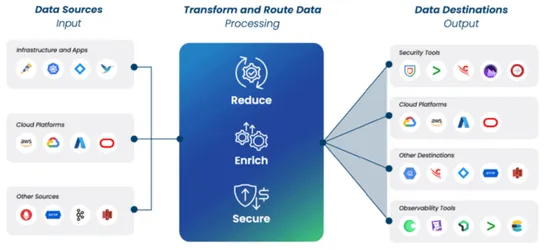
Fluent Bit just edged out Fluentd as the CNCF’s go-to log processor. Why? It's fast—up to 40× faster. Built in C. Embedded plugins. Native OpenTelemetry. Full observability baked in. It handles routing, schema changes, and telemetry across containers and edge systems without flinching. No Ruby here.. read more  

Fluentd to Fluent Bit: A Migration Guide
Link
@faun shared a link, 7 months ago
FAUN.dev()

Intelligent Kubernetes Load Balancing at Databricks

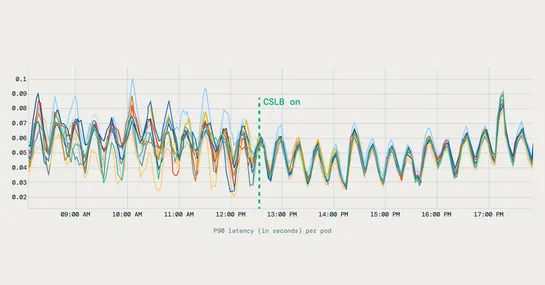
Databricks replaced default Kubernetes load balancing for a **proxyless, client-side gRPC setup**, wired up through a custom control plane. No more **CoreDNS**. No more **kube-proxy**. Clients now get live endpoint discovery through **xDS**, plus smarter routing tricks like **Power of Two Choices** .. read more  

Intelligent Kubernetes Load Balancing at Databricks
Link
@faun shared a link, 7 months ago
FAUN.dev()

Top 10 Kubernetes Deployment Errors: Causes and Fixes (And Tips)

Misconfigured YAML. Broken image refs. Botched resource settings. Most Kubernetes deploys don't fail mysteriously—they fail predictably. This guide breaks down the top 10 culprits: things like `CrashLoopBackOff`, bad image pulls, and `OOMKills`. More importantly, it shows how to dodge them with bet.. read more  

Top 10 Kubernetes Deployment Errors: Causes and Fixes (And Tips)
Link
@faun shared a link, 7 months ago
FAUN.dev()

v1.34: Pod Level Resources Graduated to Beta

Kubernetes v1.34 bumps **Pod Level Resources** to Beta—and flips them on by default. Now you can set CPU, memory, and hugepages limits for the whole Pod, not just per container. That means smoother scheduling, stricter resource caps, and less sidecar thrashing. **Why it matters:** This shifts Kuber.. read more  

GPT-5.3-Codex is OpenAI’s advanced agentic coding model, designed to go beyond writing code and operate as a general-purpose collaborator on a computer. It builds on GPT-5.2-Codex by combining stronger coding performance with improved reasoning and professional knowledge, while running about 25% faster. The model is optimized for long-running tasks that involve research, tool use, and complex execution, and it performs at the top of industry benchmarks such as SWE-Bench Pro and Terminal-Bench.

Unlike earlier Codex models that focused primarily on code generation and review, GPT-5.3-Codex can reason, plan, and act across the full software lifecycle. It supports activities such as debugging, deploying, monitoring, writing product requirement documents, creating tests, and analyzing metrics. It can also autonomously build and iterate on complex applications and better interpret underspecified prompts, producing more complete and production-ready results by default.

A defining feature of GPT-5.3-Codex is its interactive, agentic workflow. Users can steer the model while it is working, receive progress updates, and adjust direction without losing context, making it feel more like a teammate than a batch automation tool. The model was even used internally to help debug its own training and deployment processes. GPT-5.3-Codex is available through paid ChatGPT plans in the Codex app, CLI, IDE extension, and web, with API access planned for the future.