Join us

ContentUpdates and recent posts about Gemini 3..
Link
@faun shared a link, 1 year ago
FAUN.dev()

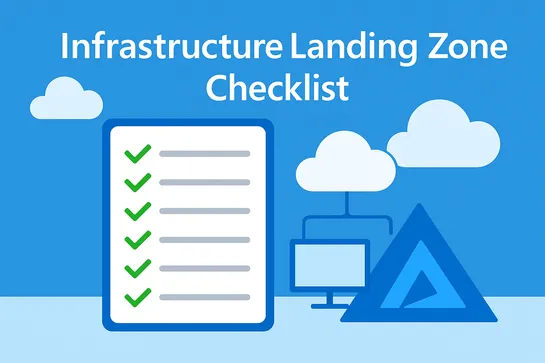
Building Azure Right: A Practical Checklist for Infrastructure Landing Zones

Azure fans are pros at dodging groundwork, which, surprise, leads to chaos; lay down a rock-solid Landing Zone to hack your costs and cut the pandemonium.GrabInfrastructure as Code tools like Terraformto smooth out deployments. Make sureRBACdoesn’t dive into the horror of unmonitored access... read more  
Building Azure Right: A Practical Checklist for Infrastructure Landing Zones
Link
@faun shared a link, 1 year ago
FAUN.dev()

Scaling Azure Microservices for Holiday Peak Traffic

Automation hacks away scaling migrainesfor microservices drowning in peak traffic. WithAzure DevOps CI/CDpipelines andIaC, scaling morphs into a cost-effective breeze. JustCosmos DB autoscalingcan shave off up to$7,200a year. Automation’s the unsung hero of cloud efficiency—no capes needed... read more  

Scaling Azure Microservices for Holiday Peak Traffic
Link
@faun shared a link, 1 year ago
FAUN.dev()

Shared Database Pattern in Microservices: When Rules Get Broken

Every shared access point is a potential failure point. The risks are real and can be catastrophic. Safe implementation includes strict data ownership, schema change protocol, data integrity protection, and auditing. Moving to a structured API layer and data separation can help mitigate risks and pl.. read more  

Link
@faun shared a link, 1 year ago
FAUN.dev()

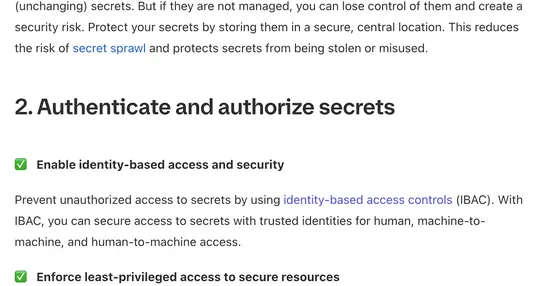
The 18-point secrets management checklist

By 2027, user blunders will cause a staggering 99% of cloud breaches, according to the experts who swear they know these things. Lock down secrets management by centralizing and automating with tools likeOktaorMicrosoft Entra ID. Don't skimp on IBAC and least-privileged access. Guard your cloud fort.. read more  

The 18-point secrets management checklist
Link
@faun shared a link, 1 year ago
FAUN.dev()

The 4 R’s of Pipeline Reliability: Data Systems That Last

RAG applicationslean on pipelines that can crumble if the4 R's frameworkisn't in place: reliable architecture, resumability, recoverability, redundancy. Ingenious stuff!.. read more  

The 4 R’s of Pipeline Reliability: Data Systems That Last
Link
@faun shared a link, 1 year ago
FAUN.dev()

Announcing Red Hat Enterprise Linux for AWS

RHEL 10for AWS makes its debut, complete with AWS-tailored performance profiles, beefed-up security, and a seamless CLI. Ready to tango with the cloud like a pro... read more  

Announcing Red Hat Enterprise Linux for AWS
Link
@faun shared a link, 1 year ago
FAUN.dev()

Bringing Kubernetes Back to Debian

KubernetesonDebianjust got its act together. The team axed the messy vendoring, shrunk the tarball bulk by over half, and tidied up dependency chaos. Now every dependency snuggles into Debian nicely, kicking out those pesky proprietary blobs. This means a secure, policy-friendly package and—drumroll.. read more  

Bringing Kubernetes Back to Debian
Link
@faun shared a link, 1 year ago
FAUN.dev()

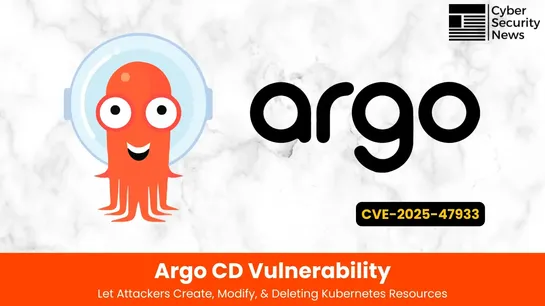
Argo CD Vulnerability Let Attackers Create, Modify, & Deleting Kubernetes Resources

CVE-2025-47933inArgo CDshreds security and hands injected JavaScript the keys to your Kubernetes kingdom. With a terrifyingCVSS score of 9.1, this one's no joke. Patch it, yesterday!.. read more  

Argo CD Vulnerability Let Attackers Create, Modify, & Deleting Kubernetes Resources
Link
@faun shared a link, 1 year ago
FAUN.dev()

Another Lightweight Kubernetes Distro Choice as k0s Joins CNCF Sandbox

k0s, the streamlined Kubernetes flavor pioneered by theCNCF Sandbox, strips it down to one slick binary. It's tailor-made for edge AI, shedding the bulky baggage. UnlikeK3s, k0s thrives on meager resources, sipping energy while skipping the tangled installation dance. Just 1-2 GB of RAM, and you're .. read more  

Link
@faun shared a link, 1 year ago
FAUN.dev()

Monolith-First - are you sure?

Modular monolithsrisk turning into messy "big balls of mud" when developers overdo shortcuts or tangle the code. Gomodular-firstand be ready to spot stealthy dependencies lurking in the corners. Skip the quick fixes—they're overrated... read more  

Monolith-First - are you sure?
Gemini 3 is Google’s third-generation large language model family, designed to power advanced reasoning, multimodal understanding, and long-running agent workflows across consumer and enterprise products. It represents a major step forward in factual reliability, long-context comprehension, and tool-driven autonomy.

At its core, Gemini 3 emphasizes low hallucination rates, deep synthesis across large information spaces, and multi-step reasoning. Models in the Gemini 3 family are trained with scaled reinforcement learning for search and planning, enabling them to autonomously formulate queries, evaluate results, identify gaps, and iterate toward higher-quality outputs.

Gemini 3 powers advanced agents such as Gemini Deep Research, where it excels at producing well-structured, citation-rich reports by combining web data, uploaded documents, and proprietary sources. The model supports very large context windows, multimodal inputs (text, images, documents), and structured outputs like JSON, making it suitable for research, finance, science, and enterprise knowledge work.

Gemini 3 is available through Google’s AI platforms and APIs, including the Interactions API, and is being integrated across products such as Google Search, NotebookLM, Google Finance, and the Gemini app. It is positioned as Google’s most factual and research-capable model generation to date.