Join us

ContentUpdates and recent posts about Gemini 3..
Link
@faun shared a link, 10 months, 1 week ago
FAUN.dev()

Debugging the One-in-a-Million Failure: Migrating Pinterest’s Search Infrastructure to Kubernetes

Migrating Pinterest's search infrastructure to Kubernetes—toasty, right? But it tripped over a rare hiccup: sluggish 5-second latencies. The culprit? cAdvisor, overzealously spying on memory like a helicopter parent. Flicking off WSS? Problem evaporated... read more  
Debugging the One-in-a-Million Failure: Migrating Pinterest’s Search Infrastructure to Kubernetes
Link
@faun shared a link, 10 months, 1 week ago
FAUN.dev()

Wix Adds Chaos to CI/CD Pipelines with AI and Improves Reliability

Wixhas slipped probabilistic AI into the mix inCI/CD, and it doesn't clutter the works. This AI chews through build logs, shaving off hours from developer workloads. Migrating 100 modules took three months? Not anymore. They've sliced it to a mere 24-48 hours by marrying AI insights with their sharp.. read more  

Wix Adds Chaos to CI/CD Pipelines with AI and Improves Reliability
Link
@faun shared a link, 10 months, 1 week ago
FAUN.dev()

Report - AI tools slow down experienced developers by 19%. A wake up call for industry hype?

Open-source devs got stuck, wasting 19% more time on tasks thanks to AI tools—oppose the hype and vendor bluster.Yet, a baffling 69% clung to AI, suggesting some sneaky perks lurk beneath the surface... read more  

Link
@faun shared a link, 10 months, 1 week ago
FAUN.dev()

Implementing High-Performance LLM Serving on GKE: An Inference Gateway Walkthrough

GKE Inference Gatewayflips LLM serving on its head. It’s all about that GPU-aware smart routing. By juggling the KV Cache in real time, it amps up throughput and slices latency like a hot knife through butter... read more  

Implementing High-Performance LLM Serving on GKE: An Inference Gateway Walkthrough
Link
@faun shared a link, 10 months, 1 week ago
FAUN.dev()

Unlocking High-Performance AI/ML in Kubernetes with DRANet and RDMA

DraNetslaps networking woes straight out the door. It natively handles RDMA in Kubernetes, so you can toss those convoluted scripts. Now in beta and weighing only 50MB, it offers deployments that are lean, speedy, and unyieldingly secure... read more  

Unlocking High-Performance AI/ML in Kubernetes with DRANet and RDMA
Link
@faun shared a link, 10 months, 1 week ago
FAUN.dev()

Critical NVIDIA Container Toolkit Flaw Allows Privilege Escalation on AI Cloud Services

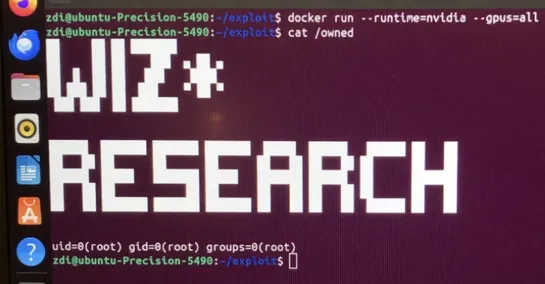
A critical container escape vulnerability (CVE-2025-23266) in NVIDIA Container Toolkit poses a severe threat to managed AI cloud services, earning a CVSS score of 9.0 out of 10.0. This flaw allows37%of cloud environments to potentially be accessed by attackers using a three-line exploit, enabling co.. read more  

Critical NVIDIA Container Toolkit Flaw Allows Privilege Escalation on AI Cloud Services
Link
@faun shared a link, 10 months, 1 week ago
FAUN.dev()

Automated Kubernetes Threat Detection with Tetragon and Azure Sentinel

Kubernetes security tools usually drop the ball. Enter the dynamic duo:Tetragonwielding eBPF magic for deep observability, and smart notifications for sniper-precise alerts.Fluent Bitpairs withAzure Logic Appsin an automated setup so you can hunt down threats in real-time. Not a drop of sweat needed.. read more  

Automated Kubernetes Threat Detection with Tetragon and Azure Sentinel
Link
@faun shared a link, 10 months, 1 week ago
FAUN.dev()

Securing Kubernetes 1.33 Pods: The Impact of User Namespace Isolation

Kubernetes 1.33rolls out with a security upgrade. It flips the switch onuser namespacesby default, shoving pods into the safety zone as unprivileged users. Potential breaches? Curbed. But don't get too comfy—idmap-capable file systems and up-to-date runtimes are now your new best friends if you want.. read more  

Securing Kubernetes 1.33 Pods: The Impact of User Namespace Isolation
Link
@faun shared a link, 10 months, 1 week ago
FAUN.dev()

Rethinking Node Drains: A Webhook Based Approach to Graceful Pod Removal

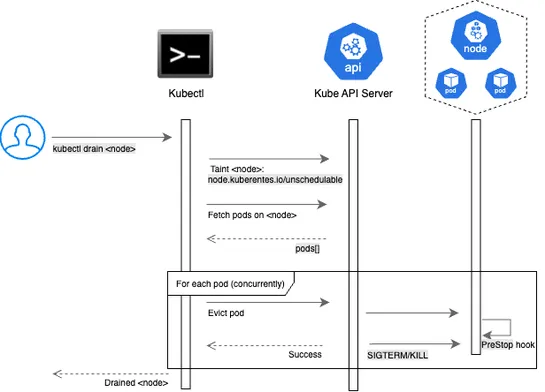
Eviction Reschedule Hooksticks its nose in Kubernetes eviction requests, letting operator-managed stateful apps wriggle their way through node drains without breaking a sweat. 🎯.. read more  

Rethinking Node Drains: A Webhook Based Approach to Graceful Pod Removal
Link
@faun shared a link, 10 months, 1 week ago
FAUN.dev()

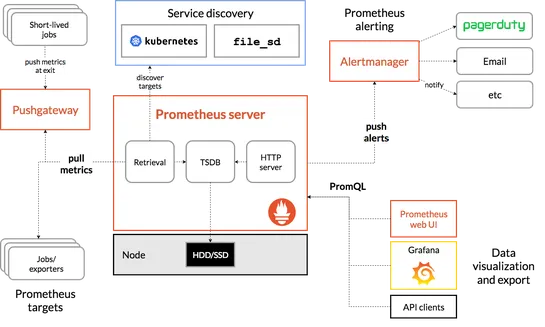
Setting up Prometheus Stack on Kubernetes

Devtronis Kubernetes monitoring on overdrive. It ropes inPrometheusandGrafana, automates the pesky setup, and shoots real-time insights straight into a slick UI. Effort? Minimal. Results? Maximal... read more  

Setting up Prometheus Stack on Kubernetes
Gemini 3 is Google’s third-generation large language model family, designed to power advanced reasoning, multimodal understanding, and long-running agent workflows across consumer and enterprise products. It represents a major step forward in factual reliability, long-context comprehension, and tool-driven autonomy.

At its core, Gemini 3 emphasizes low hallucination rates, deep synthesis across large information spaces, and multi-step reasoning. Models in the Gemini 3 family are trained with scaled reinforcement learning for search and planning, enabling them to autonomously formulate queries, evaluate results, identify gaps, and iterate toward higher-quality outputs.

Gemini 3 powers advanced agents such as Gemini Deep Research, where it excels at producing well-structured, citation-rich reports by combining web data, uploaded documents, and proprietary sources. The model supports very large context windows, multimodal inputs (text, images, documents), and structured outputs like JSON, making it suitable for research, finance, science, and enterprise knowledge work.

Gemini 3 is available through Google’s AI platforms and APIs, including the Interactions API, and is being integrated across products such as Google Search, NotebookLM, Google Finance, and the Gemini app. It is positioned as Google’s most factual and research-capable model generation to date.