Join us

ContentUpdates and recent posts about Gemini 3..
Link
@faun shared a link, 10 months ago
FAUN.dev()

How AI data integration transforms your data stack

AI data integration obliterates manual ETL chores. It handlesschema mapping,transformation,anomaly detection. Deployments sprint ahead. Machine learning models digest structured, semi-structured, unstructured formats. They forge real-time pipelines bristling withgovernanceandsecurity. Infra shift:A.. read more  

How AI data integration transforms your data stack
Link
@faun shared a link, 10 months ago
FAUN.dev()

[Cursor] Bugbot is out of beta

Bugbot hunts bugs in PR diffs, flagging logic slip-ups and strange edge cases. It then detects security gaps, blending top LLMs with custom heuristics. It plugs into the Cursor dashboard and runs dedicated Bugbot rules.Beta stats: 1M+ reviews, 1.5M+ issues found. Half the bugs are fixed before merge.. read more  

[Cursor] Bugbot is out of beta
Link
@faun shared a link, 10 months ago
FAUN.dev()

Seeing like an LLM

LLMs function as next-token predictors. With scant user context, they hallucinate—spinning fresh backstories. As these models morph into autonomous agents, context engineering—feeding facts, memory, tools, guardrails—halts rogue behavior. Trend to watch:A jump in context engineering. It pins LLMs t.. read more  

Seeing like an LLM
Link
@faun shared a link, 10 months ago
FAUN.dev()

The Future of Threat Emulation: Building AI Agents that Hunt Like Cloud Adversaries

AI agents tap MCP servers andStrands Agents. They fire off tools that chart IAM permission chains and sniff out AWS privilege escalations. Enter the “Sum of All Permissions” method. It hijacks EC2 Instance Connect, warps through SSM to swipe data, and leaps roles—long after static scanners nod off. .. read more  

The Future of Threat Emulation: Building AI Agents that Hunt Like Cloud Adversaries
Link
@faun shared a link, 10 months ago
FAUN.dev()

How Anthropic teams use Claude Code

Anthropic teamsfire upClaude Code. They automate data pipelines and squash Kubernetes IP exhaustion. They churn out tests and trace cross-repo context. Non-dev squads use plain-text prompts to script workflows, spin up Figma plugin automations, and mock up UIs from screenshots—zero code. Trend to w.. read more  

How Anthropic teams use Claude Code
Link
@faun shared a link, 10 months ago
FAUN.dev()

The vibe coder's career path is doomed

An AI-powered dev workflow combinedClaude,Playwright, and aPostgres-backed REST APIto ship 2–3 features per day. But as complexity grew, multi-agent loops broke down, tests ballooned, and schema drift demanded increasingly precise prompts and manual corrections.The result: more time spent managing c.. read more  

The vibe coder's career path is doomed
Link
@faun shared a link, 10 months ago
FAUN.dev()

Self-hosting Trigger.dev v4 using Docker

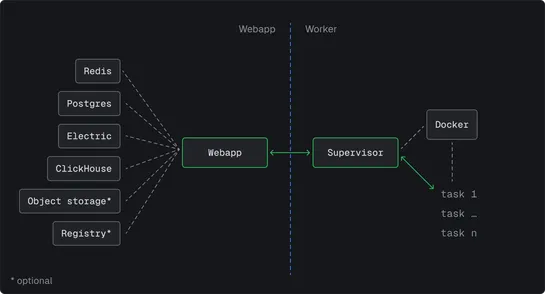
Trigger.dev v4 sharpens self-hosting. It pins everything toDocker Compose. It bakesregistryandobject storagein. It chops YAML bloat. Env-var docs unify configs. Resource caps lock down security. Scaling? Spin up more worker containers... read more  

Self-hosting Trigger.dev v4 using Docker
Link
@faun shared a link, 10 months ago
FAUN.dev()

How Zapier runs isolated tasks on AWS Lambda and upgrades functions at scale

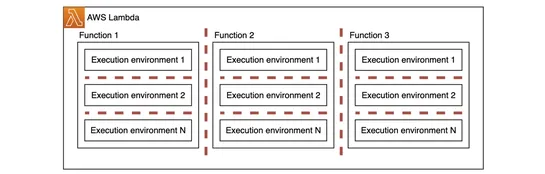
Zapier snaps each customer Zap into its ownAWS Lambda, cradled inside leanFirecracker microVMs. It wrangles 100k+ functions under anEKScontrol plane and inventory DB. When runtimes retire, Zapier swings into action: a set ofTerraform modulespaired with a customLambda canary tool. Traffic trickles in.. read more  

How Zapier runs isolated tasks on AWS Lambda and upgrades functions at scale
Link
@faun shared a link, 10 months ago
FAUN.dev()

kubriX: Your Out-of-the-Box Internal Developer Platform (IDP) for Kubernetes

Discover how kubriX seamlessly integrates leading open-source tools like Argo CD, Kargo, and Backstage to deliver a fully functional IDP out of the box. This blog post provides a deep dive into the technical aspects of kubriX, showcasing its capabilities and value proposition within the realm of Int.. read more  

Link
@faun shared a link, 10 months ago
FAUN.dev()

How GitHub engineers tackle platform problems

Product engineersare like builders ofGundam models, construcing the final product, whileplatform engineerssupply the tools needed to build these kits. Understanding theGundam analogyhelps differentiate engineering roles at GitHub... read more  

Gemini 3 is Google’s third-generation large language model family, designed to power advanced reasoning, multimodal understanding, and long-running agent workflows across consumer and enterprise products. It represents a major step forward in factual reliability, long-context comprehension, and tool-driven autonomy.

At its core, Gemini 3 emphasizes low hallucination rates, deep synthesis across large information spaces, and multi-step reasoning. Models in the Gemini 3 family are trained with scaled reinforcement learning for search and planning, enabling them to autonomously formulate queries, evaluate results, identify gaps, and iterate toward higher-quality outputs.

Gemini 3 powers advanced agents such as Gemini Deep Research, where it excels at producing well-structured, citation-rich reports by combining web data, uploaded documents, and proprietary sources. The model supports very large context windows, multimodal inputs (text, images, documents), and structured outputs like JSON, making it suitable for research, finance, science, and enterprise knowledge work.

Gemini 3 is available through Google’s AI platforms and APIs, including the Interactions API, and is being integrated across products such as Google Search, NotebookLM, Google Finance, and the Gemini app. It is positioned as Google’s most factual and research-capable model generation to date.