Join us

ContentUpdates and recent posts about Flask..
Link
@kala shared a link, 5 months, 2 weeks ago
FAUN.dev()

LaTeX, LLMs and Boring Technology 

LLMs are tearing down LaTeX's old walls. Syntax hell, cryptic errors, clunky formatting - easier now. Whether baked into editors or running solo, these models smooth the pain. Why does it work so well? LaTeX has history. Mountains of examples. It's the perfect training set. That puts newer contender.. read more  

Link
@devopslinks shared a link, 5 months, 2 weeks ago
FAUN.dev()

Visibility at Scale: How Detects Sensitive Data Exposure

Segment gutted its old permissions table—bloated, slow, tangled in logic - and replaced it with a lean, service-based setup. The new stack runs onPostgres,Redis, and a sharply tunedGo API, cutting query times from 1400ms to under 100ms. Clean, fast, and centralized... read more  

Visibility at Scale: How Detects Sensitive Data Exposure
Link
@devopslinks shared a link, 5 months, 2 weeks ago
FAUN.dev()

Terraform vs. Pulumi vs. Crossplane: Choosing the right IaC Tool for your platform

Terraform, Pulumi, and Crossplane take very different routes to Infrastructure as Code.Terraformsticks to a declarative HCL model with a massive provider ecosystem.Pulumiflips the script—developers write infrastructure in real languages, so logic is testable and dynamic.Crossplane? It runs inside Ku.. read more  

Terraform vs. Pulumi vs. Crossplane: Choosing the right IaC Tool for your platform
Link
@devopslinks shared a link, 5 months, 2 weeks ago
FAUN.dev()

Notes on switching to Helix from vim

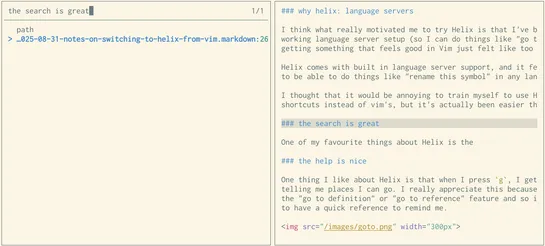
Helix keeps things lean - and that's the point. It ships withLSP support, multi-cursor editing, and smart search baked in. No dotfile gymnastics required. That alone has peeled some loyalists off Vim and Neovim. Still rough around the edges. No persistent undo. No auto-reload. Markdown support's a b.. read more  

Notes on switching to Helix from vim
Link
@devopslinks shared a link, 5 months, 2 weeks ago
FAUN.dev()

How Google, Amazon, and CrowdStrike broke millions of systems

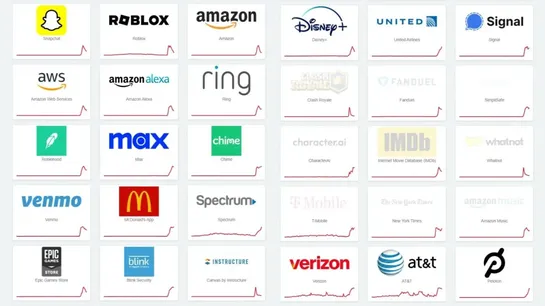
AWS. Google Cloud. Azure. CrowdStrike. All hit hard by dumb bugs with big blast radii - race conditions, nulls, misfired configs. Small cracks. Massive fallout. AWS's DNS automation knocked out its DynamoDB endpoint, dragging 113 services down with it. Google Cloud’s global APIs fell over from a str.. read more  

How Google, Amazon, and CrowdStrike broke millions of systems
Link
@devopslinks shared a link, 5 months, 2 weeks ago
FAUN.dev()

Creating VMs in separate ZFS filesystems

A dev split KVM/QEMU VMs out of a shared ZFS directory and into their own ZFS filesystems. Why? Snapshot rollbacks. Finer-grained storage control. Clean. The new setup rides a fresh ZFS pool tuned with a 64KBrecordsizefor QCOW2 images. That lines up virtual disk performance with the real IO under th.. read more  

Story
@laura_garcia shared a post, 5 months, 2 weeks ago
Software Developer, RELIANOID

EU's Cybersecurity standards for IoT devices

🔒 The EU enforces strict cybersecurity standards for IoT devices: securing networks, protecting privacy, and preventing fraud. At RELIANOID, we share this open-source commitment to resilience — helping organizations build safer, more reliable digital ecosystems. #CyberSecurity#IoT#OpenSource#Digital..

Blog IoT Security RELIANOID
Link
@anjali shared a link, 5 months, 3 weeks ago
Customer Marketing Manager, Last9

Top 9 Web Application Performance Monitoring Tools for 2025

Explore 2025’s top APM tools — from open-source stacks to enterprise platforms — and see how each helps you monitor smarter.

web_apm
News FAUN.dev() Team
@kaptain shared an update, 5 months, 3 weeks ago
FAUN.dev()

CNCF Launches Certified Kubernetes AI Conformance Program at KubeCon

Kubernetes

The Cloud Native Computing Foundation launched the Certified Kubernetes AI Conformance Program to set standards for AI workloads on Kubernetes, ensuring reliability and consistency.

CNCF Launches Certified Kubernetes AI Conformance Program at KubeCon
News FAUN.dev() Team
@kala shared an update, 5 months, 3 weeks ago
FAUN.dev()

GPT-5.1 Launches With 'Instant' and 'Thinking' Models - Here's What's New

ChatGPT

OpenAI announces GPT-5.1, enhancing ChatGPT and OpenAI APIs with improved intelligence and conversational abilities, offering two models for better reasoning and personalization, initially for paid users.

GPT-5.1 Launches With 'Instant' and 'Thinking' Models - Here's What's New
Flask is an open-source web framework written in Python and created by Armin Ronacher in 2010. It is known as a microframework, not because it is weak or incomplete, but because it provides only the essential building blocks for developing web applications. Its core focuses on handling HTTP requests, defining routes, and rendering templates, while leaving decisions about databases, authentication, form handling, and other components to the developer. This minimalistic design makes Flask lightweight, flexible, and easy to learn, but also powerful enough to support complex systems when extended with the right tools.

At the heart of Flask are two libraries: Werkzeug, which is a WSGI utility library that handles the low-level details of communication between web servers and applications, and Jinja2, a templating engine that allows developers to write dynamic HTML pages with embedded Python logic. By combining these two, Flask provides a clean and pythonic way to create web applications without imposing strict architectural patterns.

One of the defining characteristics of Flask is its explicitness. Unlike larger frameworks such as Django, Flask does not try to hide complexity behind layers of abstraction or dictate how a project should be structured. Instead, it gives developers complete control over how they organize their code and which tools they integrate. This explicit nature makes applications easier to reason about and gives teams the freedom to design solutions that match their exact needs. At the same time, Flask benefits from a vast ecosystem of extensions contributed by the community. These extensions cover areas such as database integration through SQLAlchemy, user session and authentication management, form validation with CSRF protection, and database migration handling. This modular approach means a developer can start with a very simple application and gradually add only the pieces they require, avoiding the overhead of unused components.

Flask is also widely appreciated for its simplicity and approachability. Many developers write their first web application in Flask because the learning curve is gentle, the documentation is clear, and the framework itself avoids unnecessary complexity. It is particularly well suited for building prototypes, REST APIs, microservices, or small to medium-sized web applications. At the same time, production-grade deployments are supported by running Flask applications on WSGI servers such as Gunicorn or uWSGI, since the development server included with Flask is intended only for testing and debugging.

The strengths of Flask lie in its minimalism, flexibility, and extensibility. It gives developers the freedom to assemble their application architecture, choose their own libraries, and maintain tight control over how things work under the hood. This is attractive to experienced engineers who dislike being boxed in by heavy frameworks. However, the same freedom can become a limitation. Flask does not include features like an ORM, admin interface, or built-in authentication system, which means teams working on very large applications must take on more responsibility for enforcing patterns and maintaining consistency. In situations where a project requires an opinionated, all-in-one solution, Django or another full-stack framework may be a better fit.

In practice, Flask has grown far beyond its initial positioning as a lightweight tool. It has been used by startups for rapid prototypes and by large companies for production systems. Its design philosophy—keep the core simple, make extensions easy, and let developers decide—continues to attract both beginners and professionals. This balance between simplicity and power has made Flask one of the most enduring and widely used Python web frameworks.