Join us

ContentUpdates and recent posts about Flask..
News FAUN.dev() Team
@kala shared an update, 3 months, 1 week ago
FAUN.dev()

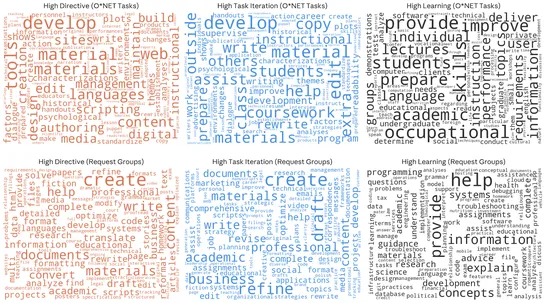
Anthropic’s New "Economic Primitives" Reveal Who Uses Claude, for What, and How Well It Works

Anthropic's new Economic Index report introduces five "economic primitives" to measure *how* Claude is used: task complexity, user and AI skill level, use case (work, coursework, personal), autonomy, and task success - built from privacy-preserving classification of anonymized Claude.ai and first-party API transcripts from **November 2025**.
Anthropic’s New "Economic Primitives" Reveal Who Uses Claude, for What, and How Well It Works
News FAUN.dev() Team
@varbear shared an update, 3 months, 1 week ago
FAUN.dev()

Tailwind CSS Lays Off 75% of Its Engineering Team as AI Cuts Documentation Traffic by 40%

tailwindcss Vercel

Tailwind CSS laid off roughly **75% of its engineering team** after a **~40% drop in documentation traffic** and an estimated **~80% decline in revenue**, even as usage of the framework continues to grow. According to its creator, AI-driven access to documentation has broken the link between adoption and sustainability.

News FAUN.dev() Team
@devopslinks shared an update, 3 months, 1 week ago
FAUN.dev()

Pulumi Expands IaC Platform to Support Terraform, OpenTofu, and Native HCL

Terraform Pulumi

Pulumi added support for managing Terraform and OpenTofu state in Pulumi Cloud and introduced native HCL support in its infrastructure as code engine. These changes allow teams to use Terraform, OpenTofu, Pulumi languages, and HCL side by side, with shared state visibility, governance features, and AI-assisted operations available across tools.

Story
@laura_garcia shared a post, 3 months, 1 week ago
Software Developer, RELIANOID

🔐 RELIANOID Load Balancer – Security Contributions

At RELIANOID, we actively and selflessly contribute to improving global cybersecurity, staying true to our open-source spirit. 🤝 We maintain close collaborations with security platforms, forums, and threat-intelligence communities, sharing our expertise to help strengthen protection across the Inter..

abuseipdb contributor relianoid
Story
@laura_garcia shared a post, 3 months, 2 weeks ago
Software Developer, RELIANOID

📍 RELIANOID at Bett UK 2026

We’re excited to take part in Bett UK 2026, the world’s leading EdTech event, bringing together educators, innovators, and decision-makers shaping the future of education. 🗓 January 21–23, 2026 📍 London, United Kingdom Join us to discover how RELIANOID enables secure, scalable, and highly available ..

bett_uk_event_london_2026_relianoid
Story
@laura_garcia shared a post, 3 months, 2 weeks ago
Software Developer, RELIANOID

🚀 If you’re building AI systems, reliability is no longer optional

Many teams are rushing to adopt AI, but few are asking the most critical question: 👉 What happens when AI fails? Back in December, we published an article that remains more relevant than ever: AI is redefining Site Reliability Engineering (SRE). Why? Because AI inference workloads introduce new reli..

 Activity
@aleonrangel gave 🐾 to Difference between Agile and Scrum , 3 months, 2 weeks ago.
 Activity
@aleonrangel gave 🐾 to Difference between Agile and Scrum , 3 months, 2 weeks ago.
Story
@laura_garcia shared a post, 3 months, 2 weeks ago
Software Developer, RELIANOID

🔐 Reminder: Azure MFA Enforcement Is Now in Place

Some time ago, Microsoft announced and enforced mandatory multifactor authentication (MFA) for all Azure tenants performing resource management actions. 👉 This marked a clear turning point: MFA is no longer optional — it’s a requirement. At RELIANOID, we shared how this change reinforces the need to..

Link
@varbear shared a link, 3 months, 2 weeks ago
FAUN.dev()

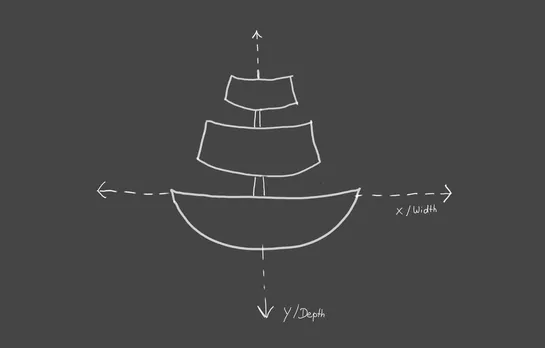
How to build internal developer tools with a small team

A fresh way to think about internal dev tooling: three axes,width(new features),depth(polish and stability), andpreparation(future-ready architecture). Instead of treating tradeoffs as binary, the model maps them as vectors in a shared space. Less tug-of-war. More informed roadmap moves... read more  

How to build internal developer tools with a small team
Flask is an open-source web framework written in Python and created by Armin Ronacher in 2010. It is known as a microframework, not because it is weak or incomplete, but because it provides only the essential building blocks for developing web applications. Its core focuses on handling HTTP requests, defining routes, and rendering templates, while leaving decisions about databases, authentication, form handling, and other components to the developer. This minimalistic design makes Flask lightweight, flexible, and easy to learn, but also powerful enough to support complex systems when extended with the right tools.

At the heart of Flask are two libraries: Werkzeug, which is a WSGI utility library that handles the low-level details of communication between web servers and applications, and Jinja2, a templating engine that allows developers to write dynamic HTML pages with embedded Python logic. By combining these two, Flask provides a clean and pythonic way to create web applications without imposing strict architectural patterns.

One of the defining characteristics of Flask is its explicitness. Unlike larger frameworks such as Django, Flask does not try to hide complexity behind layers of abstraction or dictate how a project should be structured. Instead, it gives developers complete control over how they organize their code and which tools they integrate. This explicit nature makes applications easier to reason about and gives teams the freedom to design solutions that match their exact needs. At the same time, Flask benefits from a vast ecosystem of extensions contributed by the community. These extensions cover areas such as database integration through SQLAlchemy, user session and authentication management, form validation with CSRF protection, and database migration handling. This modular approach means a developer can start with a very simple application and gradually add only the pieces they require, avoiding the overhead of unused components.

Flask is also widely appreciated for its simplicity and approachability. Many developers write their first web application in Flask because the learning curve is gentle, the documentation is clear, and the framework itself avoids unnecessary complexity. It is particularly well suited for building prototypes, REST APIs, microservices, or small to medium-sized web applications. At the same time, production-grade deployments are supported by running Flask applications on WSGI servers such as Gunicorn or uWSGI, since the development server included with Flask is intended only for testing and debugging.

The strengths of Flask lie in its minimalism, flexibility, and extensibility. It gives developers the freedom to assemble their application architecture, choose their own libraries, and maintain tight control over how things work under the hood. This is attractive to experienced engineers who dislike being boxed in by heavy frameworks. However, the same freedom can become a limitation. Flask does not include features like an ORM, admin interface, or built-in authentication system, which means teams working on very large applications must take on more responsibility for enforcing patterns and maintaining consistency. In situations where a project requires an opinionated, all-in-one solution, Django or another full-stack framework may be a better fit.

In practice, Flask has grown far beyond its initial positioning as a lightweight tool. It has been used by startups for rapid prototypes and by large companies for production systems. Its design philosophy—keep the core simple, make extensions easy, and let developers decide—continues to attract both beginners and professionals. This balance between simplicity and power has made Flask one of the most enduring and widely used Python web frameworks.