Join us

ContentUpdates and recent posts about Flask..
Link
@varbear shared a link, 3 months, 2 weeks ago
FAUN.dev()

How to build internal developer tools with a small team

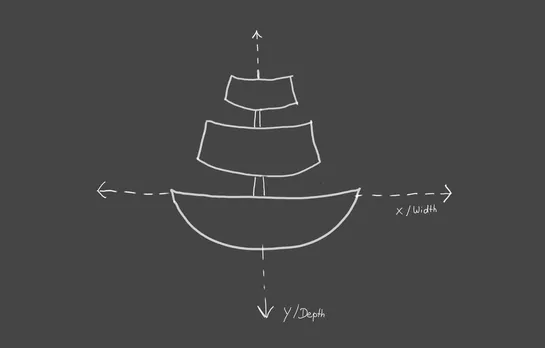
A fresh way to think about internal dev tooling: three axes,width(new features),depth(polish and stability), andpreparation(future-ready architecture). Instead of treating tradeoffs as binary, the model maps them as vectors in a shared space. Less tug-of-war. More informed roadmap moves... read more  
How to build internal developer tools with a small team
Link
@varbear shared a link, 3 months, 2 weeks ago
FAUN.dev()

The Mac Malware of 2025 👾

The 2025 macOS malware scene leveled up hard. Thinkmodular infostealers, built for stealth, slipping in with staged loaders, encrypted configs, and slick social engineering - fake updates, bogus job interviews, even sketchy terminal promos like “ClickFix.” Attackers leaned onAppleScript,JXA, andGo-b.. read more  

The Mac Malware of 2025 👾
Link
@varbear shared a link, 3 months, 2 weeks ago
FAUN.dev()

Web development is fun again

A seasoned dev takes a hard look at today’s messy full-stack reality: scattered tools, niche deep-dives, and burnout baked into the job. ButAI coding assistantsflipped the script. They help offload overhead, mimic pro-level workflows, and sanity-check the code. Now this dev moves across frontend and.. read more  

Web development is fun again
Link
@varbear shared a link, 3 months, 2 weeks ago
FAUN.dev()

How Browsers Work

An interactive open-source guide breaks down browser internals with slick, step-through models coveringDNS resolution,TCP handshakes, andHTML parsing. It walks through the browser'ssequential pipeline- from URL to DOM - blending protocol deep-dives with hands-on visuals you can poke at... read more  

Link
@kaptain shared a link, 3 months, 2 weeks ago
FAUN.dev()

v1.35: Introducing Workload Aware Scheduling

Kubernetes v1.35 is shifting gears. The newWorkload APIand earlygang schedulingsupport bring group-first thinking, schedule Pods as a unit, or not at all. They’ve thrown inopportunistic batchingtoo. It’s in Beta. It speeds up clusters juggling loads of identical Pods by skipping repeat feasibility c.. read more  

Link
@kaptain shared a link, 3 months, 2 weeks ago
FAUN.dev()

Kubernetes Was Overkill. We Moved to Docker Compose and Saved 60 Hours.

A small team rolled back their Kubernetes move after six months in the weeds. The setup tanked productivity, bloated infra costs, and turned simple deploys into a slog. They ditched it, brought back Docker Compose, and chopped deploy time from 45 minutes to 4. That one change freed up 60+ engineerin.. read more  

Link
@kaptain shared a link, 3 months, 2 weeks ago
FAUN.dev()

From Cluster UI to Operational Plane: Lessons from the Kubernetes Dashboard Deprecation

The official Kubernetes Dashboard has been deprecated. This reflects the shift in Kubernetes operations towards multi-cluster environments, GitOps workflows, and strict access controls. Modern Kubernetes environments require application-aware, RBAC-first operational tools that work across clusters a.. read more  

Link
@kaptain shared a link, 3 months, 2 weeks ago
FAUN.dev()

Kubernetes by Example

K8s by Exampleis likeGo by Example, but for YAML and Kubernetes. It’s packed with annotated manifests that show real deployment, scaling, and self-healing patterns, stuff you'd actually use in prod... read more  

Link
@kaptain shared a link, 3 months, 2 weeks ago
FAUN.dev()

Bryan Cantrill: How Kubernetes Broke the AWS Cloud Monopoly

Bryan Cantrill says Kubernetes didn’t just organize containers, it cracked open the cloud market. By letting teams provision infrastructure without locking into provider APIs, it broke AWS’s first-mover grip. That shift putcloud neutralityon the table, and suddenly multi-cloud wasn’t just a buzzword.. read more  

Bryan Cantrill: How Kubernetes Broke the AWS Cloud Monopoly
Link
@kala shared a link, 3 months, 2 weeks ago
FAUN.dev()

8 plots that explain the state of open models

Starting 2026, Chinese companies are dominating the open AI model scene, with Qwen leading in adoption metrics. Despite the rise of new entrants like Z.ai, MiniMax, Kimi Moonshot, and others, Qwen's position seems secure. DeepSeek's large models are showing potential to compete with Qwen, but the Ch.. read more  

Flask is an open-source web framework written in Python and created by Armin Ronacher in 2010. It is known as a microframework, not because it is weak or incomplete, but because it provides only the essential building blocks for developing web applications. Its core focuses on handling HTTP requests, defining routes, and rendering templates, while leaving decisions about databases, authentication, form handling, and other components to the developer. This minimalistic design makes Flask lightweight, flexible, and easy to learn, but also powerful enough to support complex systems when extended with the right tools.

At the heart of Flask are two libraries: Werkzeug, which is a WSGI utility library that handles the low-level details of communication between web servers and applications, and Jinja2, a templating engine that allows developers to write dynamic HTML pages with embedded Python logic. By combining these two, Flask provides a clean and pythonic way to create web applications without imposing strict architectural patterns.

One of the defining characteristics of Flask is its explicitness. Unlike larger frameworks such as Django, Flask does not try to hide complexity behind layers of abstraction or dictate how a project should be structured. Instead, it gives developers complete control over how they organize their code and which tools they integrate. This explicit nature makes applications easier to reason about and gives teams the freedom to design solutions that match their exact needs. At the same time, Flask benefits from a vast ecosystem of extensions contributed by the community. These extensions cover areas such as database integration through SQLAlchemy, user session and authentication management, form validation with CSRF protection, and database migration handling. This modular approach means a developer can start with a very simple application and gradually add only the pieces they require, avoiding the overhead of unused components.

Flask is also widely appreciated for its simplicity and approachability. Many developers write their first web application in Flask because the learning curve is gentle, the documentation is clear, and the framework itself avoids unnecessary complexity. It is particularly well suited for building prototypes, REST APIs, microservices, or small to medium-sized web applications. At the same time, production-grade deployments are supported by running Flask applications on WSGI servers such as Gunicorn or uWSGI, since the development server included with Flask is intended only for testing and debugging.

The strengths of Flask lie in its minimalism, flexibility, and extensibility. It gives developers the freedom to assemble their application architecture, choose their own libraries, and maintain tight control over how things work under the hood. This is attractive to experienced engineers who dislike being boxed in by heavy frameworks. However, the same freedom can become a limitation. Flask does not include features like an ORM, admin interface, or built-in authentication system, which means teams working on very large applications must take on more responsibility for enforcing patterns and maintaining consistency. In situations where a project requires an opinionated, all-in-one solution, Django or another full-stack framework may be a better fit.

In practice, Flask has grown far beyond its initial positioning as a lightweight tool. It has been used by startups for rapid prototypes and by large companies for production systems. Its design philosophy—keep the core simple, make extensions easy, and let developers decide—continues to attract both beginners and professionals. This balance between simplicity and power has made Flask one of the most enduring and widely used Python web frameworks.