Join us

ContentUpdates and recent posts about Flask..
Story
@viktoriiagolovtseva shared a post, 2 months ago

A Git and Jira Integration Guide: How to Connect GitHub, GitLab, and Bitbucket to Jira Cloud

If you ask a developer, product manager, and QA “why integrate your Git repository with Jira,” they will all give different answers. Some like it for reducing context switching and providing automation options, while others value the transparency and improved traceability. But no matter who you ask, everyone is unanimous: this integration is immensely useful for the teams.

In this article, we focus on the most popular Git applications: GitHub, GitLab, and Bitbucket. We explain how to connect them to Jira Cloud and provide you with practical tips on making the most out of this integration. You will learn how to use smart commits, leverage automation, and gain extra value from third-party apps.

Zrzut ekranu 2026-02-20 125153
Story
@ashwinisdave shared a post, 2 months ago
Developer advocate, Middleware

From Metrics to Meaning: Building Context-Aware Dashboards That Actually Help Debug Production Issues

Most dashboards show what's happening but not why it matters. Learn how to build context-aware dashboards that actually help engineers debug production issues faster.

Story Keploy Team
@sancharini shared a post, 2 months ago

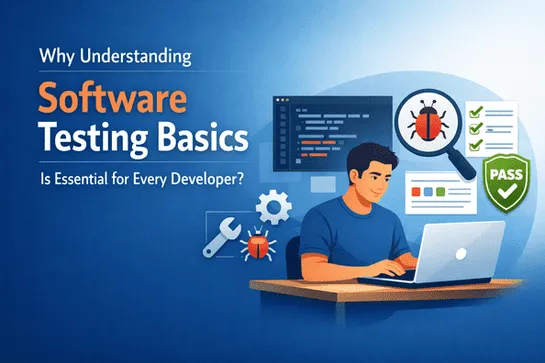
Why Understanding Software Testing Basics Is Essential for Every Developer?

Understand why software testing basics is essential for every developer. Learn key testing types, levels, techniques, and best practices to write reliable, maintainable, and high-quality code.

Software Testing Basics for Developers
Course
@eon01 published a course, 2 months ago
Founder, FAUN.dev

Practical MCP with FastMCP & LangChain

FastMCP ChatGPT GPT LangChain Python

Engineering the Agentic Experience

Practical MCP with FastMCP & LangChain
 Activity
@kala added a new tool FastMCP , 2 months ago.
News FAUN.dev() Team
@kala shared an update, 2 months ago
FAUN.dev()

FastMCP 3.0 Released: Community-Driven Enhancements Unveiled

FastMCP

FastMCP 3.0 is now generally available. It keeps the @mcp.tool() API but rebuilds the internals around components + providers + transforms, adds a CLI, and ships production features like component versioning, per-component auth + OAuth additions, OpenTelemetry tracing, background tasks, pagination, tool timeouts, and hot reload. The project moved from jlowin/fastmcp to PrefectHQ/fastmcp on GitHub, and upgrading is supported via dedicated guides for FastMCP 2 and MCP SDK users.

FastMCP 3.0 Released: Community-Driven Enhancements Unveiled
Story
@laura_garcia shared a post, 2 months ago
Software Developer, RELIANOID

🚀 Ready to level up your #AppSec skills?

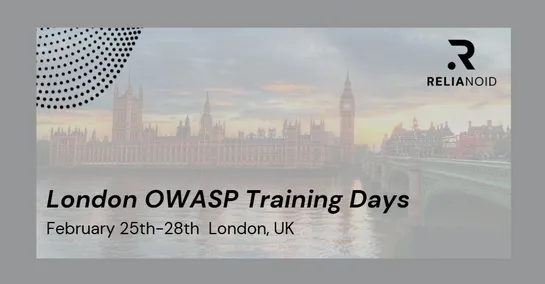
Join us at London OWASP Training Days 2026 – February 25–28 in London! Hands-on, instructor-led sessions covering: 🔹 API Security 🔹 Secure Development & Testing 🔹 Threat Modeling & Risk Analysis 🔹 AI & Security 🔹 Mobile & IoT Security 🔹 Offensive Security & Pentesting Learn from the global OWASP com..

London OWASP Training Days 2026
Story
@laura_garcia shared a post, 2 months, 1 week ago
Software Developer, RELIANOID

Finance: Resilience. Trust. Continuity

Downtime isn’t just costly—it’s a trust killer. 💸 In financial services, outages can cost millions, invite regulatory penalties, and damage customer confidence. Our latest blog dives into the true cost of downtime and why resilience, security, and compliance must be non-negotiable. #FinancialServic..

Blog_Why Financial Services Institutions Must Protect Themselves From Downtime_RELIANOID
Story
@dwisiswant0 shared a post, 2 months, 1 week ago

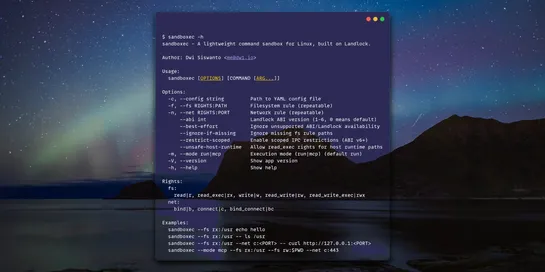
The most practical, fast, tiny command sandboxing for AI agents

Need to run one sketchy command without a full container? Here is the most practical, lightweight way to lock down one risky command in your AI pipeline. No daemon, no root, no image build.

sandboxec-social-preview
Story
@laura_garcia shared a post, 2 months, 1 week ago
Software Developer, RELIANOID

🚀 Deploy RELIANOID Community Edition v7 on Microsoft Azure using Terraform.

⚡ Infrastructure ready in minutes ⚡ Official Terraform module ⚡ Fully automated Azure deployment Simple. Fast. Reproducible. #Terraform#Azure#DevOps#IaC#LoadBalancer#CloudInfrastructure#RELIANOID https://www.relianoid.com/resources/knowledge-base/community-edition-v7-administration-guide/deploy-reli..

terraform_relianoid_community_azure_img2
Flask is an open-source web framework written in Python and created by Armin Ronacher in 2010. It is known as a microframework, not because it is weak or incomplete, but because it provides only the essential building blocks for developing web applications. Its core focuses on handling HTTP requests, defining routes, and rendering templates, while leaving decisions about databases, authentication, form handling, and other components to the developer. This minimalistic design makes Flask lightweight, flexible, and easy to learn, but also powerful enough to support complex systems when extended with the right tools.

At the heart of Flask are two libraries: Werkzeug, which is a WSGI utility library that handles the low-level details of communication between web servers and applications, and Jinja2, a templating engine that allows developers to write dynamic HTML pages with embedded Python logic. By combining these two, Flask provides a clean and pythonic way to create web applications without imposing strict architectural patterns.

One of the defining characteristics of Flask is its explicitness. Unlike larger frameworks such as Django, Flask does not try to hide complexity behind layers of abstraction or dictate how a project should be structured. Instead, it gives developers complete control over how they organize their code and which tools they integrate. This explicit nature makes applications easier to reason about and gives teams the freedom to design solutions that match their exact needs. At the same time, Flask benefits from a vast ecosystem of extensions contributed by the community. These extensions cover areas such as database integration through SQLAlchemy, user session and authentication management, form validation with CSRF protection, and database migration handling. This modular approach means a developer can start with a very simple application and gradually add only the pieces they require, avoiding the overhead of unused components.

Flask is also widely appreciated for its simplicity and approachability. Many developers write their first web application in Flask because the learning curve is gentle, the documentation is clear, and the framework itself avoids unnecessary complexity. It is particularly well suited for building prototypes, REST APIs, microservices, or small to medium-sized web applications. At the same time, production-grade deployments are supported by running Flask applications on WSGI servers such as Gunicorn or uWSGI, since the development server included with Flask is intended only for testing and debugging.

The strengths of Flask lie in its minimalism, flexibility, and extensibility. It gives developers the freedom to assemble their application architecture, choose their own libraries, and maintain tight control over how things work under the hood. This is attractive to experienced engineers who dislike being boxed in by heavy frameworks. However, the same freedom can become a limitation. Flask does not include features like an ORM, admin interface, or built-in authentication system, which means teams working on very large applications must take on more responsibility for enforcing patterns and maintaining consistency. In situations where a project requires an opinionated, all-in-one solution, Django or another full-stack framework may be a better fit.

In practice, Flask has grown far beyond its initial positioning as a lightweight tool. It has been used by startups for rapid prototypes and by large companies for production systems. Its design philosophy—keep the core simple, make extensions easy, and let developers decide—continues to attract both beginners and professionals. This balance between simplicity and power has made Flask one of the most enduring and widely used Python web frameworks.