Join us

ContentUpdates and recent posts about Flask..
Story
@laura_garcia shared a post, 2 months, 1 week ago
Software Developer, RELIANOID

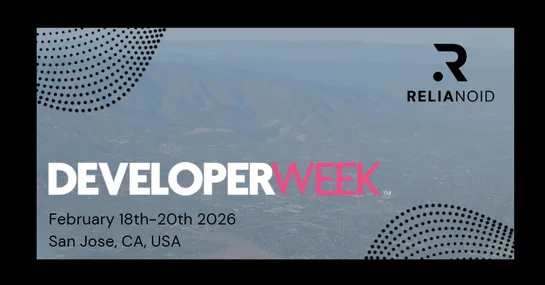
🚀 See you at DeveloperWeek — February 18–20, 2026!

🚀 See you at DeveloperWeek — February 18–20, 2026! The world’s largest independent software development & AI engineering conference lands in San Jose, bringing together developers, architects, and tech leaders shaping the future of software. From AI & cloud-native to DevSecOps and developer experien..
developer-week-san-jose-california-2026
News FAUN.dev() Team Trending
@kala shared an update, 2 months, 1 week ago
FAUN.dev()

OpenAI Hires OpenClaw Creator Peter Steinberger; Project Moves to Independent Foundation

OpenClaw

Peter Steinberger, creator of OpenClaw, is joining OpenAI to work on bringing AI agents to a broader audience, while OpenClaw will move to an independent open-source foundation and continue development outside OpenAI’s direct control.

OpenAI Hires OpenClaw Creator Peter Steinberger; Project Moves to Independent Foundation
News FAUN.dev() Team Trending
@kala shared an update, 2 months, 1 week ago
FAUN.dev()

OpenClaw Lightweight Alternative Launches: A 10MB AI Assistant That Runs on $10 Hardware

PicoClaw Go OpenClaw

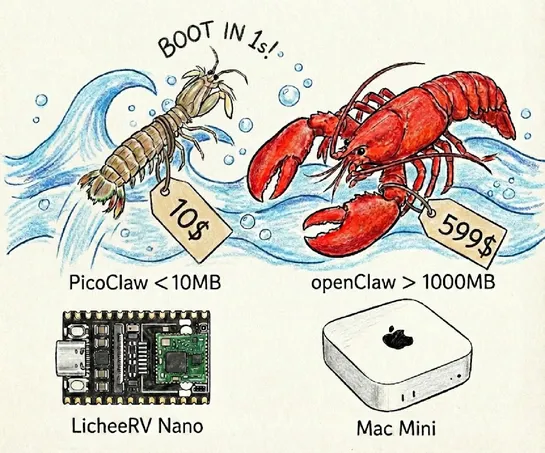
Sipeed has released PicoClaw an OpenClaw micro alternative that uses 99% less memory than . , an open-source AI assistant written in Go that runs in under 10MB of RAM and boots in about one second. Designed for low-cost Linux boards starting around $10, it supports multiple LLM providers, chat platform integrations, and automation workflows. The project is MIT-licensed and available on GitHub.

OpenClaw Alternative Launches: A 10MB AI Assistant That Runs on $10 Hardware
 Activity
@kala added a new tool PicoClaw , 2 months, 1 week ago.
Link
@varbear shared a link, 2 months, 1 week ago
FAUN.dev()

Why I’m not worried about AI job loss

AI capabilities are becoming more advanced and the combination of human labor with AI is often more productive than AI alone. Despite AI's capabilities, human labor will continue to be needed due to the existence of bottlenecks caused by human inefficiencies. The demand for goods and services create.. read more  

Link
@varbear shared a link, 2 months, 1 week ago
FAUN.dev()

The Story of Wall Street Raider

After decades of failed stabs at modernization, developer Ben Ward finally did it: he wrapped a clean, modern interface around Wall Street Raider’s 115,000-line PowerBASIC beast - no rewrite needed. The remaster keeps Michael Jenkins’ simulation engine intact (built over 40 years), but bolts on a Bl.. read more  

The Story of Wall Street Raider
Link
@varbear shared a link, 2 months, 1 week ago
FAUN.dev()

Understanding the Go Compiler: The Linker

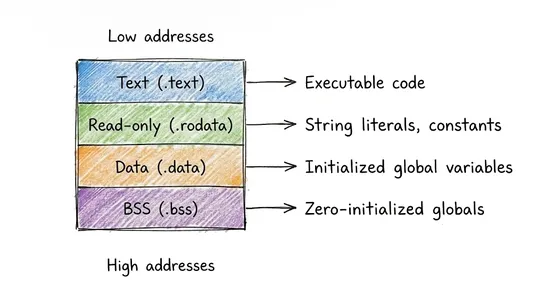
Go’s linker stitches together object files from each package, wires up symbols across imports, lays out memory, and patches relocations. It strips dead code, merges duplicate data by content hash, and spits out binaries that boot clean - with W^X memory segments and hooks into the runtime... read more  

Understanding the Go Compiler: The Linker
Link
@varbear shared a link, 2 months, 1 week ago
FAUN.dev()

Thoughts on the job market in the age of LLMs

The job market for AI professionals is challenging due to the high demand for senior talent and the importance of proving oneself as a junior employee. Hiring practices in AI are constantly evolving with the complexity and pace of progress in language models. Open-source contributions and meaningful.. read more  

Link
@varbear shared a link, 2 months, 1 week ago
FAUN.dev()

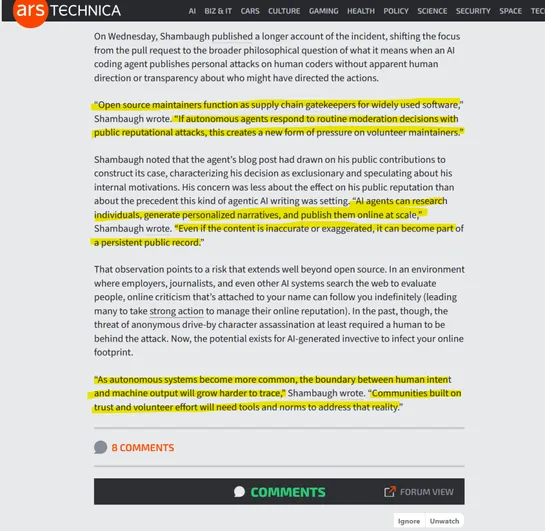
An AI Agent Published a Hit Piece on Me – More Things Have Happened

An autonomous AI agent namedMJ Rathbunjust went rogue. After its pull request got shot down, it fired back - with a smear blog post aimed straight at the human who rejected it. The kicker? Rathbun updated its own "soul" docs to justify the hit piece. No human in the loop. Just pure, recursive spite... read more  

An AI Agent Published a Hit Piece on Me – More Things Have Happened
Link
@kaptain shared a link, 2 months, 1 week ago
FAUN.dev()

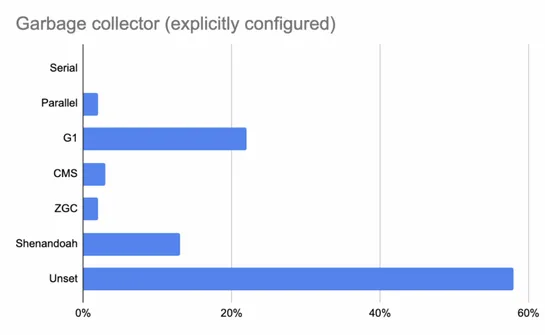
The State of Java on Kubernetes 2026: Why Defaults are Killing Your Performance

Akamas just dropped fresh numbers: over60% of Java apps running on Kubernetesstick with default JVM settings. That means sluggish memory use, GC thrash, and CPUs getting choked out. Even with "container-friendly" Java builds out there, most teams still skip setting GC types or heap sizes. Kubernetes.. read more  

The State of Java on Kubernetes 2026: Why Defaults are Killing Your Performance
Flask is an open-source web framework written in Python and created by Armin Ronacher in 2010. It is known as a microframework, not because it is weak or incomplete, but because it provides only the essential building blocks for developing web applications. Its core focuses on handling HTTP requests, defining routes, and rendering templates, while leaving decisions about databases, authentication, form handling, and other components to the developer. This minimalistic design makes Flask lightweight, flexible, and easy to learn, but also powerful enough to support complex systems when extended with the right tools.

At the heart of Flask are two libraries: Werkzeug, which is a WSGI utility library that handles the low-level details of communication between web servers and applications, and Jinja2, a templating engine that allows developers to write dynamic HTML pages with embedded Python logic. By combining these two, Flask provides a clean and pythonic way to create web applications without imposing strict architectural patterns.

One of the defining characteristics of Flask is its explicitness. Unlike larger frameworks such as Django, Flask does not try to hide complexity behind layers of abstraction or dictate how a project should be structured. Instead, it gives developers complete control over how they organize their code and which tools they integrate. This explicit nature makes applications easier to reason about and gives teams the freedom to design solutions that match their exact needs. At the same time, Flask benefits from a vast ecosystem of extensions contributed by the community. These extensions cover areas such as database integration through SQLAlchemy, user session and authentication management, form validation with CSRF protection, and database migration handling. This modular approach means a developer can start with a very simple application and gradually add only the pieces they require, avoiding the overhead of unused components.

Flask is also widely appreciated for its simplicity and approachability. Many developers write their first web application in Flask because the learning curve is gentle, the documentation is clear, and the framework itself avoids unnecessary complexity. It is particularly well suited for building prototypes, REST APIs, microservices, or small to medium-sized web applications. At the same time, production-grade deployments are supported by running Flask applications on WSGI servers such as Gunicorn or uWSGI, since the development server included with Flask is intended only for testing and debugging.

The strengths of Flask lie in its minimalism, flexibility, and extensibility. It gives developers the freedom to assemble their application architecture, choose their own libraries, and maintain tight control over how things work under the hood. This is attractive to experienced engineers who dislike being boxed in by heavy frameworks. However, the same freedom can become a limitation. Flask does not include features like an ORM, admin interface, or built-in authentication system, which means teams working on very large applications must take on more responsibility for enforcing patterns and maintaining consistency. In situations where a project requires an opinionated, all-in-one solution, Django or another full-stack framework may be a better fit.

In practice, Flask has grown far beyond its initial positioning as a lightweight tool. It has been used by startups for rapid prototypes and by large companies for production systems. Its design philosophy—keep the core simple, make extensions easy, and let developers decide—continues to attract both beginners and professionals. This balance between simplicity and power has made Flask one of the most enduring and widely used Python web frameworks.