Join us

ContentUpdates and recent posts about Flask..
Link
@kala shared a link, 3 weeks ago
FAUN.dev()

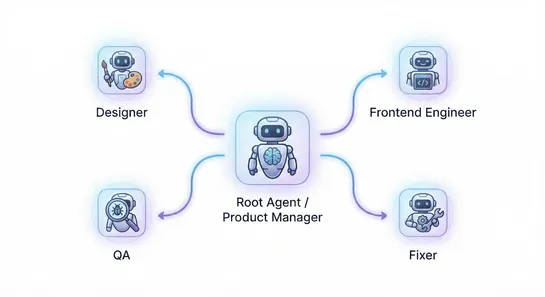
Building AI Teams with Sandboxes & Agent

Docker Agentruns teams of specialized AI agents. The agents split work: design, code, test, fix. Models and toolsets are configurable. Docker Sandboxesisolate each agent in a per-workspacemicroVM. The sandbox mounts the host project path, strips host env vars, and limits network access. Tooling move.. read more  
Building AI Teams with Sandboxes & Agent
Link
@kala shared a link, 3 weeks ago
FAUN.dev()

OpenClaw Tutorial: AI Stock Agent with Exa and Milvus

An autonomous market agent ships. OpenClaw handles orchestration. Exa returns structured, semantic web results. Milvus (or Zilliz Cloud) stores vectorized trade memory. A 30‑minute Heartbeat keeps it running. Custom Skills load on demand. Recalls query 1536‑dim embeddings. Entire stack runs for abou.. read more  

OpenClaw Tutorial: AI Stock Agent with Exa and Milvus
Link
@kala shared a link, 3 weeks ago
FAUN.dev()

OpenClaw is a great movement, but dead product. what's next?

After talking to 50+ individuals experimenting with OpenClaw, it's clear that while many have tried it and even explored it for more than 3 days, only around 10% have attempted automating real actions. However, most struggle to maintain these automations at a production level due to challenges with .. read more  

Link
@kala shared a link, 3 weeks ago
FAUN.dev()

OpenAI to acquire Astral

OpenAI will acquire Astral, pending regulatory close. It will fold Astral's open-source Python tools —uv,Ruff, andty— intoCodex. Teams will integrate the tools.Codexwill plan changes, modify codebases, run linters and formatters, and verify results acrossPythonworkflows. System shift:This injects pr.. read more  

OpenAI to acquire Astral
Link
@devopslinks shared a link, 3 weeks ago
FAUN.dev()

How we fixed Postgres connection pooling on serverless with PgDog

A startup swappedSupavisorandPgBouncerforPgDogonEKS. The swap stopped serverless deploy connection spikes. A multi-threaded, colocated pooler handled the bursty traffic. PgDogneeded fixes forPrismaprepared-statement handling. The team shipped those.PgDognow exports metrics viaOpenMetricstoPrometheus.. read more  

How we fixed Postgres connection pooling on serverless with PgDog
Link
@devopslinks shared a link, 3 weeks ago
FAUN.dev()

New Malware Highlights Increased Systematic Targeting of Network Infrastructure

The enterprise attack surface has changed, with threat actors increasingly targeting network infrastructure. Eclypsium recently captured new malware samples, including CondiBot and "Monaco," both impacting network devices such as Fortinet products. The rise in network device attacks poses serious th.. read more  

Link
@devopslinks shared a link, 3 weeks ago
FAUN.dev()

California’s AB 1043 Could Regulate Every Linux Command, and the Open Source World Is Too Quiet

California'sAB 1043requires operating systems to collect age/DOB at account setup and expose anAPIthat returns anage bracket signal. Apps must request that signal on launch and restrict access by bracket. EffectiveJan 1, 2027, vague definitions could sweepapt,flatpak,snap, and package managers into .. read more  

Link
@devopslinks shared a link, 3 weeks ago
FAUN.dev()

Rocky Linux 9 on AWS EC2: Best Practices for Production

Rocky Linux 9 pairs RHEL-9 binary compatibility and modern kernels with AWS EC2 features:cloud-init,ENA,NVMe,gp3. The guide recommendsM6i/M7ifor general servers. It favorsC‑seriesfor heavy compute andio2for databases. PreferXFS. KeepSELinuxenabled. Use immutable AMIs. Automate withAnsible... read more  

Link
@devopslinks shared a link, 3 weeks ago
FAUN.dev()

How to Host your Own Email Server

This guide shows how to self-hostSMTPon a cheapVPS. It runs DockerizedPostfixand bundlesopendkimfor DKIM signing. It skipsIMAPand inbound SMTP and relies on registrar email forwarding. It configures reverse DNS plusSPFandDMARCDNS records. It checks port 25 reachability, maps host port 1587 to contai.. read more  

News FAUN.dev() Team Trending
@kaptain shared an update, 3 weeks, 1 day ago
FAUN.dev()

The Safe Path Off Ingress-NGINX: Ingress2Gateway 1.0

Kubernetes Gateway API Kubernetes

Ingress2Gateway 1.0 has been released to aid migration from Ingress-NGINX to Gateway API before its retirement in March 2026. The tool translates Ingress resources to Gateway API and highlights untranslatable configurations. The release features enhanced annotation support and thorough testing for reliable migration.

Flask is an open-source web framework written in Python and created by Armin Ronacher in 2010. It is known as a microframework, not because it is weak or incomplete, but because it provides only the essential building blocks for developing web applications. Its core focuses on handling HTTP requests, defining routes, and rendering templates, while leaving decisions about databases, authentication, form handling, and other components to the developer. This minimalistic design makes Flask lightweight, flexible, and easy to learn, but also powerful enough to support complex systems when extended with the right tools.

At the heart of Flask are two libraries: Werkzeug, which is a WSGI utility library that handles the low-level details of communication between web servers and applications, and Jinja2, a templating engine that allows developers to write dynamic HTML pages with embedded Python logic. By combining these two, Flask provides a clean and pythonic way to create web applications without imposing strict architectural patterns.

One of the defining characteristics of Flask is its explicitness. Unlike larger frameworks such as Django, Flask does not try to hide complexity behind layers of abstraction or dictate how a project should be structured. Instead, it gives developers complete control over how they organize their code and which tools they integrate. This explicit nature makes applications easier to reason about and gives teams the freedom to design solutions that match their exact needs. At the same time, Flask benefits from a vast ecosystem of extensions contributed by the community. These extensions cover areas such as database integration through SQLAlchemy, user session and authentication management, form validation with CSRF protection, and database migration handling. This modular approach means a developer can start with a very simple application and gradually add only the pieces they require, avoiding the overhead of unused components.

Flask is also widely appreciated for its simplicity and approachability. Many developers write their first web application in Flask because the learning curve is gentle, the documentation is clear, and the framework itself avoids unnecessary complexity. It is particularly well suited for building prototypes, REST APIs, microservices, or small to medium-sized web applications. At the same time, production-grade deployments are supported by running Flask applications on WSGI servers such as Gunicorn or uWSGI, since the development server included with Flask is intended only for testing and debugging.

The strengths of Flask lie in its minimalism, flexibility, and extensibility. It gives developers the freedom to assemble their application architecture, choose their own libraries, and maintain tight control over how things work under the hood. This is attractive to experienced engineers who dislike being boxed in by heavy frameworks. However, the same freedom can become a limitation. Flask does not include features like an ORM, admin interface, or built-in authentication system, which means teams working on very large applications must take on more responsibility for enforcing patterns and maintaining consistency. In situations where a project requires an opinionated, all-in-one solution, Django or another full-stack framework may be a better fit.

In practice, Flask has grown far beyond its initial positioning as a lightweight tool. It has been used by startups for rapid prototypes and by large companies for production systems. Its design philosophy—keep the core simple, make extensions easy, and let developers decide—continues to attract both beginners and professionals. This balance between simplicity and power has made Flask one of the most enduring and widely used Python web frameworks.