Join us

ContentUpdates and recent posts about Flask..
 Activity
@devopslinks added a new tool detect-secrets , 2 weeks, 5 days ago.
 Activity
@devopslinks added a new tool Gitleaks , 2 weeks, 5 days ago.
Course
@eon01 published a course, 2 weeks, 5 days ago
Founder, FAUN.dev

DevSecOps in Practice

TruffleHog Flask NeuVector detect-secrets pre-commit OWASP Dependency-Check Docker checkov Bandit Hadolint Grype KubeLinter Syft GitLab CI/CD Trivy Kubernetes

A Hands-On Guide to Operationalizing DevSecOps at Scale

DevSecOps in Practice
Story
@tairascott shared a post, 2 weeks, 5 days ago
AI Expert and Consultant, Trigma

How Do Large Language Models (LLMs) Work? An In-Depth Look

Discover how Large Language Models work through a clear and human centered explanation. Learn about training, reasoning, and real world applications including Agentic AI development and LLM powered solutions from Trigma.

How do Large Language Models (LLMs) Work Banner
Story
@laura_garcia shared a post, 2 weeks, 5 days ago
Software Developer, RELIANOID

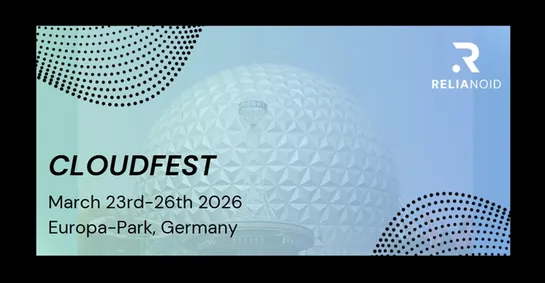
🔐 RELIANOID at Gartner IAM Summit 2025 | Dec 8–10, Grapevine, TX

We’re heading to the Gartner Identity & Access Management Summit to showcase how RELIANOID’s intelligent proxy and ADC platforms empower modern IAM: enhancing Zero Trust enforcement, adaptive access, and hybrid/multi-cloud security. Join us to explore AI-driven automation, ITDR, and identity governa..

Gartner Identity and Access Management Summit 2025 relianoid
Link
@varbear shared a link, 2 weeks, 5 days ago
FAUN.dev()

Confessions of a Software Developer: No More Self-Censorship

A mid-career dev hits pause after ten years in the game -realizing core skills likepolymorphism, SQL, and automated testingnever quite clicked. Leadership roles, shipping products, mentoring junior devs - none of it filled those gaps. They'd been writingC#/.NETfor a while too. Not out of love, just .. read more  

Confessions of a Software Developer: No More Self-Censorship
Link
@varbear shared a link, 2 weeks, 5 days ago
FAUN.dev()

Building a Blockchain in Go: From 'Hello, Block' to 10,000 TPS

A new Go tutorial shows how to build a lean, fast blockchain - clocking ~10,000 TPS - without the usual bloat. It covers the full stack:P2P networking,custom consensus, and properstate management. No unbounded mempools. No missing snapshots. Just a chain that actually runs, benchmarked on real machi.. read more  

Link
@varbear shared a link, 2 weeks, 5 days ago
FAUN.dev()

Inside the GitHub Infrastructure Powering North Korea’s Contagious Interview npm Attacks

The Socket Threat Research Team has been following North Korea’s Contagious Interview operation as it targets blockchain and Web3 developers through fake job interviews. The campaign has added at least197 malicious npm packagesand over31,000 downloadssince last report, showcasing the adaptability of.. read more  

Link
@varbear shared a link, 2 weeks, 5 days ago
FAUN.dev()

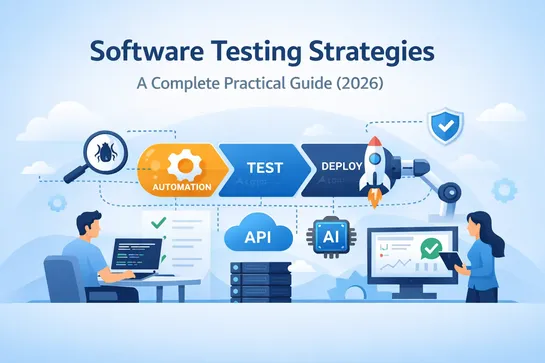
Before You Push: Implementing Quality Gates in Your Software Project

This post discusses best practices for automated testing in software engineering, including unit tests and integration tests for databases, APIs, and emulators. It also covers end-to-end tests using tools like Cypress, Appium, Postman, and more. Additionally, it highlights the importance of environm.. read more  

Link
@varbear shared a link, 2 weeks, 5 days ago
FAUN.dev()

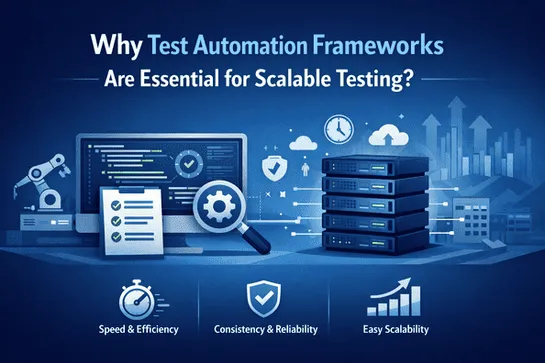
How to Get Developers in Your Team to Contribute to Your Test Automation

A fresh blog post dives into how to get devs pulling their weight ontest automation- not as extra credit, but as part of shipping code. The playbook: tie automation work straight to thedefinition of done, clear up who owns what, and stop pretending delivery pressure is a mystery. The big idea? Most .. read more  

How to Get Developers in Your Team to Contribute to Your Test Automation
Flask is an open-source web framework written in Python and created by Armin Ronacher in 2010. It is known as a microframework, not because it is weak or incomplete, but because it provides only the essential building blocks for developing web applications. Its core focuses on handling HTTP requests, defining routes, and rendering templates, while leaving decisions about databases, authentication, form handling, and other components to the developer. This minimalistic design makes Flask lightweight, flexible, and easy to learn, but also powerful enough to support complex systems when extended with the right tools.

At the heart of Flask are two libraries: Werkzeug, which is a WSGI utility library that handles the low-level details of communication between web servers and applications, and Jinja2, a templating engine that allows developers to write dynamic HTML pages with embedded Python logic. By combining these two, Flask provides a clean and pythonic way to create web applications without imposing strict architectural patterns.

One of the defining characteristics of Flask is its explicitness. Unlike larger frameworks such as Django, Flask does not try to hide complexity behind layers of abstraction or dictate how a project should be structured. Instead, it gives developers complete control over how they organize their code and which tools they integrate. This explicit nature makes applications easier to reason about and gives teams the freedom to design solutions that match their exact needs. At the same time, Flask benefits from a vast ecosystem of extensions contributed by the community. These extensions cover areas such as database integration through SQLAlchemy, user session and authentication management, form validation with CSRF protection, and database migration handling. This modular approach means a developer can start with a very simple application and gradually add only the pieces they require, avoiding the overhead of unused components.

Flask is also widely appreciated for its simplicity and approachability. Many developers write their first web application in Flask because the learning curve is gentle, the documentation is clear, and the framework itself avoids unnecessary complexity. It is particularly well suited for building prototypes, REST APIs, microservices, or small to medium-sized web applications. At the same time, production-grade deployments are supported by running Flask applications on WSGI servers such as Gunicorn or uWSGI, since the development server included with Flask is intended only for testing and debugging.

The strengths of Flask lie in its minimalism, flexibility, and extensibility. It gives developers the freedom to assemble their application architecture, choose their own libraries, and maintain tight control over how things work under the hood. This is attractive to experienced engineers who dislike being boxed in by heavy frameworks. However, the same freedom can become a limitation. Flask does not include features like an ORM, admin interface, or built-in authentication system, which means teams working on very large applications must take on more responsibility for enforcing patterns and maintaining consistency. In situations where a project requires an opinionated, all-in-one solution, Django or another full-stack framework may be a better fit.

In practice, Flask has grown far beyond its initial positioning as a lightweight tool. It has been used by startups for rapid prototypes and by large companies for production systems. Its design philosophy—keep the core simple, make extensions easy, and let developers decide—continues to attract both beginners and professionals. This balance between simplicity and power has made Flask one of the most enduring and widely used Python web frameworks.